Supermarket POS Software in Kenya 2026 (Free)
Supermarket POS software in Kenya for 2026: barcode checkout, live stock alerts, clean M-Pesa records and offline mode, free in shillings on any Android.
Retail & POS specialist, Nairobi, Kenya
What a Kenyan supermarket needs from a POS
Saturday evening in a mini-mart in Umoja, on the east side of Nairobi. Two tills, a queue at each, the M-Pesa phone chiming somewhere under the counter, and a cashier ringing up bread, milk and airtime as fast as her fingers allow. By nine the drawer is full, and nobody can answer three simple questions: how many packets of unga actually went out, whether the cooking oil on the middle shelf will survive tomorrow, and whether every one of those chimes matches a sale in the book.
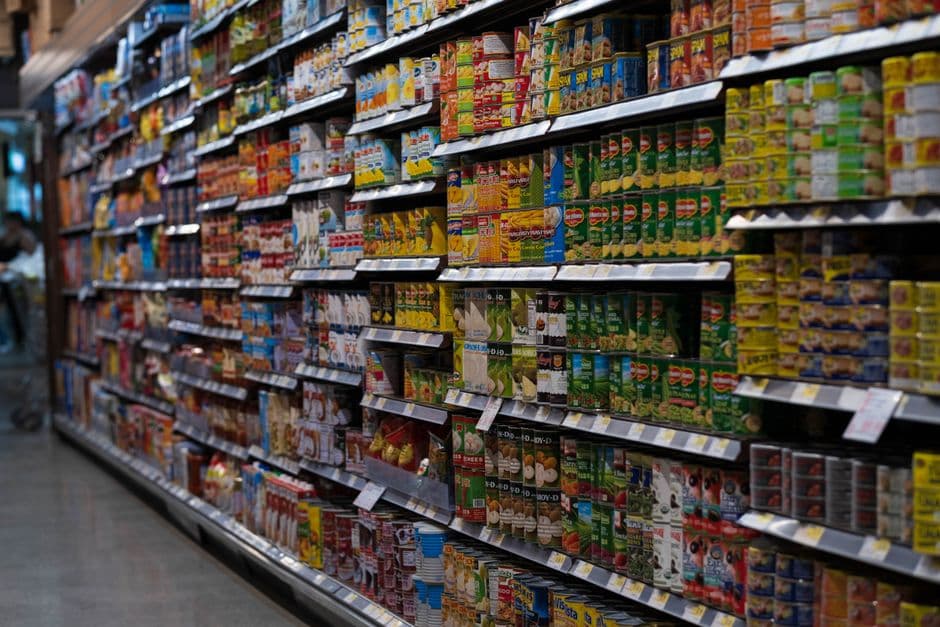
That is the daily test a till has to pass in Kenya. A supermarket or mini-mart in Nairobi, Mombasa or Nakuru carries hundreds, sometimes thousands, of items, with a thin margin on each one. You make your money on rotation, and you lose it in the gaps: milk that expired on the shelf, a fast mover that sat out of stock for four days, a payment that was “sent” but never landed.
The big chains know this. Naivas, Quickmart and Carrefour run systems that cost more than most independent shops turn over in a year. The physics of your mini-mart are exactly the same, queues, shelves, shrinkage; only the budget is different, and that gap is what this guide is about.
So the shopping list writes itself. Barcode checkout, because typing prices by hand is too slow for a queue and too easy to get wrong. Stock that updates with every sale, with an alert before a fast mover runs out, not after. Several cashier accounts, because you are not behind the till all day and you need to know who sold what. Clean recording of M-Pesa and Airtel Money, because a growing share of your turnover arrives by phone rather than in 1,000 bob notes. Everything in shillings, and ideally in both English and Swahili, so each cashier works in the language they think in.
One more requirement, and outside the big towns it is not optional: the till must keep selling when the network drops. Coverage in Kenya is good, but good is not always, and a power cut can take your router down even when the mast is fine. A cloud till that freezes with a spinning wheel while ten customers wait is worse than no till at all.
Plenty of Kenyan systems can handle most of this list. Most of them charge a monthly fee for the version that really does. The rest of this guide goes through each piece, what it is worth in shillings, and how to cover the essentials without adding a subscription to your cost line.
Barcode checkout, stock control, and M-Pesa in one place
Two numbers decide whether a supermarket makes money: how fast the queue moves, and how true the stock figures are. Everything else is decoration.
Start with the queue. Nearly everything on your shelves already carries a manufacturer barcode: sodas, unga, cooking oil, soap, tissue, the entire packaged aisle. digabloPos reads those codes with an inexpensive scanner or the phone camera, and the item rings up in about a second, at the right price, with no typing. Over a few hundred baskets a day, that is the difference between a queue that moves and a queue that gives up and walks to the duka next door.
The same scan works on the way in. When the delivery from Eastleigh or Kamukunji lands, you receive cartons by scanning them, and the quantities go straight into stock instead of onto a scrap of paper that disappears by Thursday. Goods-in is where most stock records quietly break; scanning at the door fixes it.
Then the shelves. Every sale decrements stock in real time, so the app always knows what should be in the shop. Low-stock alerts flag milk, bread or sugar the moment they drop under the threshold you set, while there is still time to reorder, rather than on the morning a customer walks out empty-handed. Fresh goods add a twist of their own: dairy, bread and yoghurt do not just run out, they expire, and a till that tracks dates helps you push the oldest stock to the front before a sale turns into a write-off.
And when the number in the app and the count on the shelf disagree, you have found shrinkage, breakage or a receiving error, and you found it this week, in one aisle, instead of during an all-night stock take at the end of the year. On supermarket margins, that gap between theory and shelf is not an accounting detail. It is very often the whole profit.
Now the money. In a Kenyan supermarket, M-Pesa is not one payment option among others; on many days it is half the till. Customers pay to your Lipa na M-Pesa till number, the confirmation lands on the shop phone, and it is on you to make sure every chime matches a sale that was actually rung up. digabloPos records M-Pesa and Airtel Money as their own payment methods, separate from cash. The evening report shows what came in by each channel, and you compare it line by line against your M-Pesa statement. A transfer that never landed, or a sale rung as cash that was really paid by phone, shows up the same evening instead of dissolving into the week’s total.
Two habits protect that money. First, confirm every payment on your own phone or till message, never on the customer’s screen: a fake confirmation screenshot takes half a minute to produce, and it tends to appear precisely at closing rush. Second, never lump mobile money and cash into one figure. Separate channels are also what make your VAT and eTIMS reconciliation bearable, and we come back to that below.
digabloPos for supermarkets: free, offline, in shillings
digabloPos covers that whole list without a monthly bill. The core till is free for life, not a trial with a countdown, and it was built for exactly the conditions a Kenyan shop runs in: patchy network, mixed payments, and hardware that has to stay cheap.
What the free core gives a supermarket:
- Barcode checkout with a scanner or the phone camera, plus fast multi-line sales for full baskets and trolleys. - Real-time inventory across thousands of SKUs, updated by every sale and every delivery, with low-stock alerts on the products you choose. - Staff PIN logins with per-cashier reports, so every sale, discount and cancellation is tied to a name. - M-Pesa, Airtel Money and cash recorded as distinct payment methods for a clean evening reconciliation. - Full offline mode: sales record on the device without internet and sync on their own when the network returns. - Shilling-native, in English and Swahili, on any Android phone or tablet.
The hardware side is deliberately boring, and that is a compliment. The Android phone you already own runs the till. A basic barcode scanner costs a few thousand shillings along River Road or online, and a Bluetooth thermal printer for receipts sits in the same range; both pair in minutes. A tablet at the counter is more comfortable for a busy shop, but it is a comfort, not a requirement. Compare that with the proprietary till bundles some vendors push: tens of thousands of shillings upfront for a locked box that does less than the phone in your pocket, plus the software fee on top.
The PIN logins deserve a word, because they solve a problem every owner knows and few like to name. You cannot watch the till all day. With a PIN per cashier, the day the drawer count is off, you do not have to suspect everyone; you open the history and look. Who sold what, who gave which discount, who cancelled which sale, per shift. That record protects your money, and it protects your honest staff just as much.
Paid modules exist for shops that grow into them, a second branch or deeper reporting for instance, and you switch one on only when the need is real. Plenty of shops never activate any. The essentials of a supermarket till, checkout, stock, staff and payments, stay free.
Cost and compliance
Most Kenyan POS suites are freemium. The demo costs nothing; the version that actually runs a supermarket, more than one user, proper stock control, real reports, sits behind a monthly plan, commonly somewhere around KSh 2,500 per month. That sounds harmless until you multiply it: KSh 30,000 a year, every year, for as long as the shop exists, before you have bought a single piece of hardware. For a supermarket with three tills and serious volume, the trade can be argued. For a mini-mart clearing thin margins on unga, bread and milk, it is a month of profit handed to a software company annually.
digabloPos keeps the core POS free for life, with optional paid modules only if you grow into them. The till you need on day one, and honestly the till most shops still need in year three, costs nothing.
Compliance is the other line on the bill, and it deserves plain words rather than fine print. VAT in Kenya is 16%, and if you are VAT-registered, KRA eTIMS applies: your tax invoices must be transmitted to KRA electronically. digabloPos keeps your sales and your stock organized; the eTIMS invoice itself goes through your eTIMS channel, and our eTIMS guide linked below walks through the options. What the till contributes is the part that actually hurts during an audit: a complete, consistent record of what was sold, when, and how it was paid. Reconciling eTIMS against a clean sales base is bookkeeping. Reconciling it against an exercise book is archaeology.
The mistakes that eat a mini-mart’s margin
Watch enough mini-marts open and close around Nairobi and the same handful of mistakes shows up every time. None of them needs bad luck. They only need nobody paying attention.
Trusting the customer’s screen. The M-Pesa confirmation that counts is the one on your phone or in your till messages. A screenshot proves nothing, and the fake ones appear exactly when you are too busy to check, on Saturday evening with a full queue.
Ringing everything as cash. If mobile money and cash land in one total, you can reconcile neither. Keep one lane per payment method and make the evening comparison against your M-Pesa statement a two-minute habit, not a monthly project.
Receiving stock from memory. If deliveries go onto the shelf without going into the system, your stock numbers are fiction within a month, and every report built on them is fiction too. Scan cartons in at the door, every time, including the rushed drop-offs.
One login for everyone. A shared password means the sales history proves nothing and protects nobody. A PIN per cashier costs nothing and settles arguments before they start.
A till that needs internet to sell. Ask any vendor one question before you sign: if the network is down for two days, what do I lose? The only acceptable answer is nothing. Anything else means your busiest Saturday is one outage away from the exercise book.
Never counting. Real-time stock tells you what should be on the shelf; only a count tells you what is. You do not need to close the shop for it: one aisle a week, rotating, catches the leaks while they are still small.
None of these fixes costs money. Each one is a decision, made once, plus a till that makes the honest path the easy one.
How to get started this week
Do not plan a grand migration; a mini-mart cannot close for a software project. The path that works looks like this.
Day one, install digabloPos on an Android phone and create your shop: name, shillings as the currency, and your payment methods, cash, M-Pesa, Airtel Money. Add a PIN for each cashier. That is one evening’s work, done at the counter between customers.
Day two, load your fast movers. Not the whole shop: the hundred or so products that make most of your turnover, bread, milk, unga, sugar, cooking oil, sodas, soap. Scan the barcode, type the price, move to the next. With two people it goes faster than you fear.
Then sell. Keep the exercise book running alongside for a week or two if it reassures you, and compare in the evenings. The report will start telling you things the book never could: which products carry the shop, which shelf-warmers are freezing your cash, whether the drawer matches the screen, and what share of the day really came in through M-Pesa.
Load the rest of the catalogue aisle by aisle over the following weeks, set low-stock thresholds on the products that hurt when they run out, and only then look at the optional modules, if you still feel the need.
The test costs nothing: no subscription, no card, no hardware beyond the phone already in your pocket. That is the whole point. The money stays in the shop, where it earns more than it ever will on a software vendor’s invoice.
Frequently asked questions
Is there free supermarket POS software in Kenya?
Yes. digabloPos offers a free supermarket till with barcode checkout, real-time stock, low-stock alerts, and M-Pesa recording, in shillings, in English and Swahili, offline.
Does it record M-Pesa at the till?
Yes. M-Pesa and Airtel Money are set up as payment methods, so your daily report shows mobile money versus cash and simplifies your eTIMS records.
Does it work in English and Swahili?
Yes. The interface is available in both English and Swahili, so every cashier uses the language they prefer.
Also on digabloPos
Sources and references
Run your supermarket on a free till
Barcode checkout, real-time stock and clean M-Pesa records, free, offline, in shillings, in English and Swahili. Set up digabloPos on any Android in minutes.
Try for free