Free POS Software in Kenya 2026: M-Pesa Ready, No Fee
The best free POS software in Kenya for 2026: records M-Pesa and Airtel Money, works offline when the network drops, no monthly fee. English and Swahili.
Retail & POS specialist, Nairobi, Kenya
A free till for the Kenyan duka, M-Pesa and all
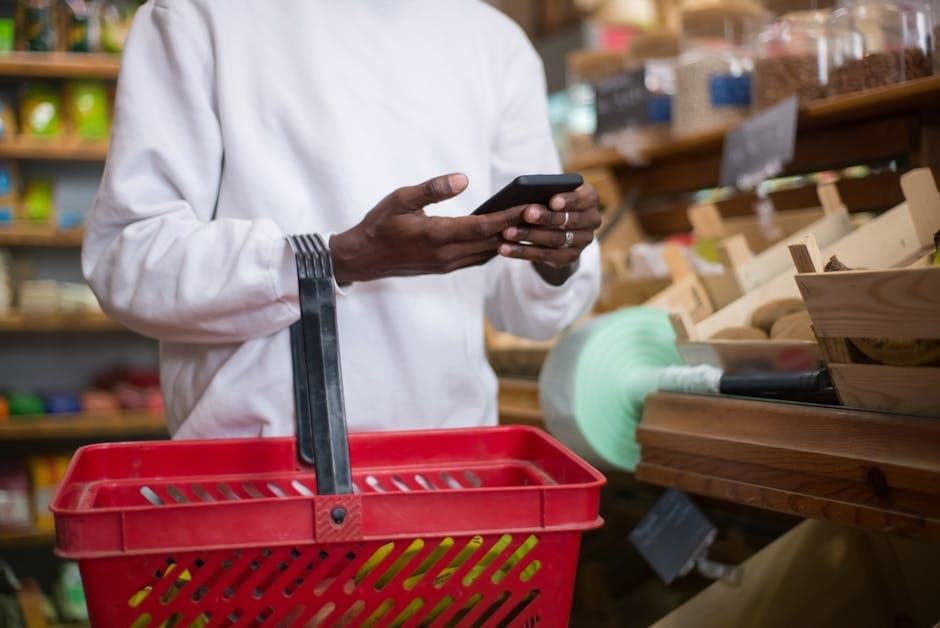
Half past seven on a weekday evening, in a duka off Jogoo Road in Nairobi. A customer picks up bread, milk and a packet of unga, says "nimetuma" and holds up his phone. The owner checks her own phone for the confirmation SMS before she nods, because she has seen the fake screenshot trick before. Then she writes the sale into an exercise book that already holds three months of numbers nobody will ever add up.
That counter is what a POS has to fit. In Kenya, almost every sale touches M-Pesa, and most shops run on a phone, not a counter terminal. So the right till for a Nairobi duka, a Mombasa kiosk, or a Nakuru shop has a short, non-negotiable checklist. It should record M-Pesa cleanly, next to cash and Airtel Money. It should keep working offline when the network drops or the estate goes dark. It should cost nothing per month, because a duka’s margin is counted in shillings, not in software budgets. And it should speak English and Swahili, so whoever is behind the counter in the evening actually uses it.
Kenya is not short of duka apps, and this guide will not pretend otherwise. Duka Manager, Duka Digital, Dukarun, Tiwi: they exist, they are built locally, and they are good. The catch is the model. Many are freemium, meaning the version that actually helps you, with deeper inventory and proper reports, sits behind a monthly plan. Tiwi Pro, for example, runs around KSh 2,500 per month. That is not a scandal, it is a business model. But it does mean the word "free" on the download page and the amount you pay in month three can be two different things.
What follows is the honest map: what a till must record in a country where money moves by phone, where a genuinely free option fits among the paid ones, and how to start this week without spending a single shilling.
Taking M-Pesa and Airtel Money cleanly
In Kenya, almost every digital sale is M-Pesa, with Airtel Money a step behind. Most dukas take payment through Lipa na M-Pesa, either a Buy Goods (Till) number or a Paybill, so the money lands in the business account instead of dissolving into a personal line that also pays school fees. That part, Safaricom has made easy. The part that actually trips shops up is not receiving the payment. It is recording it at the till.
Watch closing time in a shop that skips that step. The drawer holds some cash. The phone holds a day of M-Pesa confirmations. The Airtel Money ones sit in a different thread. Somewhere in between are two sales served during the evening rush that nobody wrote down. Matching the M-Pesa statement to the drawer is now guesswork, and guesswork at a till always resolves in the same direction: against the owner.
The discipline that fixes it takes seconds per sale:
- The customer pays to your M-Pesa Till or Paybill (or Airtel Money) number. - You wait for the confirmation SMS on your own side. Never the customer’s screenshot: a convincing fake takes half a minute to produce, and the friendly customer flashing his screen at rush hour is exactly when it happens. - You log the sale under the right payment method, so the end-of-day report splits cash, M-Pesa and Airtel Money into separate lines.
Do that, and the evening reconciliation becomes a two-minute comparison instead of an argument. The M-Pesa statement says what came through the Till today; the till report shows the same figure; the drawer matches the cash line. A payment that was "sent" during the day and never arrived shows up that same evening as a gap on one line, not as a mystery buried inside a single doubtful total. So does a sale that quietly went to someone’s personal number instead of the shop’s Till.
A POS that keeps one payment method per channel is not an advanced feature. In a country where most of your money moves through a phone, it is the entire point of owning a till.
digabloPos: free, offline, and built around M-Pesa
digabloPos is free for life on its core POS, and free here means the whole till, not a demo. Unlimited sales, unlimited products, receipts, reports and two staff accounts are included permanently. No card number to enter, no trial counting down, no day when the app suddenly demands a plan before letting you sell.
The details follow the Kenyan counter:
- It records M-Pesa and Airtel Money properly. Each one is logged as its own payment method, so the daily report shows exactly how much came in by mobile money and how much in cash. The reconciliation habit from the previous section is built in, not bolted on. - It works offline. Sell, track stock and print receipts with no connection; everything syncs on its own when the network returns. That covers the upcountry duka with one bar of signal, the estate shop during a blackout, and the market stall where data bundles are rationed. No sale waits for the network, and no sale is lost to it. - No monthly fee. Optional paid modules exist for shops that grow into them, deeper stock control or more staff accounts for example, and you switch one on only the day you actually need it. Plenty of shops never activate any. - English and Swahili. You may want your reports in English while the person on the evening shift is more comfortable selling in Swahili. Both work on the same shop, at the same time. - Any Android phone. The Tecno, Samsung or Infinix already in your pocket is the hardware. If you want printed receipts, a Bluetooth thermal printer costs around KSh 3,000 along Luthuli Avenue or online, and pairs in minutes. Nothing else is required, and nothing proprietary is sold to you.
A quick, honest note on tax, because free software does not make the KRA disappear. For everyday duka selling, a free till covers you: it records every sale, tracks the stock and produces clean daily numbers, which is exactly the base any tax conversation starts from. If you are VAT-registered and need KRA eTIMS e-invoices, that is a compliance layer beyond a free till, and you should confirm your e-invoicing setup separately rather than assume an app has handled it.
Free POS in Kenya, compared
Put the main options side by side and the real differences are in the business model behind each app, not in the screenshots on the store page.
- digabloPos: free for life, offline-first, records M-Pesa and Airtel Money, English and Swahili. The logical pick when zero monthly cost is a requirement rather than a preference. - Duka Manager (Pesapal): solid duka record-keeping and inventory, tied to the Pesapal ecosystem. It makes the most sense if your payments already live there. - Duka Digital / Dukarun: lightweight, offline-friendly duka apps with M-Pesa. Honest starting points, with fewer features waiting for you as the shop grows. - Tiwi: a free or lite tier to get you in the door, with the full feature set on the paid Pro plan at around KSh 2,500 per month. Well built, but the version you will actually want has a price. - Loyverse: a capable free global app, but nothing Kenya-specific. No local support, and the add-ons you eventually need, employee management or advanced inventory, are paid subscriptions.
A practical way to decide: write your own checklist before installing anything. For most small Kenyan shops it reads "no monthly fee + offline + M-Pesa", in that order, and against that list digabloPos and the lightweight duka apps are the strongest free starting points. The freemium apps are not bad software. They are a different bet, one where the vendor is counting on your shop growing into a subscription. If you would rather the shop grow into stock instead, start free and stay free until a paid feature clearly earns its keep.
Then apply one last filter that beats any comparison table: install the app and try to record one cash sale and one M-Pesa sale within ten minutes. If that is hard on day one, no subscription will make it easy in month six.
By type of business
The same free, offline core fits most Kenyan trades, but each trade leans on a different part of it.
A duka or general shop leans on stock and credit. Barcodes and real-time stock tell you the sugar is about to finish before a customer does, across hundreds of items the exercise book was never going to track. Customer credit for regulars replaces the deni notebook: the debt is attached to a named customer on the sale itself, instead of living in handwriting only one person can read. And the M-Pesa reconciliation from earlier closes every day with figures instead of feelings.
A hotel in the Kenyan sense, the eatery serving lunch, or a café or bar, leans on speed. Quick buttons for the dishes that move keep the queue advancing, orders reach the kitchen without a waiter walking them there, and M-Pesa is confirmed at the counter while the customer is still in front of you rather than gone with the change.
A chemist leans on batches and expiry dates. Scan the box and the product identifies itself; the till then pushes out the stock that expires soonest instead of letting it die quietly on the back shelf, which in a pharmacy is money thrown away twice.
The market trader and the mama mboga lean on the phone itself. No hardware, everything offline, and sales recorded during a network drop sync later on their own. This is honestly where free matters most: nobody should pay a monthly software fee to run a vegetable stand, and no subscription vendor is building for that trader anyway.
Whatever the trade, the pattern holds. Start with the free till, and switch on a module the day the business genuinely needs it, not the day someone selling it says you will.
Start in 5 minutes
No agent visit, no contract, no carton of hardware arriving on a boda:
1. Download digabloPos on your Android phone. 2. Add your products, starting with the twenty that move fastest, or import a full list. Set the currency to Kenyan shillings. 3. Add M-Pesa and Airtel Money as payment methods, next to cash. 4. Make your first sale. Pair a Bluetooth thermal printer if you want paper receipts; plenty of shops never bother, since the M-Pesa confirmation already gives the customer a record.
If the exercise book has run the shop for years, keep it going alongside the app for a week or two, then compare. The evening report will tell you things the book never did: which products actually carry the shop, how much of the day came in through the Till versus the drawer, and whether the cash you are holding matches the sales you made. Most owners quietly stop updating the book in the second week, not because anyone told them to, but because the report already answers the questions they used to add up by hand.
No contract, no monthly fee, and it keeps selling when the network drops.
What a till really costs over a year in Kenya
Subscription prices are designed to look small on a flyer and only become honest over a year. Take the common freemium price point of around KSh 2,500 per month for a full plan: that is KSh 30,000 a year, every year, paid before you have restocked a single shelf. For a supermarket running several tills and steady traffic, the line can be defended. For a duka whose entire float would fit inside that figure, it cannot.
Now put the free path next to it. The phone is the one you already own. The core software is KSh 0, permanently. The only money that ever needs to leave your pocket is optional: around KSh 3,000, once, for a Bluetooth thermal printer if your customers want paper receipts.
Then there is the cost nobody prints on any flyer: the losses a till quietly stops. The sale that never reached the book during the rush. The screenshot that looked like a confirmation and was not. The stock that finished two days before anyone noticed, in the exact week customers were asking for it. The deni remembered one way by you and another way by the customer. None of these arrives as an invoice, but each one is real money, and a shop that records every sale, every payment channel and every debt simply leaks less of it.
So the honest arithmetic for a small Kenyan shop is not KSh 2,500 against KSh 0 per month. It is a recurring cost you can avoid entirely, set against losses you are already paying without ever seeing the bill.
Will it stay free? A fair question
Kenyan traders have watched enough apps switch on fees overnight to treat the word free with suspicion, and that suspicion is healthy. So here is the model, plainly.
digabloPos earns its money from optional modules, billed one by one and cancellable whenever you like, which only some shops ever activate. A free shop costs almost nothing to serve, and today’s free duka is tomorrow’s module customer, the day it opens a second branch or needs deeper stock control. Nobody in that chain gains anything by cutting off free users, because free users are where the paying ones come from.
Beyond the model, two guarantees are worth demanding from any software that holds your business records, this one included. First, your data stays yours: you can export your sales and your stock whenever you want, so if you ever choose to leave, you leave with your records. Second, the free tier is not a crippled demo: unlimited sales and unlimited products are part of it, permanently.
If another vendor offers you "free" without those two answers in writing, ask the questions before you type in a single product. The answers are usually the whole story.
Frequently asked questions
Is there a free POS app for shops in Kenya?
Yes. digabloPos is free for life on its core POS, records M-Pesa and Airtel Money, works offline, and is available in English and Swahili.
Can it record M-Pesa payments?
Yes. You set up M-Pesa and Airtel Money as payment methods, and each sale is recorded with its method, giving a clear split between cash and mobile money on your daily report.
Does digabloPos handle KRA eTIMS?
digabloPos keeps your sales and stock organized but does not itself issue eTIMS invoices; the eTIMS invoice is issued through KRA's channels (the portal, eTIMS Lite, or an approved integrator).
Also on digabloPos
Sources and references
Start your free till in Kenya
No monthly fee, records M-Pesa, works offline, in English and Swahili. digabloPos runs on any Android and is set up in 5 minutes.
Try for free