Supermarket POS Software in Nigeria 2026 (Free)
Supermarket POS software in Nigeria: barcode checkout, real-time stock, low-stock alerts and offline sales through NEPA outages, free and in naira for 2026.
Retail & restaurant tech, Lagos, Nigeria
What a Nigerian supermarket actually needs from a POS
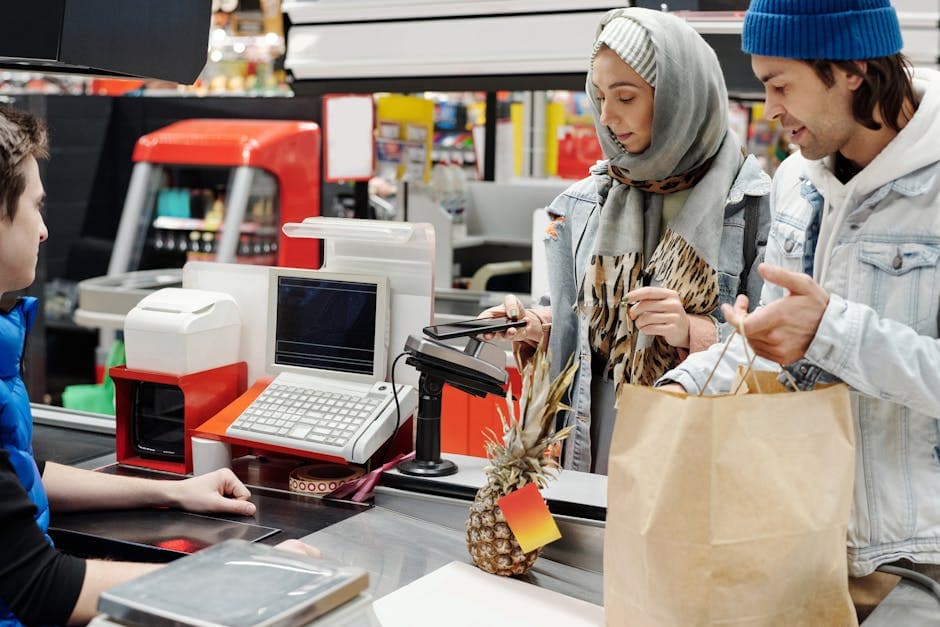
Saturday evening in a supermarket in Surulere. Three tills running, a queue at each one. One customer is holding up his phone to show a transfer alert, another is counting out cash, a third wants to know why the yoghurt scanned at a price different from the shelf tag. Then NEPA takes light. The gen picks up after a few seconds, but the router takes longer, and if your point of sale needs the internet to open a sale, your busiest hour of the week just turned into a shouting match at the counter.
That scene is why supermarket POS software in Nigeria gets chosen differently from supermarket software anywhere else. A supermarket or a large provision store is not a kiosk you can run from an exercise book. You carry hundreds or thousands of SKUs, from sachet tomato paste to 50 kg bags of rice. You employ cashiers you cannot watch every minute of the day. And you lose money quietly, through expired stock, stale prices and missing cartons, long before you ever lose it loudly.
So before you open any brochure, write down what the software actually has to do:
- Barcode checkout fast enough that the Saturday queue keeps moving. - Real-time stock across every SKU, with low-stock alerts before a fast mover runs out. - A login per cashier, so every sale, every discount and every cancellation has a name attached. - Every payment method Nigerians actually use: cash, bank transfer, OPay, PalmPay, Moniepoint, each one recorded separately. - Offline mode that genuinely works, because power cuts and network failures are a normal Tuesday, not a rare event. - Prices, receipts and reports in naira, with no currency gymnastics.
Notice what is not on the list: loyalty points, AI dashboards, e-commerce plugins. Some stores grow into those later. But no supermarket in Lagos or Kano ever closed because it lacked a dashboard. Plenty have bled out because the stock figure was fiction and nobody noticed for six months.
Most supermarket suites sold in Nigeria will tick the list above and then quote you ₦15,000 to ₦50,000 every month, often with a hardware bundle on top. For a big store with several branches, that can be money well spent. For the mini-mart in Ikeja or the provision store in Ibadan, there is a way to get the essentials without the subscription. We will do the arithmetic further down. First, the two features that decide whether a supermarket makes money at all.
Barcode checkout and stock control that stops losses
Two things decide whether a supermarket is profitable: how fast the till moves and how honest the stock figure is. Everything else is decoration.
Checkout speed first. A cashier searching for products by name, scrolling through a list while eight people wait, costs you twice: the customers who drop their basket and walk out, and the ones who remember the queue and never come back. A barcode scanner rings up an item in a fraction of a second, never confuses two sizes of the same detergent, and never types ₦1,200 instead of ₦2,100 because the shop was noisy. The same scanner speeds up the other side of the counter: when the distributor van delivers on Tuesday morning, you scan cartons into stock instead of typing them line by line.
One field note: most packaged goods sold in Nigeria carry proper barcodes, but some items never will. Bread from the bakery down the road, repackaged garri, eggs sold per piece. Good software lets you print your own labels or set up one-tap buttons for those, so the exceptions do not slow the till down.
Stock accuracy is where the real money hides. Every sale should reduce stock instantly, every delivery should increase it, and once that discipline holds, three familiar losses start shrinking at the same time. Shrinkage, the polite word for what walks out the back door: when staff know every item is counted, temptation drops, and when something still disappears, the gap shows up in a report instead of circulating as a rumour. Expiry: provisions carry dates, and a slow-movers report tells you which cartons to discount and push before they die on the shelf. Stock-outs: low-stock alerts warn you while there is still time to call the distributor, instead of a customer informing you that the shelf is empty.
Inflation has added a fourth loss: stale prices. When the wholesale price of a carton moves, every shelf in the store needs the new price, or you keep selling at last month’s margin without knowing it. With a proper POS you change the price once in the system, reprint the tag, and the till is right from the very next sale.
Stock-take changes character too. Instead of closing the store for a full day of counting, you spot-check two aisles a week against what the system says. When the figures match, you sleep well. When they do not, you know exactly which aisle, which products and roughly which week to ask about.
digabloPos for supermarkets: free, offline, naira
digabloPos was built for exactly this kind of store, and the core is free. Not free for fourteen days. Free.
- Barcode checkout with fast multi-line sales, on any Android phone or tablet. - Real-time inventory across thousands of SKUs, with low-stock thresholds you set per product. - A PIN for each cashier and per-cashier reports, so the evening reconciliation names names. - Cash, transfer, OPay, PalmPay and Moniepoint recorded as separate methods, so the daily report matches the bank app and the agent statements channel by channel. - Full offline mode: when NEPA takes light and the network follows, the till keeps selling, and everything syncs by itself once the connection returns. - Naira-native pricing, receipts and reports.
On hardware, resist the bundle. Some vendors quote a package around ₦400,000: a proprietary terminal, a customer screen, their own printer, all locked to their subscription. You need none of it on day one. The Android phone already in your pocket runs the till. When you are ready to grow, a USB or Bluetooth barcode scanner and a thermal receipt printer from the electronics lines at Trade Fair or the computer sellers around Balogun in Lagos will together cost you less than two months of a typical POS subscription, and they belong to you, not to a vendor. The traders there will let you test a scanner before you pay. Take a product from your own shelf and scan it right at the stall.
Two practical tips from stores already running this way. First, put the router and the till device on a small UPS or a decent power bank, so the five minutes after the gen kicks in do not interrupt anything. Second, if you run more than one till, give each cashier their own PIN from day one. It feels like ceremony in a small team. It stops feeling like ceremony the first evening the cash count is short and the report shows you exactly whose till and which hour.
Paid modules exist in digabloPos for stores that grow into them, deeper stock tools and advanced reporting among others, and they are priced per module, not as a bundle. The point is the order of operations: the free core covers the till, the stock and the reconciliation, which is everything this article has called essential.
Cost: free vs ₦15,000 to ₦50,000 per month
Do the arithmetic the sales brochure hopes you will skip. A subscription of ₦15,000 to ₦50,000 per month comes to ₦180,000 to ₦600,000 a year, before hardware, before training, before the price review that usually lands after the first year. Now translate that into supermarket terms. It is a chest freezer. It is months of gen fuel. It is simply stock, cartons sitting on your shelves earning margin instead of money sitting in a software vendor’s account.
For a large supermarket with several branches, central purchasing and a manager on payroll, a heavyweight suite can justify its fee. If that is you, negotiate hard and demand offline mode in writing. For everyone else, and that is most supermarkets and provision stores in Nigeria, paying every month for barcode checkout and a stock report makes no sense when the same essentials exist free.
Watch the traps on both sides. Subscription vendors sometimes hide the real cost in the hardware: the ₦400,000 bundle, the mandatory maintenance visit, the printer that only takes their own paper rolls. Free apps have traps of their own: a cap of a few hundred products that a supermarket hits in its first week, adverts on the till screen, or a free tier that quietly excludes offline mode, which in Nigeria is the whole point.
digabloPos keeps the core POS free for life, with no product cap a supermarket will hit and offline included. The paid modules are optional, priced individually, and cancellable. The honest way to use it: start free, run the store on it, and if a paid module one day earns its keep, add that one module. Never pay for a bundle because a brochure looked complete.
One more principle worth writing down. Whatever software you choose, the first real money you spend should go to things you keep: a scanner, a printer, a UPS. They work with any software and hold their value. A subscription stops working the month you stop paying.
Getting started, and a note on compliance
You do not need a consultant or a training week. Install digabloPos on an Android device, create your store, set the currency to naira and add your payment methods: cash, transfer, OPay, PalmPay, Moniepoint, whichever ones your counter actually takes.
Then the products, and here is the only advice that matters: do not try to load everything in one night. Start with your two hundred fastest movers, the drinks, the noodles, the detergent, the rice. Scan the barcode, type the name and the price, next. That is one evening of work. Open the till on those the following morning and keep selling while you add the rest of the shelves aisle by aisle over the week. A provision store finishes in a weekend; a full supermarket with thousands of SKUs takes a week of evenings, and the till is earning from day one either way.
Give each cashier a PIN before the first shift, set low-stock alerts on your fast movers, and from the first Tuesday delivery, make one rule permanent: nothing goes on a shelf before it has been scanned into stock. That single habit is the difference between a stock figure you can trust and a decoration.
Keep the old exercise book running in parallel for a few days if it reassures you. Most stores stop filling it in by Thursday, because the phone is already faster.
Now the compliance note, in plain terms. If your supermarket is VAT-registered, FIRS e-invoicing applies in 2026. What it means for you: the tax authority wants invoices reported through its electronic channel, and a store whose sales are already recorded cleanly has very little to fear from that. digabloPos keeps every sale, every payment method and every stock movement organized; the cleared invoice itself goes through the FIRS channel. Our FIRS guide, linked below, walks through who is concerned and when. If you are not VAT-registered, nothing changes for you today, but keeping clean records now means the day you cross the threshold becomes an administrative step, not a panic.
Five mistakes that quietly eat a supermarket’s margin
Talk to enough store owners, from Lagos to Onitsha, and the same five mistakes keep coming up.
Buying hardware before software. The ₦400,000 terminal bundle gets bought first, and the software choice shrinks to whatever runs on it. Do it in the other order: pick software that runs on Android, prove it works in your store, then buy exactly the scanner and printer you need at Trade Fair or around Balogun, for a fraction of the bundle.
Choosing a POS that needs the internet to sell. The demo in the vendor’s office, on the vendor’s wifi, is always beautiful. The first long NEPA outage in your store tells you the truth. Ask one question before you pay anything: if power and network are gone for two days, what happens to my sales? The only acceptable answer is: nothing, the till keeps working and syncs later.
One shared login for every cashier. When everyone sells under the same account, the evening the count is short you have nothing but suspicion, and suspicion poisons a team faster than theft does. A PIN per cashier costs nothing and turns the evening gap from an argument into a report.
Trusting the transfer alert on sight. Fake credit alerts are an industry of their own in Nigeria. The rule at the till: confirm inside the bank or agent app itself before goods leave the counter, and record transfers as their own payment method so the evening reconciliation compares your report to the app, channel by channel. A phantom transfer surfaces the same evening, not at the end of the month.
Receiving goods straight to the shelf. The van arrives during rush hour, cartons go directly onto shelves, and the stock system knows nothing about them. From that moment the stock figure is fiction, the low-stock alerts are wrong, and shrinkage becomes invisible. Scan goods in first, every time, even when it costs ten minutes.
Every one of these mistakes is free to avoid. That is the pattern worth noticing: what protects a supermarket’s margin is rarely the expensive part. It is the discipline, and software that makes the discipline easy to keep.
Frequently asked questions
What is the best free supermarket POS software in Nigeria?
digabloPos offers a free supermarket till with barcode checkout, real-time stock across thousands of SKUs, low-stock alerts, multiple cashiers, and offline mode, in naira, with no monthly fee.
Does it support barcode scanning?
Yes. Barcode scanning rings up items in a fraction of a second and speeds up goods-in, while every sale decrements stock in real time.
Can it handle multiple cashiers?
Yes. Each cashier gets a PIN login with their own sales report, which adds accountability across shifts.
Also on digabloPos
Sources and references
Run your supermarket on a free till
Barcode checkout, real-time stock and low-stock alerts, free, in naira, and still selling through NEPA outages. Set up digabloPos on any Android this week.
Try for free