Spaza Shop POS App in South Africa 2026 (Free)
Free POS app for spaza shops in South Africa: fast till, stock control and clean daily totals in rand, selling through loadshedding on your own Android.
Commerce & tax, Accra, Ghana
What a spaza shop actually needs
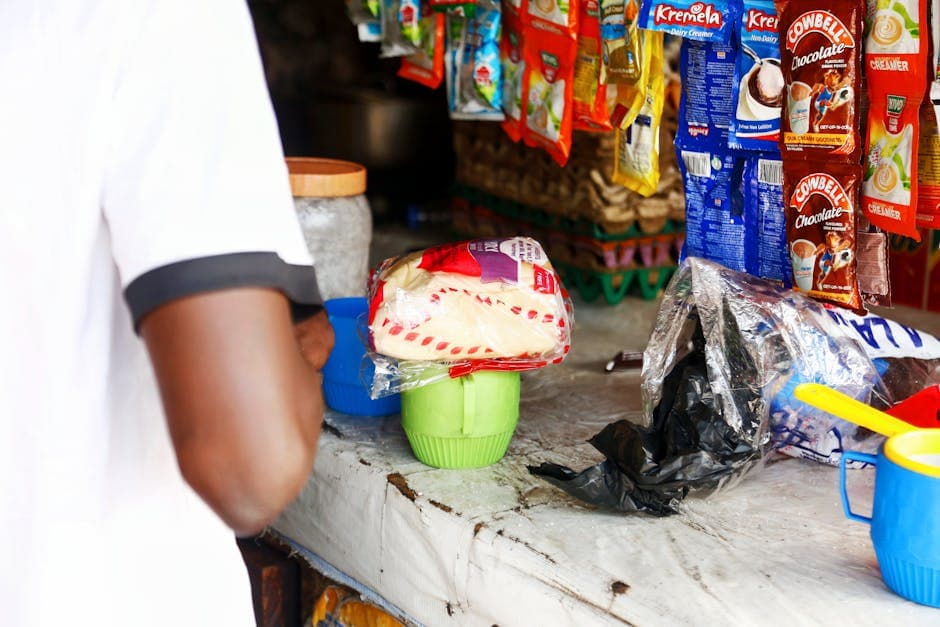
Month-end Friday in Tembisa, and the queue at the counter never quite ends. One customer wants R12 airtime, the next a loaf of bread and a box of matches, the one after that a cold drink, two candles and a kota to share with a friend. Every sale is small. Most are cash. The margin on each one is a few rand at best, and the whole business runs on volume, speed and not losing count.
That last part is where the money leaks. A spaza shop rarely fails for lack of fancy features. It weakens slowly, and invisibly, on three things: not knowing what is actually in stock, losing track of the money that passes through several hands in a day, and a till, or a notebook under a lamp, that stops working the moment loadshedding hits.
Think about what sits on your shelves. Bread that arrives in the morning and must sell before it stales. Airtime in five denominations. Maize meal, sugar, cooking oil, paraffin, washing powder, sweets that children buy one at a time, cool drinks that empty out of the fridge faster than anyone records. Nobody holds all of that in their head, however long they have run the shop. And the stock you cannot see is the stock that quietly disappears: a short delivery nobody checked against the invoice, a shelf that sat empty through a busy Saturday because nobody noticed in time, goods taken by family and never written down anywhere.
Then there is the money itself. When you open in the morning, a cousin covers the afternoon and a nephew helps through the evening rush, the day’s takings are a guess unless every sale lands in a record. Guessing is expensive, because you cannot tell a slow week from a leaking drawer, and you end up suspecting people instead of reading numbers.
So the tool a spaza actually needs is short to describe: a fast, simple till that keeps up with a window queue, basic stock control with alerts before the items people cross the street for run out, a clear daily total you can trust at closing, and the ability to keep selling when the power is out. All of it in rand, on the Android phone already in your pocket. And it has to be free, because a business built on rand-and-cent margins should not be carrying a monthly software bill before it has paid for its own bread delivery.
A free till that survives loadshedding
Loadshedding is the test every township till must pass, because the outage arrives exactly when the shop matters most. The stage alert lands on EskomSePush in the afternoon, your block goes dark at 18:00, and suddenly the whole street wants candles, paraffin, airtime and bread from you, because you are the shop that is two minutes away. The hours when the grid is down are often the busiest hours of your day. A till that depends on a wall socket and Wi-Fi chooses precisely that moment to become a black screen.
digabloPos runs fully offline, on the battery of your phone or tablet. You ring up sales, check stock and record payments with no electricity and no network at all, and everything syncs by itself when power and signal come back. Nothing is lost in between, and nothing waits for Eskom’s schedule. A cheap power bank carries the phone through back-to-back stages, and it costs less than a single month of a typical POS subscription. You pay for it once, instead of every month.
Offline is the headline, but the everyday value is quieter. The till rings up a sale in a couple of taps, fast enough for a month-end queue at the window. It counts stock down as each item sells, so you know on Thursday that the weekend’s cool drinks need ordering, not on Saturday in front of a half-empty fridge. And at closing it hands you a daily total you can trust, instead of an estimate based on how thick the cash box feels.
It also records cash and card as separate lines, along with any other method you accept. That sounds like a small detail until the first evening it saves you. You count the drawer, the app tells you what should be in it, and the two either agree or they do not. A drawer that is R200 short shows up that same night, with the day’s sales listed next to it, instead of dissolving into a vague feeling that the month was slow. For a shop where several family members take turns at the counter, one trustworthy number at closing time does more for peace in the house than any feature a salesman will ever demo.
digabloPos for spaza shops: free and simple
digabloPos gives a spaza shop the essentials at no cost, and it stays free: this is the core product, not a trial that expires after thirty days.
- Fast, simple till on any Android phone. No R3,000 device to buy: the Samsung, Tecno or Mobicel already in your pocket is the hardware. - Stock control with low-stock alerts, so the bread order and the airtime restock happen before the shelf runs dry, not after. - Daily and weekly reports of what sold, what it brought in and what is moving fastest. - Records cash, card and any other payment as separate lines, for cash-ups that actually balance. - Works through loadshedding, fully offline, in rand.
A few of those deserve a closer look, because a spaza uses them differently from a supermarket.
The stock alerts earn their keep on the short list of items your regulars will walk to another shop for: bread, airtime, cool drinks, paraffin in winter. Set a minimum for each and the app warns you while there is still time to order. The weekly report then settles the question every owner argues about with themselves: which products actually carry this shop, and which ones have been decorating the shelf since Easter, tying up money the fast movers could be turning over.
The employee PIN matters from the day it stops being only you behind the counter. Each person signs in with their own code, so every sale, every discount and every cancelled sale carries a name. That protects your money, and it protects the honest people working for you, because when the drawer balances, nobody sits under quiet suspicion at the kitchen table.
Month-end credit gets a proper home too. Regulars who buy on account until payday are part of township trade, and the till records who owes what against real, dated sales instead of an exercise book that only one person can decipher.
One honest note, the same one this guide has always carried: digabloPos is a shop till, not an airtime and electricity vending service, and not a money-transfer counter. For prepaid vending you would still use a Flash-type device beside the till; digabloPos handles the goods side of your shop. What the till can do is record each airtime or electricity sale like any other product, so the evening total covers everything that crossed the counter, vending included.
Cost and getting started
Card machines have their place in this picture. Yoco and iKhokha are solid local companies, and if a good share of your customers tap a card, a machine with its per-transaction fees can be a fair trade. But look at the deal from a cash-heavy spaza’s side: you pay for a device upfront, then give away a slice of every card sale, to solve a problem you mostly do not have yet. What the shop needs every single day is a till and stock control, and that part should cost nothing.
With digabloPos, the arithmetic is short. The software: R0, permanently, on the core till. The phone: R0, because yours is enough; the app runs comfortably on the entry-level Androids sold in every mall. A Bluetooth thermal printer, only if you want printed slips: around R500, once. Many spazas skip even that, because the customer buying bread and airtime through the window is not waiting for a slip.
Getting started takes an evening, not a project plan:
1. Download digabloPos on your Android phone. 2. Add your products, starting with the twenty or thirty items that sell every day: bread, your airtime denominations, cool drinks, sugar, maize meal, paraffin, sweets. 3. Set the currency to rand and open the till. 4. Sell. The stock counts down on its own, and the daily total builds while you serve.
If card payments grow later, as tap habits spread from the malls into the townships, add a card reader from whichever provider suits you at that point. The till records card sales next to cash either way, so starting free locks you out of nothing. Buy hardware when the customers ask for it, not when a brochure does.
Mistakes that quietly eat a spaza’s profit
The till is a tool; the habits around it decide whether the shop makes money. The same five mistakes appear behind counters from Khayelitsha to Umlazi, and every one of them can be fixed this week.
Shop money and house money in one pocket. When the day’s takings buy the evening’s supper before they are counted, nobody ever learns whether the spaza is profitable or just busy. Count the day first, record it, then decide what the household takes. With a till that shows the expected total, the count takes two minutes.
Credit living in an exercise book. Month-end credit is part of the trade; pretending otherwise is naive. The problem is the book: pages tear, figures blur, and the awkward conversation at payday turns into an argument without proof. Credit recorded against real, dated sales turns that argument into a fact you can show.
Never counting the stock. If the last full count was "sometime last year", the gap between what you bought and what you sold is invisible, and that gap is exactly where shrinkage lives. A rolling count, one shelf a week checked against the app, catches short deliveries and quiet leaks before they become a tradition.
Prices from memory. When three people serve and each remembers a different price for the same washing powder, the shop gives away its margin at random. One price list in the till ends it: everyone charges the same, and a price change happens once, on the screen, instead of three times in three heads.
Skipping the evening cash-up. The most valuable ten minutes in this whole article: count the drawer, compare it with the app, and chase anything that does not match while the day is still fresh. A shop that reconciles daily loses a small amount once. A shop that never reconciles loses a small amount every day.
None of these fixes costs money. They cost a record, and the record is exactly what a free till provides.
Your first week on the new till
Do not try to build a supermarket system on day one. A spaza goes digital in a week of small steps, without ever closing.
Day one, after closing: load your fast movers. Bread, the airtime denominations you sell, cool drinks, maize meal, sugar, paraffin, candles, the sweets children buy. Twenty to thirty products cover most of a spaza’s daily sales.
Days two and three: sell on the app, and keep the notebook running alongside if that reassures you. Speed comes quickly; by the second afternoon the till is faster than the pen, especially with a queue at the window.
Day four: bring in your credit customers, the regulars who settle at month-end, so the exercise book can start its retirement.
Day five: set low-stock alerts on the items people will cross the street for if you run out, and nothing else yet. Alerts on everything means alerts on nothing.
The weekend: do the cash-up both ways, notebook and app, and compare. This is usually where the notebook loses the argument, because the app tells you not just the total but what sold, at what time, for how much, and by whose hand.
Week two: add the rest of the shelves during quiet moments, shelf by shelf, and give a PIN to everyone who serves.
Somewhere in that second week, loadshedding will hit while a customer stands at the window with exact change for a loaf and R29 airtime. The lights will go, the phone will stay on, the sale will go through, and you will see why this guide kept returning to that one point. The whole change will have cost you a few evenings and not one rand, which is exactly what a spaza can afford.
Frequently asked questions
Is there a free spaza shop app for stock and sales?
Yes. digabloPos is a free till and stock app for spaza shops, fast sales, stock control with low-stock alerts, and daily totals, running on the phone you already own, in rand.
Does it work during loadshedding?
Yes. digabloPos runs fully offline on your phone battery, so you keep selling through loadshedding and it syncs when power and the network return.
Can it sell airtime and electricity?
No. digabloPos is a shop till for goods; prepaid vending like airtime and electricity still needs a service such as a Flash device.
Also on digabloPos
Sources and references
Run your spaza shop on a free till
Simple till, stock control and clean daily totals in rand, and it keeps selling through loadshedding. Free on the Android you already own, ready in minutes.
Try for free