Zelty Review 2026: Pricing, Limits & Alternatives
Zelty review 2026: real pricing from €70 to €150/month excl. tax, strengths in the dining room, the Apple only limit, and free alternatives compared honestly.
POS & restaurant consultant, 12 years in the industry
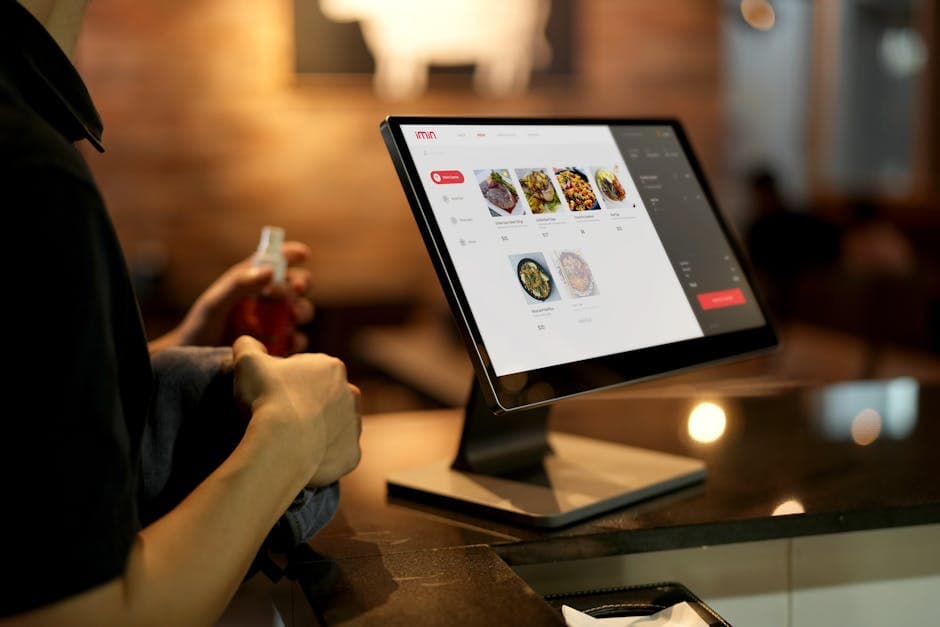
Zelty and digabloPos: introduction
You are kitting out a restaurant and the name Zelty keeps coming up. That figures: it is one of the most widely installed French tills in table service dining. The question everyone asks before signing never changes. What does it really cost, and is it worth that? This review puts the 2026 pricing of both products side by side, line by line, and ends with a verdict per restaurant profile.
Start with who is who. Zelty is a French POS built for restaurants, and for nothing else. It runs on iPad, iPhone, iPod and Apple Watch, and on nothing else either: no Android version, no Windows, no browser. Pricing is not public. Zelty quotes per project, based on the number of establishments, the features you keep and the hardware you ask for. The range usually observed on the market is €70 to €150/month excl. tax per point of sale. The vendor offers a free trial, a personalised demo for the Entreprise offer and, above all, a no commitment SaaS model you can cancel at any time. On a market where 12 or 36 month lock-ins are still common, that last point deserves credit.
digabloPos plays a different game. It is an NF525 certified till, and a more generalist one: it runs restaurants, but also shops and service businesses. Its forever free plan is unlimited and already covers orders, 1 employee, the floor plan and offline mode. Advanced features arrive as modules billed in USD: reports at $20/month, stock at $15/month, an extra employee at $5/month, reservations at $10/month, among others. The software is multi-platform (iPad, Android, Web, Windows) and also covers French-speaking Africa, with native FCFA multi-currency.
The dividing line is clean. Zelty is a specialist: kitchen, table service, delivery, every screen is drawn for a restaurant and nothing but. digabloPos is a generalist with a serious free plan and modules you switch on one at a time. Everything that follows turns on one question: how much restaurant specialisation do you genuinely need, and at what price are you willing to buy it?
Feature comparison: Zelty vs digabloPos
On paper the two tills do the same job: take the order, fire it to the kitchen, cash out, print the ticket. The profiles part company in the details, and some of those details weigh a lot at nine on a Saturday evening.
The free plan first, because it is the most visible gap. Zelty does not have one: after the trial you start on a quote, in the usual €70 to €150/month excl. tax band, per point of sale. digabloPos runs the opposite logic, with a forever free plan, no cap on orders, already including 1 employee, the floor plan and offline mode.
Hardware next. Zelty runs on the Apple ecosystem only: iPad, iPhone, iPod, Apple Watch. No Android, no Windows, no web version. If your dining room already runs on iPads, that costs you nothing. If you are starting from scratch, every additional till means another iPad to buy or lease, and that line rarely appears in the software quote. digabloPos takes whatever you have on hand: iPad, iPhone, an Android phone or tablet, a browser, a Windows PC.
On the floor plan, the advantage goes to Zelty, and it should be said without hedging. Fine table management, transfers from one table to another, split bills, merged bills: everything a full service demands on a Saturday night is there, and well executed. The digabloPos floor plan, included in the free plan, covers the ordinary needs of a dining room, but it does not reach that level of finesse on the awkward cases.
Delivery is the other place where Zelty pulls ahead. The Zelty Delivery module centralises external orders, terminals and platforms, and the vendor offers Click & Collect integrations. On the digabloPos side, QR ordering is included in the free plan for table ordering, Click & Collect exists as a $10/month option, but there is no native Deliveroo or Uber Eats integration for now. If the platforms carry a serious share of your revenue, keep this paragraph in mind, because it comes back in the verdict.
For the rest, the match runs point by point:
- Reservations: a module per configuration at Zelty; a $10/month option at digabloPos. - Stock and recipes: stock management is included in the base Zelty subscription, with recipes and technical sheets depending on the module. At digabloPos, stock is a $15/month module, with FIFO plus batch and expiry tracking inherited from the pharmacy build; recipes stay less refined than top-tier Zelty. - Offline mode: available at Zelty; native and well tested at digabloPos, with automatic sync when the connection comes back. - Multi-currency: single currency at Zelty; EUR, FCFA, USD and CHF handled natively at digabloPos. - Support: 24/7 online plus daytime phone at Zelty; in-app chat and email during business hours at digabloPos, with no hotline for now.
A word on commitment, because it matters on both sides. Zelty can be cancelled at any time, which stays rare among restaurant tills. digabloPos has no commitment either, and its base plan is free for life. Neither one locks you in, and that already puts both ahead of a good part of the market.
Price comparison: total 1-year cost
Since Zelty prices on quote, the estimates below sit on the typical €70 to €150/month excl. tax range observed on the market. Always ask for your own quote: depending on the modules and the hardware, your reality may land at the top of that band. Four concrete scenarios to get a feel for it.
Scenario 1: simple independent restaurant, 1 till, 3 employees - Zelty (low estimate): €70/month excl. tax → €840/year excl. tax. - digabloPos: free plan + 1 extra employee ($5/month) → $60/year (~€55/year). - digabloPos saves about €785/year.
Scenario 2: medium restaurant with stock, 2 tills, 5 employees - Zelty (mid estimate): €100/month excl. tax × 2 tills = €200/month → €2,400/year excl. tax. - digabloPos: 3 extra employees ($15/month) + stock module ($15/month) + reports module ($20/month) = $50/month → $600/year (~€550/year). - digabloPos saves about €1,850/year.
Scenario 3: high-end restaurant with Deliveroo / Uber Eats / Click & Collect delivery - Zelty (high estimate): €150/month excl. tax (+ Zelty Delivery) → €1,800-2,200/year excl. tax. - digabloPos: full modules (3 employees + reports + stock + reservations + Click & Collect) = $75/month → $900/year (~€825/year). No native Deliveroo/Uber Eats integration: you handle the platforms in their own apps, next to the till. - digabloPos saves about €1,000/year, but without native delivery integrations.
Scenario 4: group of 5 restaurants - Zelty: 5 × €100/month = €500/month excl. tax → €6,000/year excl. tax. - digabloPos with enterprise modules: ~€150/month → about €1,800/year. - digabloPos saves €4,200/year.
What do those four scenarios tell you? First, that the gap is never trivial: from €785 to €4,200 a year depending on the profile, enough to pay an extra hand through the high season or replace part of the kitchen kit. Second, that Zelty is not only selling software. Its price buys real restaurant specialisation and a 24/7 support line that earns its keep the night service falls apart at nine on a Saturday. For a high-end restaurant that needs the native delivery integrations, that premium can be defended. For an independent, a fast-casual, a group watching its fixed costs, or a restaurant already running its platforms in their own apps, it is far harder to defend.
One last item, usually forgotten: the scenarios above ignore hardware. Add the price of the iPads on the Zelty side, at roughly €500 to €800 per till, and the first-year gap widens again.
UX, support and ecosystem
A till is not judged on a demo, it is judged on a full service with a new waiter who started on Tuesday. On that test, the Zelty interface holds up: it has been polished for years on iPad, the floor plan reads at a glance, the kitchen tools were clearly designed by people who have watched a pass at full tilt. digabloPos offers a modern, uncluttered interface that behaves the same on a tablet, a phone, a browser or a Windows PC, but it stays a generalist tool: on the sharpest restaurant workflows, it is less finely tuned.
Support is where the price gap gets its clearest justification. Zelty runs 24/7 online support plus a daytime phone line, and a human voice at the other end matters when the card terminal stops talking to the till in the middle of service and nobody on the team is technical. digabloPos answers via in-app chat and email during business hours, and answers quickly, but there is no hotline for now. If that is a deal-breaker for you, say so before comparing prices, because it changes the conclusion on its own.
Hardware follows the same split. On iOS only, Zelty means buying or leasing iPads and iPhones, around €500 to €800 per till. digabloPos accepts a €200 to €400 Android tablet, or the phone already in your pocket. Over three tills that gap alone covers a good chunk of the annual subscription.
- Updates: regular releases at Zelty, focused on restaurants; monthly releases at digabloPos, spread across platforms and sectors. - Integrations: Zelty is very well connected to the restaurant ecosystem (Deliveroo, UberEats, JustEat, reservation platforms), and the Zelty Delivery module is its strong point. digabloPos connects to Stripe, SumUp, myPOS, QuickBooks, Xero and Zapier, with no native Deliveroo or UberEats integration. - International: Zelty is mainly France, with some users in Belgium and Switzerland. digabloPos covers France plus French-speaking Africa, with native FCFA and 6 languages. - Commitment: no commitment on either side. Zelty is cancellable at any time, a real commercial asset; digabloPos is free for life on the base plan.
Which to choose: recommendation by profile
No till is right for everyone. Find your line below, and take the verdict that goes with it.
A high-end traditional French restaurant with complex table service. Take Zelty. The restaurant specialisation has no equal here, and the 24/7 support holds up. Above roughly €500k of yearly revenue, the cost of the subscription is a rounding error next to a service that goes wrong.
A fast or fast-casual restaurant, or a café-restaurant. Take digabloPos. The free plan plus a couple of modules covers what you actually do all day, without paying the restaurant premium for table-service features you will never open.
A restaurant living off Deliveroo and UberEats. Take Zelty if platform orders pass 30% of your revenue. Native Zelty Delivery integration removes the retyping of orders and the mistakes that come with it, and buys back kitchen time every service. Below that share, handling the platforms in their own apps costs you a tablet on the shelf, not €1,000 a year.
You want to start free, or hold the cost line hard. Take digabloPos. Forever free plan, modules à la carte, and savings of €800 to €2,000 a year on most profiles.
A food truck or an itinerant restaurant. Take digabloPos. Solid native offline mode, multi-currency, free choice of hardware. Zelty works, but it is expensive for this profile and it forces an iPad on you.
You want a partner with a real phone line. Take Zelty. 24/7 support plus daytime phone. digabloPos has no hotline for now, and pretending otherwise would help nobody.
A restaurant group or a franchise. Take digabloPos: on 5 restaurants the saving is around €4,000 a year, unless you have a specific need for native delivery integrations, in which case Zelty earns its place.
You are in French-speaking Africa. Take digabloPos. Native FCFA multi-currency, offline mode, multilingual support. Zelty does not operate in Africa.
You want the most out of a free plan. Take digabloPos. Floor plan, offline mode, multi-currency and QR ordering are all in the free tier. At Zelty, free means the trial, and nothing else.
You want to stay out of the Apple ecosystem. Take digabloPos. Zelty means iPad and iPhone. digabloPos runs on Android, Web, Windows and iPad.
Three mistakes to avoid before you sign
Comparing subscriptions without counting the hardware. A quote at €70/month excl. tax looks reasonable until you add two iPads at €500 to €800 each to run the counter and the terrace. Compare the first-year total, hardware included, not the monthly line.
Paying for delivery integration you will not use. Native Zelty Delivery integration is genuinely useful, but only if the platforms carry a real share of your orders. If Deliveroo brings you six covers on a Friday, an iPad from the platform sitting next to the till costs nothing and does the same job.
Choosing on the demo instead of the service. Every till looks good with three products in the catalogue and one open table. Ask for a trial, load your real menu, and run a full Saturday evening on it. What you want to know is what happens when a table splits the bill six ways, when the kitchen printer goes offline, and when the internet drops at 8pm. Both vendors run without commitment, so you can test the real thing.
If your restaurant is a table-service house living off platform orders, Zelty is worth the money. In every other case, start on the digabloPos free plan, run a full month of real services, and only switch on the modules the day the missing feature actually costs you something.
Frequently asked questions
Does Zelty work on Android?
No, Zelty is strictly Apple (iPad, iPhone, iPod, Apple Watch). If you want to use Android, Web or Windows, it's not Zelty. digabloPos is multi-platform (iPad + iPhone + Android + Web + Windows).
How much does Zelty cost?
Zelty operates on quote, no public pricing. The typical observed range is €70 to €150/month excl. tax per point of sale. The quote depends on number of establishments, requested features and hardware. Free trial available and no commitment (cancellable any time).
Does Zelty natively integrate Deliveroo and UberEats?
Yes, Zelty offers the native Zelty Delivery module to manage external orders from platforms (Deliveroo, UberEats, JustEat) and terminals. A real strength for restaurants with high delivery volume. digabloPos doesn't have these native integrations.
Which is better for a restaurant?
Zelty for high-end restaurants with complex table service and high platform delivery volume. digabloPos for fast restaurants, food trucks, or those who handle delivery apps separately.
Which has better support?
Zelty has 24/7 online support + daytime phone, a real strength. digabloPos has in-app chat + email during business hours, no hotline for now. If 24/7 phone support is critical for you, choose Zelty.
Also on digabloPos
Sources and references
Try digabloPos free for your restaurant
Forever-free NF525-certified plan with floor plan, offline mode, multi-currency, QR ordering. Advanced modules to activate as needed. Multi-platform.
Try for free