Restaurant POS Software in Nigeria 2026 (Free)
Restaurant POS software in Nigeria for 2026: floor plan, QR ordering, kitchen tickets and ingredient stock, free and offline in naira on any Android phone.
Retail & restaurant tech, Lagos, Nigeria
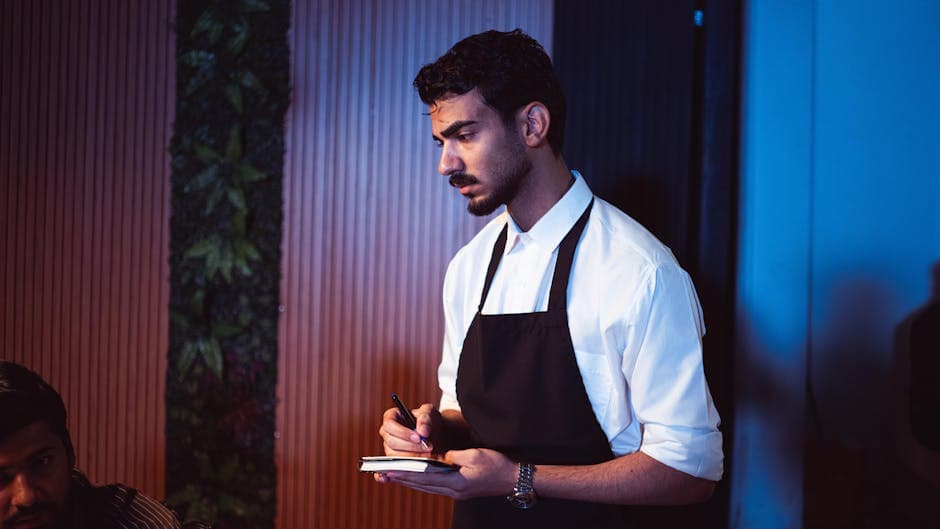
What a Nigerian restaurant needs from a POS
Half past twelve on a weekday, in a buka one street behind the banks of Lagos Island. The lunch crowd lands all at once: office workers with exactly forty minutes, a table of six sharing amala and ewedu, two drivers eating jollof standing up because every seat is taken. Orders fly across the room, the kitchen shouts back, and in the middle of it all a customer raises his phone to show that his transfer has gone through.
That hour is where the money is made, and it is exactly the hour a shop-style till falls apart. A boutique serves one customer at a time and the sale is over in a minute. A restaurant, bar or eatery in Lagos, Abuja or Port Harcourt lives on open tables: table 4 ordered twenty minutes ago and is still waiting, table 2 wants to add two bottles of Star to a bill that already exists, table 6 wants to split the total three ways and one of the three is paying by transfer. If your system cannot hold all of that at once, your waiters hold it in their heads, and heads drop things on a busy Friday night.
So the checklist for a restaurant POS in Nigeria is short but strict. It needs:
- a floor plan with orders attached to each table, so splitting a bill or moving a group to a bigger table takes seconds instead of an argument, - fast order taking with a clear path to the kitchen, so the amala lands on the table that ordered amala and not the one that asked for pounded yam, - ingredient stock, so you know by 6 p.m. that the goat meat will not survive the evening rush, - every payment Nigerians actually use: cash, bank transfer, OPay, PalmPay, card, - and it must keep serving when NEPA takes the light, running on the generator and no internet, with every price in naira.
One more thing the checklist hides: the till has to be usable by the waiter you hired last week. If taking an order needs three trainings, the system will be abandoned by the second Saturday and you will be back to shouting and paper. Whatever you choose, insist on watching a new person take a full order on it before you commit.
Capable Nigerian restaurant systems exist and deserve a mention: EPOS, Lumi, eRestaurant, and OyaSync at ₦29,999 per month. They do serious work. Most of them, however, charge monthly, and for a buka or a small bar that fee lands whether the month was good or not. There is a free way to cover the core, and that is what the rest of this guide walks through.
QR ordering: faster tables, fewer staff
One feature changes the economics of a Nigerian restaurant more than any other, and it is not in the kitchen. It is QR ordering. You print a code, stick it on the table, and the customer scans it with their own phone: the menu opens, they pick their food, and the order lands directly in your till and your kitchen view. Nobody walked to the table to write it down.
Think about what a waiter actually does during the rush. He walks to table 5, waits while the group decides, writes, walks to the kitchen, comes back because table 5 forgot the drinks, walks again. Multiply that by fifteen tables and you understand why a full bar needs a small army on a Friday night. With QR ordering the customer does the first half of that work themselves, from their seat, at their own pace. Your team concentrates on carrying food and clearing tables, and the same three people serve a floor that used to need five.
The order errors go with it. A shouted order in a loud bar becomes two Gulder instead of two Star, and the argument that follows costs more than the beer. An order typed by the customer on their own phone is the order they wanted. It arrives in the kitchen view spelled out, table number attached.
There is a quieter benefit that matters a lot in Nigeria right now: the menu on the phone is always the current one. When tomato and pepper prices jump and your jollof has to follow, you change the price once in the till and every table sees the new price instantly. No reprinting, no laminated menu with three corrections in biro, no customer pointing at an old price and holding you to it.
digabloPos includes QR ordering in its free core. Guests order from their phones, the order flows into the floor plan and the kitchen view like any other, and you still take payment your usual way at the end: cash, transfer, OPay, PalmPay, or card via Stripe where available. For a lounge in Lekki or a bar in Wuse it removes the bottleneck at the counter. For a lunch buka with a serving line it is less central, and that is fine: turn it on for the tables at the back and let the line keep moving.
digabloPos for restaurants: free, offline, naira
digabloPos gives a Nigerian restaurant a complete front-of-house at no monthly cost, on the Android phone or tablet you already own. The free core covers:
- Floor plan: lay out your room, attach orders to tables, split a bill three ways, merge two tables when a birthday party grows, transfer a group without losing their order. - QR ordering, as above, so guests order from their own phones. - Ingredient stock with low-stock alerts, so the kitchen tells you at 5 p.m. that the stockfish is finishing, not at 9 p.m. when a customer has already ordered it. - Multiple staff with PIN logins: every order, discount and cancellation is tied to a person, and each server has their own report at the end of the night. When the count is short, you check the history instead of suspecting everyone. - Every payment method recorded in its own lane: cash, bank transfer, OPay, PalmPay, card.
That last point deserves a pause, because in Nigeria the payment mix is a job in itself. Since cash became scarce, a large share of restaurant bills settle by bank transfer, with the customer turning their screen to show the debit alert. Everyone in Lagos knows the risk: a screenshot is not money, and fake alert apps exist. The discipline that protects you has two parts. First, confirm the credit on your own phone or soundbox before the guest leaves, never on theirs. Second, record the payment in the till as a transfer, not as cash. In the evening you compare what the bank app and the OPay and PalmPay wallets say against what the till says, channel by channel, and a missing transfer shows up the same night instead of hiding inside a fat cash total.
Underneath everything, digabloPos works fully offline. NEPA takes the light, the router dies, the gen takes a minute to start: the till keeps taking orders on the phone battery and syncs by itself when the network returns. Nothing is lost and nobody stands at the counter waiting for the internet to come back.
Prices, receipts and reports are in naira, and the app runs on any ordinary Android. The Tecno or Infinix already in your pocket can run the whole restaurant.
Put side by side with a paid suite at ₦29,999 per month, the free core covers the essentials that fee normally buys: tables, kitchen, stock, staff, payments. Optional paid modules exist for the day you grow into them, advanced reports or reservations for example, and you add them one by one, only when a real need shows up. Not before.
Getting started, and a note on compliance
Setting up takes an afternoon, not a project. Download digabloPos on your Android, then build your menu: the swallows and the soups, the rice dishes, the proteins by portion, the drinks with their pack sizes. Give each dish a price in naira. Lay out your floor plan so the screen matches your room, turn on QR ordering, tick the payment methods you accept, and you can serve tonight.
Two pieces of hardware are worth adding early. A Bluetooth thermal printer turns orders into kitchen tickets, closes the argument about who ordered what, and prints the customer receipt. If your kitchen separates the grill from the bar, a second printer splits the tickets by station. Both cost a fraction of a single month of a paid restaurant suite.
Train the team on one quiet afternoon. Give each waiter their PIN, have them take three practice orders end to end, and set the strictest rule from day one: a transfer counts as paid only when the alert lands on your phone, not on the customer’s.
A note on compliance, in plain terms. If your restaurant is registered for VAT, FIRS e-invoicing applies in 2026: the tax authority wants invoices reported through its electronic channel. This is not something to panic about, and it is not something a till solves on its own. What digabloPos does is keep every sale recorded, timed and organized, so the numbers you report are the numbers that actually happened. The cleared invoice itself goes through the FIRS channel; our FIRS guide linked below walks through who exactly is concerned and how it works.
What a restaurant POS really costs in Nigeria
The sticker price is the easy part. OyaSync publishes ₦29,999 per month; other Nigerian suites sit in the same neighbourhood or negotiate per site. Over a year that is around ₦360,000 before you have sold a single plate, and subscriptions have a way of falling due in the same week as the diesel and the rent.
Whether that fee makes sense depends entirely on your size. For a chain of lounges across three locations, a paid suite with a dedicated account manager can earn its keep. For a lunch buka, a bar with twelve tables or a young restaurant still finding its crowd, our honest opinion is that a monthly software fee is the wrong place for your first money. The same amount pays for fuel, a freezer, or the deposit on a bigger space.
The real cost of putting your restaurant on a till breaks down like this:
- Software: zero, if you start with a free core like digabloPos. Optional modules are priced per feature, and you can live without all of them on day one. - Hardware you already own: the Android phone in your pocket. A dedicated tablet is more comfortable at the counter, but it is not required to start. - A thermal printer for kitchen tickets and receipts, a one-time purchase that costs less than a single month of the subscriptions above. - Power, the cost every Lagos business already carries. The till adds nothing to it: a phone runs for hours on its battery, which is precisely why a phone-based till survives NEPA better than a plugged-in terminal ever will.
Watch out for one trap: hardware lock-in. Some providers bundle their own proprietary terminal and charge for it monthly. You end up renting a device that does less than the phone you own, and if you ever leave the provider, the terminal becomes a paperweight. Keep the hardware yours and generic, an Android plus a standard Bluetooth printer, both usable with whatever software you choose next.
Counted that way, a small restaurant gets tables, kitchen, stock and payments running for the price of a printer. The subscription can wait until the day your volume genuinely demands features the free core does not have, and that day announces itself. You do not have to guess it.
The mistakes that empty a restaurant’s till
After the features, the failures. The same handful of mistakes shows up in almost every restaurant that struggles with its numbers, and none of them is about the cooking.
The first is treating the customer’s screen as proof of payment. Fake debit alerts are an industry of their own in Nigeria, and the busiest hour is exactly when one slips through. The rule costs nothing: the guest has paid when the credit shows on your phone or your wallet soundbox, not before. Your staff must also know you will stand behind them when they politely insist on it.
The second is mixing all payments into one pile. If transfers, OPay, PalmPay and cash all land in the till as simply paid, the evening count can never be checked against anything. Record each method separately and the day reconciles itself in ten minutes.
The third is a till that needs the internet. Data networks in Lagos wobble, and NEPA does what NEPA does. A cloud-only system freezes at the exact moment the room is full. Ask the vendor one question before you commit: if the internet disappears for two days, what do I lose? The only acceptable answer is nothing.
The fourth is running the kitchen without stock numbers. Meat and fish walk out of untracked kitchens, portions drift, and you discover the loss at the end of the month as a vague feeling that the profit should have been bigger. Ingredient stock with alerts turns that feeling into a line you can act on.
The fifth is one shared login for the whole team. When every waiter uses the same account, a missing ₦20,000 has ten suspects and no evidence. A PIN per person, and permissions that reserve cancellations and discounts for the manager, protect your money and your honest staff at the same time.
The last one is skipping training. A till nobody mastered gives wrong numbers, and wrong numbers are worse than none, because you trust them. One quiet afternoon of practice before the Friday rush is the cheapest insurance you will buy this year.
Frequently asked questions
Is there free restaurant POS software in Nigeria?
Yes. digabloPos gives restaurants a free floor plan, QR ordering, ingredient stock, and multi-staff logins, in naira, offline through NEPA outages, with no monthly fee.
Does it support QR ordering?
Yes. Customers scan a QR code at the table and order from their phones; the order flows into the till and kitchen view, speeding up service.
Does the floor plan cost extra?
No. The floor plan with table-by-table orders, splits, and transfers is included in the free plan.
Also on digabloPos
Sources and references
Run your restaurant on a free till
Floor plan, QR ordering, kitchen tickets and ingredient stock, free and offline through NEPA outages, in naira. digabloPos sets up in minutes on any Android.
Try for free