Bar & Lounge POS Software in Nigeria 2026 (Free)
Bar and lounge POS software in Nigeria for 2026: open tabs, VIP bottle service, drink stock control that stops leakage. Free, offline, in naira, on any Android.
Retail & restaurant tech, Lagos, Nigeria
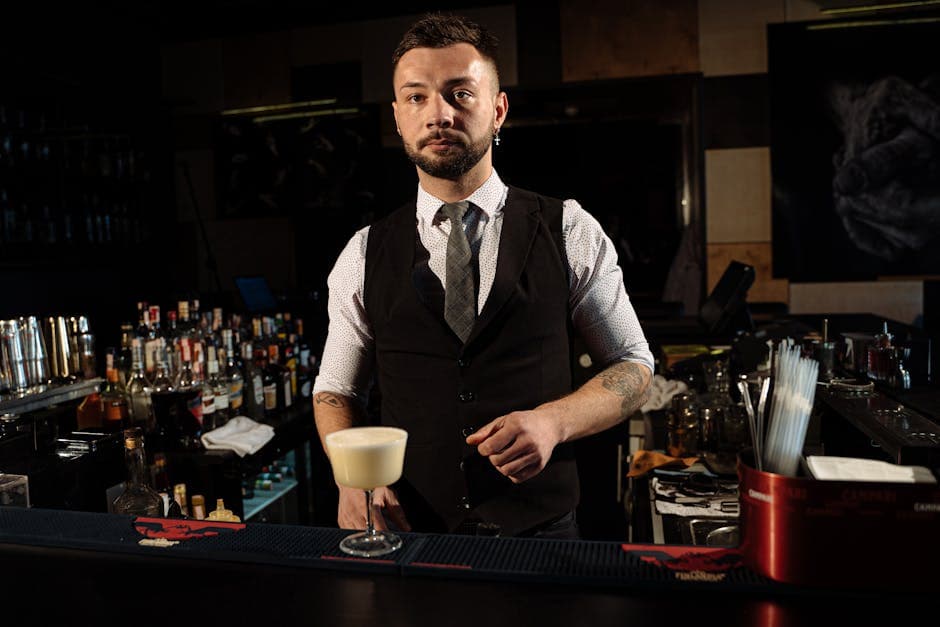
What a Nigerian bar or lounge needs from a POS
Friday night in a lounge off Admiralty Way in Lekki. Every booth is taken, the DJ has just switched sets, and a waitress is walking a bottle parade, sparklers and all, to a VIP table that booked with a minimum spend. At the same moment three other tables want rounds added to their tabs, a group at the bar is arguing over how to split a bill, the hookah attendant needs to bill two coal changes, and somebody’s transfer is "on the way". Then the lights blink as the gen takes over from NEPA.
That is the environment a bar POS has to survive. Not a quiet shop with one customer at a time: a dark, loud room where money moves fast, everyone is in a hurry, and mistakes vanish into the noise until you count the bottles on Sunday.
The pressure looks different from place to place. On Victoria Island the game is bottle service and table minimums. In a beer parlour in Surulere or a pub in Port Harcourt it is crates of beer and pepper soup, with tabs kept in someone’s head. In Abuja’s Wuse 2 it is a mix of both. The needs underneath do not change: open tabs you can keep adding to all night and settle at the end, table service that lands each order on the right booth, drink stock control down to the bottle and the crate, staff accountability that ties every pour to a name, fast payment in naira across cash, transfers and wallets, and a till that keeps working offline when the power or the network drops mid-rush.
A generic retail till does not survive this room either. Software built for a boutique assumes one customer, one basket, one payment, done. A bar needs the opposite: an order that stays open for hours, grows round by round, splits at the end between three friends and two payment methods, and never blocks the queue while it does. That single difference, the open tab, is why bars need bar software rather than a shop app with a drinks menu.
Most bar and hospitality systems charge a monthly subscription for all of this. The rest of this guide walks through the free route, and through the habits that make the software actually pay off.
Open tabs and drink stock that stops leakage
Ask any experienced bar owner in Lagos where the profit goes and you will hear one word: leakage. It rarely walks out the front door. It leaks out behind the bar, a little every night. The barman pours generous shots for his friends. A waitress takes payment in cash and the order never enters the book. Two bottles of cognac leave the shelf but only one appears in the sales. None of it looks dramatic on a Friday. Added up over a month, it is often the difference between a bar that makes money and one that mysteriously does not.
Two disciplines protect the margin: controlling tabs and controlling stock. Both live in the till.
Tabs first. A tab kept in a waitress’s head, or on a slip of paper behind the counter, dies around 1 a.m. The customer who swears he only had four drinks. The round added to the wrong table. The group that melts into the night with the bill unsettled. With digabloPos, you open a tab per table or per customer, every round is added the moment it is served, and the bill is settled at the end, itemized. Nothing forgotten, nothing quietly given away, no argument at closing, because the tab shows what landed on the table and when.
Stock is the other half. Every drink sold decrements your inventory in real time, bottle by bottle and crate by crate. That gives you two weapons. Low-stock alerts tell you on Wednesday that the champagne or the crates of Star will not survive Friday, so you reorder before you run dry on your busiest night. And the sales-versus-stock comparison shows you the moment the two stop matching, which is the classic signature of over-pouring or shrinkage: the shelf says twelve bottles went out, the till says nine were paid for. Now you have a number and a date instead of a suspicion.
Bottle service actually makes control easier at the VIP end: a bottle is sold whole, so it is easy to count. The leakage hides in the cocktails, the shots and the mixers, and at the hookah station, where coals and flavours disappear without a trace unless they are billed like everything else. Put them in the till as products. If a coal change is free, ring it at zero; at least it is counted.
Finally, every sale is tied to the staff member who rang it, through their own PIN. On a packed night, that single fact changes behaviour more than any camera.
digabloPos for bars and lounges: free, offline, naira
digabloPos gives a Nigerian bar or lounge a full service till at no monthly cost. The core is free for life, not a trial: unlimited sales, unlimited products, receipts, reports, offline mode. You pay nothing to start and nothing per month unless you later choose an optional add-on.
What that core covers, in bar terms:
- Floor plan and open tabs. Lay out your booths, tables and bar seats, open a tab on each, add rounds all night, split a bill between friends or transfer it when a group moves from the bar to a table. - Drink stock with low-stock alerts on bottles and crates, so Friday never starts with a hole on the shelf. - Staff PIN logins with per-server sales reports. You see who sold what, who gave discounts, who cancelled orders, name by name. - QR ordering for the nights when the floor is too full to reach every table: guests scan a code and order from their phones, and the order lands on your till. - Cash, transfer, OPay and card, each recorded as its own payment method, in naira, so the evening report reconciles channel by channel. - Fully offline. Sales carry on through a NEPA outage or a dead router and sync on their own when the connection returns.
It runs on any Android phone or tablet, including the one already in your pocket. There is no proprietary terminal to buy and no hardware bundle.
The evening ends with a closing report: sales by product, by server and by payment method, plus what should be in the drawer. Count the cash against it and a shortage shows up the same night, with a name and a shift attached, not at the end of the month as a vague bad feeling.
Paid modules exist for needs that come with scale, and you switch one on only when the bar grows into it. Plenty of venues never activate any. The point is that the till, the tabs, the stock and the staff accountability, the things that stop leakage, all sit in the free part.
Getting started
Setup takes minutes, not a consultant. Download digabloPos on an Android phone or tablet, add your drinks and prices (beers by bottle and by crate, spirits by bottle and by shot if you sell both, cocktails, hookah flavours and coals), lay out your tables and booths, set the naira and your payment methods, and open your first tab. A Bluetooth thermal printer for receipts pairs in minutes and costs around ₦25,000 at Computer Village or online.
Name your tables the way your floor actually works: VIP 1 to VIP 6, bar seats, the terrace, the smoking section. Give each waitress her own PIN before the first shift, and spend twenty minutes on a quiet evening letting the team open, add to and settle a few practice tabs. A bar POS fails when the staff route around it, and staff route around what they have not been shown. Twenty minutes of practice on a Tuesday saves an hour of chaos on Friday.
Two habits are worth installing from the first night.
First, confirm every transfer on your own alert, never from the customer’s screenshot. Fake transfer receipts are an everyday scam in nightlife, and 1 a.m. at a loud counter is exactly when they work. The till records the sale; your bank app confirms the money.
Second, ring everything, including what you give away. The birthday shot, the manager’s gesture for a regular, the free coal change: enter them at zero. Comps are part of running a lounge, but uncounted comps are indistinguishable from theft, and they poison your stock numbers.
A note for VAT-registered venues: FIRS e-invoicing applies in 2026, rolling out from larger taxpayers. digabloPos keeps your sales organized and your records clean, while the cleared or reported invoice goes through the FIRS channel (see our FIRS guide). Clean daily records are also what turn the 7.5% VAT return into an evening’s work instead of a week of archaeology.
What does bar POS software cost in Nigeria?
Hospitality POS subscriptions in Nigeria commonly run ₦15,000 to ₦50,000 per month depending on features, before hardware. OyaSync, a popular Lagos hospitality system, starts at ₦29,999 per month. Over a year that is ₦180,000 to ₦600,000, paid whether the month was good or the gen swallowed the margin.
For a high-volume Island lounge with a full floor every weekend, a subscription can be argued: spread across thousands of orders, it is small. For a neighbourhood bar, a beer parlour or a lounge still building its crowd, it makes no sense. You would be working the first weekend of every month for your software vendor.
The free route flips the equation. With digabloPos the core till costs nothing, forever, and the money you do spend goes into things that earn: the Android tablet (or nothing, if you use a phone you already own), the ₦25,000 printer, maybe a second phone for the floor. In practice a lounge can equip a till, a printer and QR codes on the tables for less than one month of a mid-range subscription. Optional modules are priced individually and can be cancelled anytime, so the software bill grows only if the bar does, and only if you choose it.
One more line to watch when comparing offers: terminals that take a percentage of every transaction. A "cheap" system that clips every card payment costs more than its subscription suggests. Read the pricing page to the end.
Mistakes that drain a bar’s profit
Software alone does not stop leakage. Habits do, and these are the mistakes that undo them.
Verbal tabs. If a tab exists only in someone’s memory, part of it will not survive the night. Every tab in the till, every round rung when it is served, no exceptions for regulars. Especially not for regulars.
No bottle count. The till tells you what was sold; only a physical count tells you what left the shelf. A weekly count of spirits and a crate count of beer takes an hour on a quiet afternoon. Compare it to sales and the gap, if there is one, has a size and a week attached. Bars that count rarely find much, and that is exactly the point: the count is what keeps the numbers honest.
One shared login. If every waitress rings sales under the same profile, per-server reports mean nothing and accountability evaporates. PINs cost nothing. Use them. Give the manager and the owner their own profiles too: permissions decide who can cancel an order or give a discount, and cancellations are where the creative leakage likes to live.
Mixed payment channels. Cash, transfers, OPay and card, each in its own lane, reconciled at closing against your own alerts. A transfer that never landed should be discovered the same night, not at the end of the month.
Untracked hookah and comps. Coals, flavours, birthday shots, the manager’s gestures: if it leaves the stock, it goes through the till, even at zero naira.
Skipping the closing report. Five minutes at the end of the night: compare the drawer to the report, channel by channel, while the shift is still in the room. A gap caught the same evening is settled in five minutes; the same gap discovered three weeks later has become a story with no culprit.
None of this takes technology beyond a free app and a phone. It takes one decision: everything gets counted. Set the till up this week, run it alongside your current system through one Friday, and compare Sunday’s numbers. The difference usually settles the argument.
Frequently asked questions
Is there free bar POS software in Nigeria?
Yes. digabloPos gives bars and lounges a free POS with open tabs, table service, drink stock control, and staff PIN logins, in naira, offline through NEPA outages.
Can it manage open tabs?
Yes. You open a tab per table or customer, keep adding rounds, and settle at the end, so nothing is forgotten or given away.
Does it track drink stock?
Yes. Every drink sold decrements stock in real time, with low-stock alerts on bottles and crates, helping you spot over-pouring or shrinkage.
Also on digabloPos
Sources and references
Run your bar on a free till
Open tabs, table service, drink stock control that stops leakage: free, offline through NEPA outages, in naira. Set up digabloPos in minutes on any Android.
Try for free