Pharmacy Software in Kenya 2026: Free, M-Pesa, Offline
Pharmacy software in Kenya for 2026: batch and expiry tracking, barcode scanning and M-Pesa in shillings, free and fully offline on any Android phone.
Retail & POS specialist, Nairobi, Kenya
Why a Kenyan chemist needs more than a generic till
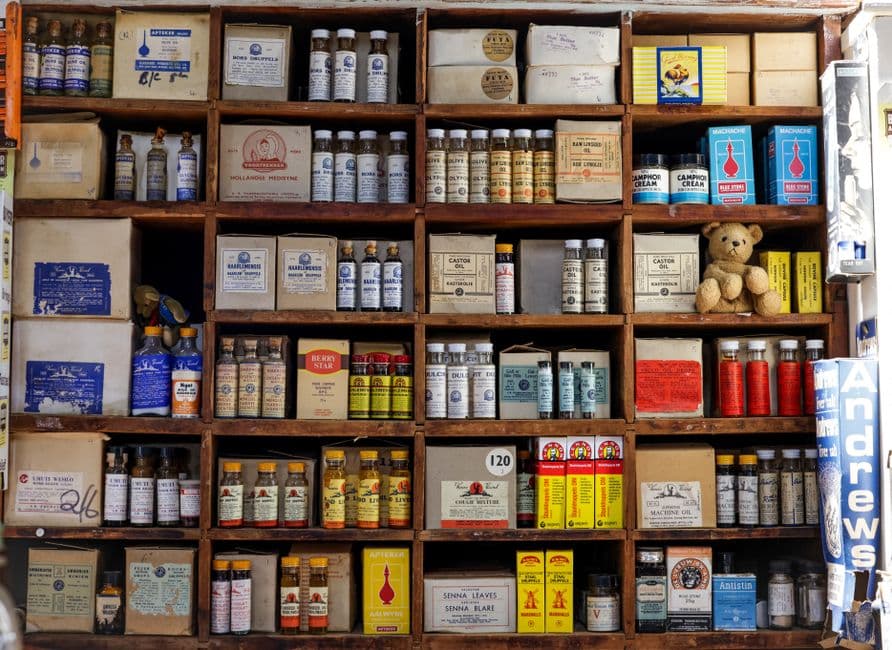
Saturday evening in a chemist off Jogoo Road, and the queue reaches the door. One customer holds a prescription from the clinic nearby. The next wants something for a child’s fever and trusts you, not a doctor, to say what. A third has already typed your till number into her phone and waits for you to confirm the M-Pesa message before she lets go of the box. Behind the counter sit thousands of drug lines: three dosages of the same molecule, brand next to generic, several batches of the same amoxicillin with different expiry dates.
A general shop till was never built for any of that. It adds up a sale, prints a receipt, and stops there. But a pharmacy is not an ordinary duka. Every box on your shelf carries obligations the till knows nothing about: which batch it came from, when it expires, and how quickly you could pull it and trace it if the Pharmacy and Poisons Board (PPB) announced a recall tomorrow morning. A recall handled with a notebook takes days you do not have. Handled with proper records, it takes minutes.
The gaps of a generic till are not abstract. They are the carton of expired syrup you find at the back of the store, bought with money you will never see again. They are the evening totals that never quite match the drawer plus the M-Pesa statement, without anyone being able to say why. They are the customer who leaves for the chemist across the road because finding out whether you still stock her insulin took too long.
The picture is the same in Nairobi, Mombasa, Eldoret or Kisumu: a chemist lives on volume, on trust, and on stock that must never be expired and never quite run out. And nearly every sale touches M-Pesa. So the software question is really two questions in one. Can it handle the clinical side: batches, expiries, recalls, substitutions? And can it handle the Kenyan side: shillings, M-Pesa and a network that comes and goes, on the phone or the counter PC you already own? This guide walks through both, and ends with the mistakes to avoid and a checklist to take into any demo.
Batch and expiry tracking that protects margin and patients
Expired stock is money you have already paid the distributor, sitting on a shelf until the day you throw it away. Across thousands of lines, no human memory catches it in time. The pharmacies that keep the loss small all do the same thing: they record the batch number and expiry date once, at delivery, and then let the software watch the calendar for them.
digabloPos tracks batches and expiry dates natively and applies FEFO: first expired, first out. When a product exists in several batches, the till sells from the batch that expires soonest, automatically, without the attendant even thinking about it. You set alert thresholds that match how your shelf moves, say 90 days for slow movers and 30 for fast movers, and the app flags products while there is still time to do something useful: push them at the counter, return them to the supplier, or at worst take them off the shelf before an inspector or a patient finds them first.
That last point deserves a plain sentence. Dispensing an expired drug is not a stock problem, it is a patient problem, and it is exactly what a PPB inspection is designed to catch. A chemist that can print a clean batch history walks into that conversation calm. A chemist reconstructing dates from cartons does not.
And because this is Kenya, the whole thing works fully offline. When the network drops, or the bundle runs out mid-afternoon, dispensing continues exactly as before: sales are recorded on the device, stock counts down, and everything syncs on its own when the connection returns. A queue at the counter should never wait for Safaricom.
Scan a box and identify the drug automatically
Most pharmacy software makes you type in every drug by hand first, and only recognises the barcodes you entered yourself. That is weeks of data entry before the system is useful. digabloPos ships with a built-in medication catalogue of more than 370,000 references: scan the barcode on a pack, including the 2D Data Matrix printed on many medicine boxes, and the product is identified automatically. The name fills in by itself, and for lot-managed products the scan also reads the batch number and expiry date straight from the code. Receiving a delivery becomes scan, confirm, done, instead of an evening of typing.
The catalogue draws on official public databases, including the dm+d of the UK NHS, which matters in Kenya because a large share of the medicines on your shelf are imported from the UK, plus American and French sources. A pack that came through a Mombasa importer from a British wholesaler is very likely already in the catalogue before you ever scan it.
Not everything is covered, and it would be dishonest to pretend otherwise. India-sourced generics, which fill a good part of Kenyan shelves, are often absent from those databases. Here the catalogue grows the practical way: the first pharmacy that creates the product enriches a shared, anonymised catalogue, so the next chemist who scans the same box, in Nakuru or in Thika, gets it recognised automatically. Nobody sees your prices or your stock; only the product identity is shared. The more Kenyan pharmacies scan, the less typing is left for everyone.
There is a quieter benefit too. Boxes look alike, and a tired attendant at 8 pm picks the wrong dosage more easily than anyone admits. A scan does not get tired: the product on the receipt is the product that left the shelf.
Offer the same-molecule generic when a drug is out of stock
A customer hands over a prescription, or names the brand she always buys, and you are out of it. In most shops that is a lost sale and a small dent in trust. In a chemist running digabloPos, the till instantly shows the products in your own stock that share the same molecule, the active ingredient, what pharmacists call the INN. The branded amoxicillin is finished, but two generics with the same molecule and dosage are sitting on the shelf: they appear on screen, you explain the options, tap one, and it goes into the cart in place of the missing brand.
This works offline too, because the molecule is attached to each product the moment it is recognised in the catalogue; the till does not need to ask the internet anything at the moment of sale.
Two honest limits. First, the suggestion is only as good as your stock records, one more reason the batch discipline described above pays for itself. Second, the software proposes and the pharmacist decides. Substitution is a professional judgement, sometimes a conversation with the prescriber, and digabloPos leaves that judgement where it belongs: with you. What it removes is the part that wasted time, digging through shelves from memory while the queue grows, and the sales that walked out of the shop simply because nobody remembered the generic was there.
digabloPos for pharmacies: free, M-Pesa, offline
digabloPos gives a Kenyan chemist the essentials at no monthly cost:
- Batch and expiry tracking with FEFO and automatic alerts. - Barcode scanning with automatic product identification from the built-in catalogue. - Real-time inventory with low-stock alerts, so essential medicines never quietly run out. - Customer records for repeat patients and for credit. - M-Pesa and cash recorded separately, full offline operation, prices in shillings (KSh), on any Android.
A few of those lines carry more weight than they look. Recording M-Pesa and cash as separate lines means the evening reconciliation is finally short: the app tells you what should be in the drawer and what should be on the M-Pesa statement, you compare each to reality, and a gap shows up the same evening, on the right channel, instead of hiding inside one big total for a month.
Customer records matter more in a pharmacy than in almost any other shop. The hypertension patient who comes every month, the mother whose children you have served for years, the regulars who take goods on credit until end month: a dated record of who bought what, and who owes what, replaces the exercise book that only one person can read.
Kenya does have capable local pharmacy systems, phAMACore, PharmaSync, Sazara and others, and some run deep features for hospital pharmacies and chains. Most are paid or freemium. The honest comparison is this: if you are a chain with an IT budget, evaluate them. If you are one or two counters trying to stop losing money to expiries and untracked stock, digabloPos covers that core workflow for free, and you can judge it on your own shelf without signing anything.
Cost, KRA eTIMS and getting started
Most dedicated pharmacy systems in Kenya are paid, some per month, some per branch, and the yearly total becomes serious money for an independent chemist. digabloPos takes the opposite path: the core is free for life, and optional paid modules exist only for needs that come with growth. You are not asked to finance features you will never open.
On hardware, spend nothing at first. The Android in your pocket runs the till, and a basic Bluetooth thermal printer costs a few thousand shillings, once, the day printed receipts start to matter to your customers.
Getting started is an evening of work, not a project:
1. Download digabloPos on the Android phone or tablet you already have. 2. Add your fast movers first, with batches, expiry dates and barcodes, scanning as you go; the rest of the shelf can follow week by week. 3. Set the currency to shillings and add M-Pesa as a payment method next to cash. 4. Dispense. Add a barcode scanner and a thermal printer when the volume justifies them, not before.
One compliance note, because the question always comes up: KRA eTIMS is mandatory for VAT-registered businesses. digabloPos keeps your sales and stock organised and exportable, while the eTIMS invoice itself goes through the KRA channel. In practice, a clean and complete sales record makes the eTIMS side straightforward; the chemists who struggle are the ones reconstructing figures at the deadline. If you are not VAT-registered, nothing changes for you today, but the same clean records will make the transition painless the day your turnover takes you there.
The mistakes that cost a chemist money
The first mistake is buying a till with no batch tracking. It disqualifies the product on its own, whatever else it does, because in a pharmacy the till is first a safety tool and only second a calculator. A surprising number of chemists run on general retail software and discover the gap at the first big expiry write-off.
The second is choosing software that dies without internet. The demo happens in an office with good Wi-Fi; your counter lives with a bundle that runs out and a network that dips at the worst hour. Ask the vendor one blunt question: if the connection is gone for two days, what do I lose? The only acceptable answer is nothing.
The third is one big evening total that mixes M-Pesa and cash. That total can look right while one channel leaks. Separate lines per payment method, reconciled against the drawer and the statement each evening, is what actually catches a problem while it is still small.
The fourth is never counting. Software gives you a theoretical stock; only a physical count tells you whether reality agrees. A rotating count, one shelf a week, takes twenty minutes and finds the leaks, the short deliveries and the forgotten cartons long before an annual stock-take would.
The last is paying monthly from day one for modules nobody opens. Start free, prove the need, then pay for exactly the module that answers it. Software subscriptions behave like slow-moving stock: small amounts, quietly leaving, every single month.
The checklist before you commit
Take this list into any demo, in this order:
1. Batches and expiries recorded at delivery, FEFO at the counter, alerts before the date. 2. Full offline operation, with automatic sync and zero data loss. 3. M-Pesa and cash as separate lines, not one merged total. 4. Scanning identifies the product, 2D Data Matrix included, with batch and expiry. 5. Same-molecule alternatives shown from your own stock when a brand is out. 6. Shillings on any Android, no proprietary terminal, no hardware subscription. 7. Free to start, with written pricing for anything beyond the core.
Seven yeses and you can commit with a clear head. A no on points 1 or 2 ends the conversation, whatever the discount: a pharmacy till that ignores batches or stops with the network is a general shop till wearing a lab coat.
The cheapest way to run the test is on your own counter. digabloPos is free to install, works in shillings with M-Pesa from the first sale, and keeps dispensing when the network does not. Load your fifty fastest movers this evening and judge it on a real Saturday, not on a salesman’s laptop.
Frequently asked questions
Is there free pharmacy software in Kenya?
Yes. digabloPos covers the core pharmacy workflow, batch and expiry tracking, barcode scanning with automatic product identification, real-time stock and customer records, for free, in shillings and offline.
Does the pharmacy software record M-Pesa?
Yes. digabloPos records M-Pesa and cash, works fully offline, and prices in shillings on any Android. KRA eTIMS invoices go through the KRA channel while digabloPos keeps your sales and stock organised.
Can I scan a medicine box to identify it automatically?
Yes. digabloPos ships with a built-in catalogue of 370,000+ references (including the UK NHS dm+d). Scanning the barcode or Data Matrix fills in the product name, batch number and expiry date, no manual entry.
Also on digabloPos
Run your chemist on a free, M-Pesa-ready till
Batch and expiry tracking, barcode scanning and same-molecule alternatives, free and offline, in shillings with M-Pesa. Set up digabloPos on any Android in minutes.
Try for free