Moniepoint Alternative 2026: Free POS for Your Shop
Moniepoint alternative in 2026: keep your terminal for payments and run the shop on a free till. Sales, stock and daily reports, offline in naira, on Android.
Retail & restaurant tech, Lagos, Nigeria
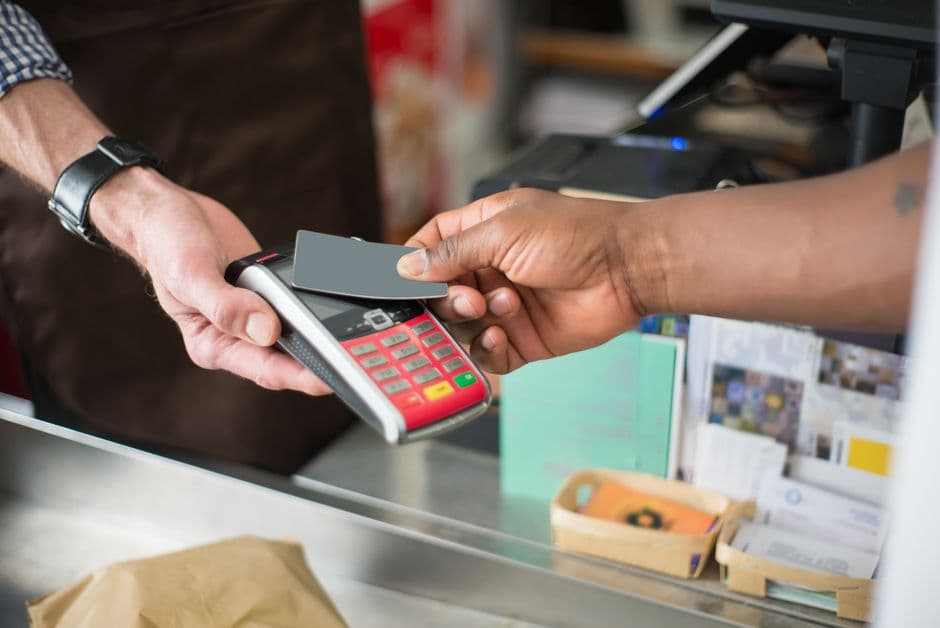
Moniepoint and digabloPos do two different jobs
In Nigeria, the word "POS" means two different things at once, and that is exactly where the confusion starts. On the street, a POS is the agent under a parasol doing cash-in and cash-out on a terminal. Behind a shop counter, a POS is the system that rings up sales and watches the stock. Moniepoint owns the first meaning almost everywhere you look, from Yaba to Balogun market. digabloPos does the second. Put side by side, they are not two rivals fighting for one spot on your counter; they are two tools that happen to share a name.
Moniepoint is a banking and payments company, and one of the biggest names in Nigerian fintech. It provides business accounts, agent banking terminals (the machines handling cash-in and cash-out on practically every busy street), card and transfer acceptance, and lending. The terminals are everywhere for a reason: they move money reliably, settlement is fast, and the agent network reaches streets where no bank branch ever opened. If your goal is to take payments, or to build an agent banking business, Moniepoint was made for exactly that, and it does the job well.
digabloPos is a free retail point of sale app. It is the software that runs the shop itself: ringing up each sale, tracking what leaves the shelf, giving every staff member a personal PIN, and producing the report you read before you lock up at night. It is not a bank. It holds none of your money, issues no terminal, and will never lend you working capital. It is the till and inventory layer for a business that sells goods.
One quick test makes the difference plain. Ask your Moniepoint terminal how much money came in today, and it answers to the kobo. Ask it how many sachets of milk you sold, which sales girl gave a discount this afternoon, or whether you are about to run out of rice before the weekend, and it has nothing to say. That is not a flaw in the terminal. It was never designed to know those things.
So the honest question is not "which is better". It is "which job do you need done?" A kiosk running on a notebook can get away with the terminal alone for a while. Most Nigerian shops, once they pass a certain size, quietly need both.
If you run a shop (not an agent), here is what you actually need
A retailer, whether that is a provision store in Surulere, a supermarket in Lekki, a pharmacy, a boutique or a buka, needs a till that does five things without drama:
- rings up sales fast and prints or shares a receipt, - tracks stock and warns you before the fast movers run out, - records every payment method you accept: cash, bank transfer, OPay, PalmPay, and yes, Moniepoint, - produces a daily report that actually reconciles with the drawer and the terminal, and - keeps working offline when NEPA takes the light and the router goes dark with it.
The offline point is not a luxury. Customers do not stop buying because the network did, and a till that needs internet to record a sale will fail you on the exact evening the shop is full. Whatever you end up choosing, test it with the WiFi switched off before you trust it with a Saturday.
The daily report deserves a longer look, because it is where most shops lose money without noticing. Many owners close the day with three numbers that refuse to agree: what the notebook says, what the terminal statement says, and what is physically in the drawer. The gaps usually have ordinary explanations. A transfer went to your personal account instead of the business one. A cash sale never got written down. Change was given from someone’s pocket. None of it is dramatic on its own, but if you cannot see the gap the same evening, you meet it three months later as missing money, and by then nobody remembers anything.
Then there is stock. Ask any provision store owner what hurts more than a slow week, and the answer is stock that vanishes: a carton counted full at delivery, half empty two weeks later, no explanation anywhere. Tracking stock is not about suspecting your staff. It is about knowing instead of guessing, and it protects your honest employees just as much, because the day the numbers do not add up, you check a history instead of eyeing everybody at the counter.
This is exactly the job digabloPos does, for free, on the Android phone already in your pocket. A Moniepoint terminal alone gives you excellent payment acceptance. It does not give you stock control, staff accountability or a reconciled daily report, because none of that was ever its job.
Payments, cost, and lock-in
The two price models could hardly be more different, because they charge for different things.
Moniepoint earns on the movement of money. You typically pay a refundable deposit for a terminal, around ₦21,500, and from then on the economics run on transaction-based charges: the machine earns its keep each time money passes through it. For an agent, those charges are the whole business. For a merchant, it means the cost follows your volume, and the terminal itself is not the expensive part. Its strength is exactly what you would expect: moving money, whether by card, transfer or agent transaction, quickly and dependably.
digabloPos charges nothing for the core: the POS is free for life. No terminal deposit, no monthly fee, no trial that quietly expires after thirty days. Selling, stock tracking and the daily report cost nothing on day one and still nothing in year three. Paid modules exist for advanced needs, and you add them if the shop grows into them, never because a countdown ran out.
The two also treat payment methods differently, and this is the part that changes your evenings. digabloPos does not process payments; it records them. Cash, bank transfer, OPay, PalmPay and Moniepoint are each logged as a distinct method, so the evening report tells you exactly how the day’s money arrived. When the terminal statement and the till disagree, you see it the same night, method by method, instead of discovering a vague shortfall at the end of the month.
If you come to Nigeria from Cotonou, Douala or Accra, one habit surprises quickly: instant bank transfer plays the role mobile money plays elsewhere in West Africa. "Do transfer" settles half the counters in Lagos. A till built for Nigeria has to treat the transfer as a first-class payment method, not an afterthought, and digabloPos does.
Card acceptance is the one nuance to spell out. digabloPos supports card payments via Stripe Connect where Stripe operates (Visa, Mastercard, Apple Pay, Google Pay), which matters for export-facing or online-facing businesses. For everyday sales inside Nigeria, the honest picture does not change: the practical mix stays cash, transfer and mobile money, and digabloPos logs all of it.
One last word on lock-in. A terminal ties you to its provider’s charges for as long as you use it, which is fair: the provider does real work moving your money. A free till ties you to nothing. Your catalogue and your sales history stay yours, and leaving would cost you an afternoon, not a deposit. digabloPos does not replace your payment provider and does not try to. It sits on top of however you get paid, and adds the till, stock and reporting layer a payment terminal alone was never meant to provide.
Which should you choose?
The honest answer: for most shops this is not a choice, it is a stack.
Keep Moniepoint (or OPay, or plain bank transfers) if you need a payment terminal, a business account or you run agent banking. digabloPos does none of those things and does not pretend to. Nobody serious will advise you to drop a terminal that settles your money fast; in Nigeria in 2026, that machine has earned its spot on the counter.
Add digabloPos if you run a shop and want a free till with real stock tracking and daily reports: your Moniepoint takings, your transfers and your cash recorded in one place, offline through the outages, in naira, on the Android you already own.
The only genuinely wrong answer is the most common one: using a payment terminal as if it were a management system. The terminal reports what it processed, and nothing else. It stays silent about the cash sales, the stock walking out the back, the discounts nobody approved, and the difference between busy and profitable. Plenty of Lagos shops are full every single day and still cannot say whether they made money this month. That blind spot is precisely what a till removes.
So the setup for most Nigerian retailers fits in one sentence: take payments however you already do, and run the shop on digabloPos. One machine moves the money. One app tells you the truth about the business. They meet every evening, on the daily report.
Five mistakes Nigerian shop owners make with POS
Reading the terminal total as the day’s sales figure. It is not; it is the day’s terminal figure. Cash never touches it, transfers sent to a personal account never touch it, and any sale a staff member "forgot" to process never touches it. A shop steering by its terminal statement is steering by a partial story, and every decision built on that number inherits the gap.
Releasing goods on a fake credit alert. Every trader in Lagos knows this one: a customer flashes a doctored "transfer successful" screen and walks out with your goods. A till does not stop the fraud by itself, but it exposes it fast. When every sale carries its payment method, a transfer sale with no matching credit in the account sticks out that same evening, instead of dissolving into a vague monthly shortfall you can no longer trace.
Running the agent float and the shop money out of one drawer. Many owners operate an agent banking point and a shop side by side, and that is a sensible pairing. Letting both cash flows share a drawer is not: neither business can then be judged on its own numbers, and the profitable side quietly finances the leaking one. Give the shop its own till and its own report, and let the agent ledger carry the float.
Waiting for the network to sell. A till that cannot record offline turns every NEPA outage into accounting darkness: the sales happen, the records do not, and someone promises to enter everything later. Later rarely comes. Sales recorded on the device and synced when the network returns is the only version of "later" that works.
Buying more hardware to fix an information problem. When the numbers stop adding up, the tempting fix is a second terminal, a bigger notebook, a camera over the drawer. But missing stock and unexplained shortfalls are information problems, and information problems are solved by recording things, not by adding machines. A free app on a phone you already own beats another gadget on the counter.
None of these mistakes comes from carelessness. They all come from asking one machine to do two jobs. Split the jobs, and most of them disappear on their own.
Where to start this week
Skip the grand migration plan. A shop till proves itself in days, not months.
Day one, install digabloPos on an Android phone and enter your fifty fastest-moving products. Not the whole store; just what sells daily. Create your payment methods: cash, transfer, OPay, PalmPay, Moniepoint. Give each staff member a PIN. The whole setup fits inside an hour, and most of that is typing product names.
For the first week, ring every sale in the app and keep your notebook running in parallel; nobody is asking you to jump without a net. At closing, put three things side by side: the digabloPos daily report, the terminal statement and the drawer. The first evening they disagree, and one evening they will, you have learned something about your shop that the terminal alone could never have told you.
Week two, add stock quantities for those fifty products and set a low-stock alert on the ten that matter most. From then on the app warns you before the shelf goes empty, instead of a customer breaking the news at the counter.
Through all of it, the Moniepoint terminal does not move an inch. Nothing changes about how you take money. What changes is that for the first time, what you take and what you sell are written in the same place, by the same system, every day.
The experiment costs zero naira. digabloPos is free for life, so the only thing you invest is one week of ringing up sales properly, and if the reports teach you nothing, you stop. In practice, the first reconciled evening usually settles the question.
Frequently asked questions
Is digabloPos an alternative to Moniepoint?
They do different jobs. Moniepoint is a banking and payments provider (business accounts, agent terminals, card and transfer acceptance); digabloPos is a free retail POS that runs your shop, sales, stock, and reports. Many Nigerian shops use both.
Can digabloPos replace a Moniepoint POS terminal?
digabloPos does not provide banking or agent-banking services, so it does not replace the payment terminal itself. It sits on top of however you get paid, recording cash, transfer, OPay, and Moniepoint, and adds the free till, stock control, and reporting a Moniepoint terminal alone does not.
What does digabloPos add for a Nigerian shop?
It gives you a free, offline till in naira with stock tracking, low-stock alerts, multi-staff logins, and daily reports, keeping your Moniepoint, transfer, and cash takings organized in one place.
Also on digabloPos
Sources and references
Run your shop on a free till
digabloPos is free for life, works offline through NEPA outages, and records cash, transfer, OPay, PalmPay and Moniepoint side by side. Set up your fifty best sellers tonight on the Android you already own.
Try for free