Free POS Software in Vietnam 2026: VietQR, MoMo, ZaloPay
Free POS software in Vietnam: record VietQR, MoMo and ZaloPay separately, sell offline in đồng, pay nothing per month. digabloPos, KiotViet, Loyverse compared.
POS & restaurant consultant, 12 years in the industry
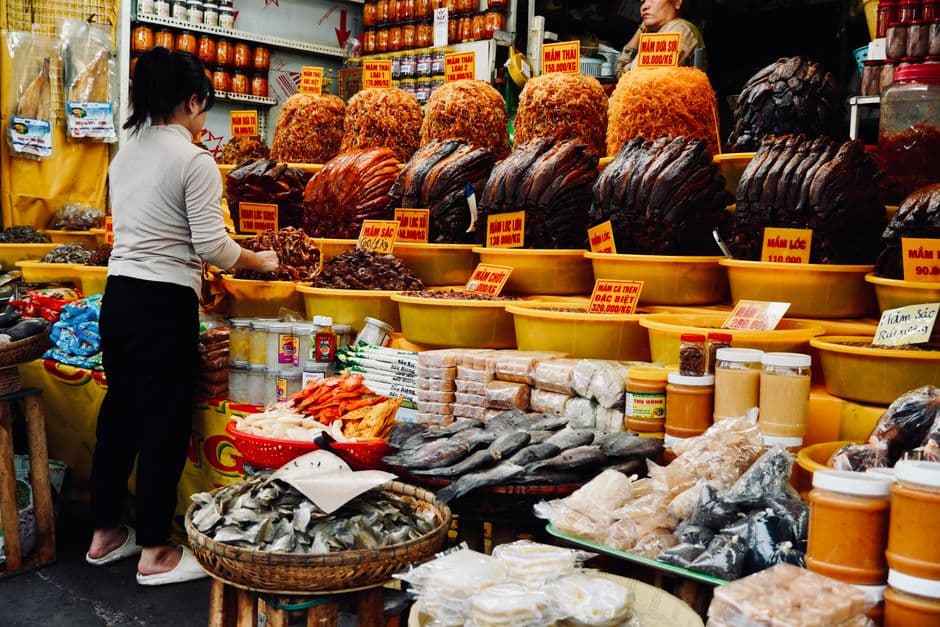
A free till for the Vietnamese shop, VietQR, MoMo and ZaloPay included
Six in the evening, in an alley in Hồ Chí Minh City. The tạp hóa on the corner has three customers at once. One is buying a crate of beer for a family dinner, one wants instant noodles and a bottle of fish sauce for 25.000 ₫, and a Grab driver is waiting for a cold drink with his phone already open. Nobody is holding a banknote. Two of them scan the VietQR sticker taped to the shelf. The third taps MoMo.
That scene is now ordinary, from District 7 to Hà Nội, Đà Nẵng and the towns of the Mekong Delta. QR acceptance among merchants has reached around 85%, and digital wallets take about a third of the payment market. A shop that only accepts cash is not just behind the times. It loses the sale to the shop across the alley that has the sticker.
The interesting problem starts after the scan. The money lands in a bank account or a wallet balance, the customer leaves, and nothing gets written down. By the end of the week the owner has a phone full of notifications, some notes in a drawer, and no way to say which products actually sold, which regular still owes for last Tuesday, or how much of the day’s takings really came in through MoMo. The payment worked. The bookkeeping did not exist.
That is what a till is for, and the till a small Vietnamese shop needs has to do four unglamorous things. Record each payment method separately, with cash, VietQR, MoMo, ZaloPay and card on their own lines. Work in đồng (VND, ₫) with no decimals, the way prices are written on your shelves. Keep selling when the signal drops. And cost nothing per month.
Most traditional POS setups fail at least two of those four, usually the last two, because they arrive as a package: a terminal you rent and a plan you pay for in a slow month exactly as in a busy one. This guide covers how to take QR and wallet payments without losing track of them, what the free options really give you, and where the free till stops and the tax rules begin.
Accepting VietQR, MoMo and ZaloPay cleanly
The smartest move in Vietnam is to lean on VietQR, the national QR standard run by NAPAS (the National Payment Corporation of Vietnam) over its NAPAS 247 instant transfer rails. Its big advantage is interoperability. A customer paying from any of 40+ banking apps, or from MoMo, ZaloPay or ShopeePay, scans the same VietQR code. One sticker covers every bank and every wallet, instead of the wall of competing QR codes you still see on some counters, which slows the queue and makes customers hesitate.
Getting the code is the easy half: your bank issues a VietQR tied to your account, and you can open merchant accounts on MoMo and ZaloPay on top if you want their own flows, their promotions and their traffic. The hard half is the ten seconds after the scan.
Here is the discipline that separates a shop with clean books from a shop that guesses:
- The customer scans your VietQR code, or your MoMo/ZaloPay merchant QR. - You wait for the confirmation on your side: the bank notification, the wallet alert, the little sound box on the counter that reads out the amount. Never the customer’s screenshot. Fake payment screens take thirty seconds to produce and they get used on shops that are busy, distracted, and polite. - Then you record the sale at the till with that exact method, so the end of day report splits cash, VietQR, MoMo and ZaloPay on separate lines.
Skip that last step and reconciliation turns into archaeology. You end up at eleven at night with a bank statement, three wallet histories and a drawer of notes, trying to work out whether a missing 180.000 ₫ is theft, an unpaid tab, or a sale your cousin took by MoMo on her own phone during the rush. With one payment method per channel, the same job takes four minutes. You compare the till total per channel with what each app says, and any gap has a name attached to it before you go to bed.
Two habits make this stick. Fix the order of the payment buttons in the order your customers actually pay, cash then VietQR then MoMo, so staff stop thinking about it and mis-tagged payments mostly disappear. And decide once and for all who watches for the confirmation. The moment that responsibility floats, the screenshot trick starts working on you.
One last thing, easy to forget during Tết when the shop is three deep: an unrecorded payment is also a stock problem. The beer left the shelf, the till still thinks it is there, and next week you reorder the wrong quantity.
digabloPos: free, offline, and built for the đồng and e-wallets
digabloPos is free for life on its core POS. Not free for thirty days, not free until you pass a number of sales. Free on the part you use every day: selling, stock, receipts, reports.
- Records VietQR, MoMo, ZaloPay and card as separate payment methods, so the daily report splits cash from each wallet instead of dumping everything into one total. - Native đồng (VND). Prices, receipts and reports in đồng, with no decimals and the thousands separators your customers read (25.000 ₫, not 25,000.00). - Works offline. Sell, track stock and print receipts with no signal, and everything syncs on its own when the connection comes back. This matters more than people admit in a country with good 4G: the basement of a market building, the far end of the chợ, the delta village on a busy Sunday. - No monthly fee. Unlimited sales and products, two staff accounts, receipts and reports, all free. Paid modules exist, and you only switch one on the day it earns its keep. - Any Android phone. The one in your pocket is enough. Add a Bluetooth thermal printer if your customers want a paper receipt, which in Vietnam they often do not. - Customer credit (bán ghi nợ / mua chịu). Track credit sales and each regular’s outstanding balance. It is the notebook under the counter, except it adds up by itself and it does not get wet in the rain.
The honest limit, stated up front rather than buried: digabloPos manages your shop, it does not issue the legal electronic invoice. More on that below, because for a growing business in Vietnam that is the one thing to understand before choosing anything.
Free POS in Vietnam, compared
Vietnam has a strong local POS market, which is a good thing. The catch is that almost every well-known name is a paid monthly subscription, and the free tier, when it exists at all, is a trial in disguise. Here is where the main options sit.
- digabloPos. Free for life, offline first, đồng, records VietQR/MoMo/ZaloPay separately, runs on any Android. Best when what you want is zero recurring cost and no dependence on the signal. - KiotViet. The dominant local POS for shops, cafés and street vendors, with support people who know it everywhere. Affordable, but a paid monthly plan per store, and per branch once you add branches. - Sapo. Multichannel POS popular with sellers who also list on Shopee and Lazada, so your online and counter stock sit in one place. Subscription based. - iPOS.vn, MISA CukCuk, POS365. Capable F&B systems with table management and kitchen tickets, aimed at restaurants and chains. Paid plans, with premium tiers around 370.000 ₫ per store per month. - Loyverse. A genuinely free mobile POS (free core, paid add-ons). A solid free alternative, and worth trying alongside digabloPos.
An opinion, since a comparison that never picks a side is useless. For a single tạp hóa or a ten-seat quán cà phê, a subscription at 370.000 ₫ a month makes no sense: that is a decent morning’s takings, spent every month on features built for a chain. Start free, prove you actually need table maps and kitchen printers, then pay for them with your eyes open.
If your checklist is "no monthly fee, offline, đồng, VietQR/MoMo/ZaloPay," digabloPos and Loyverse are the strongest starting points. The local subscription suites earn their price later, when you have several branches, a real kitchen or heavy marketplace selling, and someone whose job is to look after the system.
By type of business
The same free core adapts to most Vietnamese trades. What changes is which two or three features you actually lean on.
- Tạp hóa (grocery, convenience). Barcodes for the packaged goods, real time stock so you know what to reorder, credit tracking for the regulars in the alley, and a VietQR/MoMo reconciliation that takes minutes rather than an evening. - Quán ăn and quán cà phê (eatery, coffee shop). Quick item buttons for the twenty things that make up most of your sales, orders sent to the kitchen, and VietQR presented at the counter or at the table. Morning cà phê sữa đá is a volume game: every second you save keying in an order is a customer who stays instead of walking to the next place. - Nhà thuốc (pharmacy). Batch and expiry tracking, scan the box to identify the product automatically. Here the till is protecting you from selling expired stock, not just from mistakes with change. - Chợ stall (market vendor). Everything on the phone, offline, no hardware. You sell with no signal in the middle of the market and it all syncs later, and there is nothing on your table that a downpour can ruin. - Street cart (bánh mì, xôi, hủ tiếu). Five products, one phone, a QR sticker on the cart, and at the end of the week a real answer on what sold and what the ingredients cost against it.
You start with the free till and only turn on a module (kitchen, batches, multi store) the day you feel the pain of not having it. Turning everything on at once is how staff end up ignoring the system and going back to the notebook.
What about VAT and the e-invoice (hóa đơn điện tử)?
Now the part most free POS articles skip, and the reason to read this section twice.
A free till covers your day to day operations: recording sales, tracking stock, reconciling wallets, producing a clean sales report. That is the operational backbone almost every small shop needs, and for a lot of them it is enough on its own.
But the electronic invoice (hóa đơn điện tử) is a separate, regulated layer, run by the General Department of Taxation (Tổng cục Thuế / GDT). Under Decree 70/2025/ND-CP (in force since 1 June 2025), business households and individuals with annual revenue of VND 1 billion or more, plus consumer facing sectors (restaurants, supermarkets, hotels, retail and more), must issue e-invoices generated from cash registers (máy tính tiền) connected to the GDT, in the official signed XML format, transmitted to the tax authority. On VAT (GTGT), the standard rate is 10%, with a temporary 8% rate applying to most goods and services through 31 December 2026 (Resolution 204/2025/QH15).
So treat digabloPos as your store management and reporting system. It is not a GDT certified hóa đơn điện tử issuer. The legal e-invoice has to go through an authorised e-invoice provider or the GDT system, and you keep that running alongside your till. What the till gives you is a clean, honest sales base to report from, which is exactly the input that makes the tax side quick instead of painful. Always confirm what applies at your revenue level with the GDT, and if you are close to the 1 billion đồng line, ask before you cross it rather than after.
The practical version: a small tạp hóa well under the threshold can run a free till alongside its existing tax arrangements and stop worrying. A restaurant, supermarket, hotel or retailer in the sectors covered, or any business heading past 1 billion đồng a year, needs the e-invoice chain, and no POS alone will ever be the answer. What you can do is keep the operational side free and pay only for the invoicing layer, instead of a subscription for both.
Start in 5 minutes
1. Download digabloPos on your Android phone, or open it in a browser. 2. Add your products, or import a list, and set the currency to the Vietnamese đồng (VND). 3. Add VietQR, MoMo and ZaloPay as payment methods, alongside cash. 4. Make your first sale, and pair a Bluetooth printer if you want printed receipts.
No contract, no monthly fee, and it keeps selling when the signal drops.
A word on the first week, because this is where most shops give up. Do not enter your whole catalogue on day one. Enter the thirty or forty products that make up most of your sales, sell with the app for a fortnight, keep the notebook beside you if it reassures you, then add the rest shelf by shelf. Once staff see the end of day report land in a minute instead of an argument, the notebook goes back in the drawer on its own.
What a till really costs in Vietnam
Free software does not mean a free setup, and pretending otherwise helps nobody. Here is the honest arithmetic.
Software: 0 ₫ per month with digabloPos or Loyverse on their free core. A local subscription suite runs from a modest monthly fee for a basic plan up to around 370.000 ₫ per store per month on premium F&B tiers. Multiply by twelve, then by the number of branches, and you have the real number to compare against.
Hardware: the Android phone you already own, or a cheap new one in the low millions of đồng. A Bluetooth thermal printer costs around a million đồng and stays optional, because plenty of Vietnamese customers never ask for paper. A barcode scanner is worth it for a tạp hóa with hundreds of packaged lines and pointless for a coffee stand. A cash drawer only makes sense if you still handle a lot of notes, which, given where QR is going, describes fewer shops every year.
Payments: bank and wallet fees are unrelated to the till, but check them anyway, because merchant terms differ from one bank or wallet to the next.
The trap to avoid is renting a proprietary terminal. You pay every month for a locked box that does less than the phone in your pocket, and the day you stop paying you lose access to your own sales history. Money spent on a scanner and a decent phone stays yours. Money spent on a subscription for features you have not needed once in six months is simply gone.
The mistakes that cost shops money
Trusting the screenshot. It is the most common way to lose money in a QR economy, and it happens to the friendliest shops, because refusing to hand over the goods while you check feels rude. Wait for your own notification. Every time, including for the regular you have known for years.
Mixing every channel into one total. If cash, VietQR, MoMo and ZaloPay all land in the same figure, you will never find a discrepancy, and you will never know that a wallet fee or a failed transfer ate the difference. Separate the channels at the moment of sale, not at the end of the month.
Choosing software that needs a permanent connection. The first time the signal goes and you sell for two hours on paper, your stock figures stop meaning anything and you spend the evening retyping. Ask the vendor the blunt question before you commit: if the internet dies for two days, what do I lose? The right answer is nothing.
Believing a POS makes you compliant. It does not, in any country, and least of all in Vietnam. The till is your operations, the e-invoice chain is your tax obligation, and they are two different things bought from two different places.
Never counting the drawer. The report says the drawer should hold a given amount in cash tonight. Count it. A gap you find the same evening is a question you can answer. The same gap found a month later is just a number you will never explain.
None of this is complicated. It is the difference between a shop that knows what it sold and a shop that finds out at the end of the year, and it starts with a till that costs nothing and records the scan properly.
Also on digabloPos
Sources and references
Start your free till in Vietnam
No monthly fee, records VietQR, MoMo and ZaloPay, works offline, in đồng. digabloPos runs on any Android and takes five minutes to set up.
Try for free