Free POS Software in Tanzania 2026: Swahili, M-Pesa
Free POS software for shops in Tanzania in 2026: Swahili interface, records M-Pesa and Tigo Pesa, keeps selling offline, no monthly fee, any Android phone.
Retail & restaurants, Dar es Salaam, Tanzania
A free, Swahili-first till for Tanzania
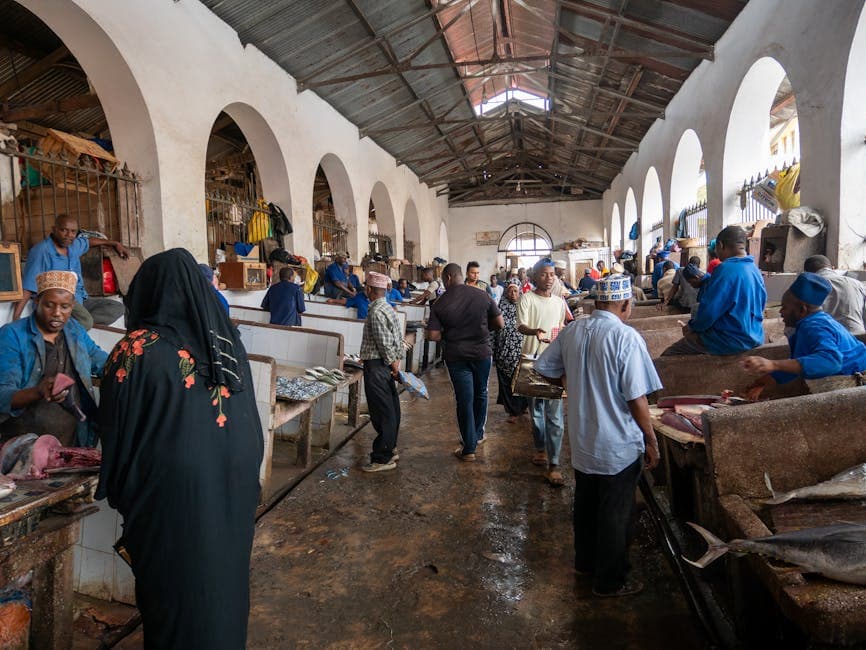
Walk through Kariakoo on a Saturday morning and listen to how sales end: the customer taps a phone, the vendor’s handset buzzes, a nod, next in line. Trade in Tanzania runs on Swahili and on mobile money. M-Pesa, Tigo Pesa (Mixx), Airtel Money and HaloPesa move shillings from Dar es Salaam to Arusha, Mwanza and Zanzibar faster than any bank branch ever did, and they keep doing it at ten o’clock at night when the banks are long closed.
Most POS software sold in the region was built for a different reality: stable Wi-Fi, English-only menus, a card reader on the counter and a monthly charge in dollars. The checklist for a Tanzanian duka looks nothing like that. The till should speak Swahili, because your staff should not have to guess what “void transaction” means during the evening rush. It should record every mobile money wallet separately, because your end-of-day count depends on it. It should keep selling offline, because the signal inside a market building, or on the road out of Mbeya, is not a promise. And it should cost nothing per month, because a fixed fee hurts most in the months when customers stay home.
Capable systems built for this market do exist. Smartwas and NinoPOS both support English and Swahili, and both integrate mobile money. They are also paid products, and for a small shop the subscription is often the exact cost line you were trying to remove. This guide looks at what a genuinely free till can do for the everyday duka, and where the paid tools still earn their fee.
Taking M-Pesa, Tigo Pesa and Airtel Money cleanly
Four wallets matter in Tanzania: M-Pesa, Tigo Pesa (Mixx), Airtel Money and HaloPesa. Depending on the street, one of them dominates, but a shop that serves everyone ends up accepting all four. Established shops use a merchant (Lipa) number so payments land in a business account rather than on a personal SIM. That separation matters more than it looks: it keeps the shop’s money apart from your pocket money, and it usually costs the customer less than a person-to-person transfer.
Receiving the payment is the easy part. What trips shops up is recording it at the till. The discipline has three steps:
- The customer pays to your merchant number, whichever wallet they use. - You wait for the confirmation SMS on your own phone. Never the customer’s screenshot: a faked confirmation screen takes a minute to produce and looks identical to a real one. - You log the sale straight away, with the right payment method attached, so the evening report splits cash from each wallet.
Skip the third step and closing time becomes guesswork. You sit with the drawer, the M-Pesa statement and the Tigo Pesa statement, and none of the totals agree with any of the others. Was the missing amount a sale nobody typed in, a transfer to the wrong number, or change given twice? There is no way to know, so the loss gets shrugged off. Again.
Record one payment method per wallet and the same evening takes five minutes. The till says what M-Pesa took today, the statement says the same, and you move to the next wallet. Any gap points to one wallet and a narrow window of time instead of the whole day.
One more habit costs nothing and saves plenty: display your Lipa numbers on a card at the counter. Dictating a merchant number over the noise of a full shop is exactly how digits get swapped and a payment lands on a stranger’s account.
digabloPos: free, offline, and in Swahili
digabloPos is free for life on its core POS, and the core is not a teaser. Unlimited sales, unlimited products, two staff accounts, receipts and daily reports: all of it costs nothing this month and nothing next year.
What that core does for a Tanzanian shop:
- It works in Swahili (and English). Menus, buttons, receipts and reports appear in the language your team actually thinks in. A new employee learns the till in an afternoon instead of a week, and stops calling you over for every unfamiliar screen. - It records M-Pesa, Tigo Pesa, Airtel Money and HaloPesa as separate payment methods. Your daily report splits cash from each wallet on its own line, which is the whole foundation of the five-minute reconciliation described above. - It works offline. Sales, stock movements and printed receipts carry on with no connection at all. When the network returns, everything syncs on its own. A TANESCO cut or a dead signal inside the market building does not stop the queue. - It has no monthly fee. Optional paid modules exist for the day your business outgrows the basics, and only for that day. Nothing switches itself on quietly. - It runs on any Android phone. No proprietary terminal, no imported hardware. If you want paper receipts, pair a Bluetooth thermal printer and you are done.
For a duka, a kiosk or a mgahawa watching every cost, this removes the two barriers that keep most small shops on the exercise book: the hardware bill and the monthly fee. The phone is already in your pocket. The software costs nothing. What remains is the decision to start typing sales instead of writing them.
Free POS in Tanzania, compared
Put the main options side by side and the market sorts itself quickly:
- digabloPos: free for life, offline first, Swahili interface, records every mobile money wallet. The strongest fit for shops whose target is zero monthly cost. - Smartwas: a capable POS used across Tanzania and Kenya, English and Swahili, mobile money included. A paid product. - NinoPOS: native M-Pesa, Tigo Pesa and Airtel integration, plus cards and bank transfers. Also paid. - Loyverse: a free global app with a polished interface, but no Tanzania-specific support, and the useful extras sit behind paid add-ons.
The honest reading: Smartwas and NinoPOS are serious tools, and a supermarket doing heavy volume with accounting integrations to maintain may find the subscription justified. For a duka, a food stall or a one-branch mgahawa, paying every month for capacity you will not use makes little sense, and the fee does not pause in a slow month. Loyverse is free at the door but was not built with Kariakoo in mind: nobody at the other end knows what a Lipa number is, and the moment you need the extras, the free label quietly disappears.
If your checklist reads “no monthly fee + offline + Swahili + mobile money”, digabloPos is the strongest free starting point, and you can test that claim in an afternoon without spending a shilling.
By type of business
The same free, offline core bends to most Tanzanian trades, because underneath they share the same three problems: stock that walks away, wallets that must be reconciled, and a network that comes and goes.
Duka and general shop. Scan barcodes instead of typing prices, watch stock move in real time, and keep a clean record of the regulars who buy on credit. The credit book is where handwritten systems die: a name, an amount, a promise, and three weeks later nobody remembers which of the three has changed. A till that stores customer credit next to the sales history settles those conversations before they start.
Mgahawa, café and bar. Fast item buttons for the dishes that sell every hour, orders sent to the kitchen without a waiter crossing the room, and mobile money handled at the counter while the tables are full. On a football night, the difference between a till and a notebook is measured in customers who gave up waiting.
Pharmacy and duka la dawa. Batch and expiry tracking, so the box that expires first is the box that leaves first, and a scan of the packaging identifies the product without spelling contests at the counter.
Market stalls and street vending. Everything lives on the phone: no printer, no drawer, no cabling. You sell all day with no network at all, and the day’s record syncs when you pass somewhere with signal. For a machinga moving through town, that is the entire hardware conversation.
Start with the free till. The day your shop actually needs a bigger feature, switch the module on then, not before.
Start in 5 minutes
The setup is genuinely short, and you do not need a technician:
1. Download digabloPos on your Android phone and set the language to Swahili. 2. Add your products, or import a list if you already keep one in a spreadsheet, and set the currency to Tanzanian shillings (TZS). 3. Add M-Pesa, Tigo Pesa, Airtel Money and HaloPesa as payment methods, one entry per wallet. 4. Make your first sale. If you want paper receipts, pair a Bluetooth thermal printer; it takes two minutes.
A practical tip for day one: do not try to enter your entire stock before you start selling. Load the fifty products that move every day, sell with those, and add the rest during the quiet hours of the week. A till that is already ringing sales motivates the data entry far better than an empty screen does.
No contract, no monthly fee, and nothing to cancel if you change your mind. The till keeps selling when the network drops, which in Tanzania is not a bonus feature. It is the job description.
What a free till really costs in Tanzania
The word “free” deserves an audit, so here is the full bill, in shillings.
The phone: zero, because digabloPos runs on the Android you already own. There is no proprietary terminal to import and no intimidating minimum specification. If the phone runs WhatsApp comfortably, it runs a till.
The printer: optional. Customers at a market stall rarely ask for paper, while a mgahawa or a pharmacy prints all day. Generic Bluetooth thermal printers sell in Kariakoo’s electronics rows for somewhere between roughly TZS 100,000 and 250,000 depending on brand and build, paid once. Receipt rolls afterwards cost pocket change per week.
The data: close to nothing. An offline-first till does not stream every sale to a server as it happens. It syncs compact records whenever a connection shows up, and a small weekly bundle covers it comfortably.
The software: zero per month for the core, permanently. The honest asterisk is that optional modules exist for businesses that grow into them, priced per module, switched on by you, cancellable when you want. Nothing activates itself.
Now run the same audit on a subscription till. The fee looks small in a good month. It is the same size in the rainy month when half your customers stay home, and the same again the month the landlord raises the rent. A fixed monthly cost is a bet that every month will be average, and every shopkeeper in Tanzania knows that months refuse to be average. Removing that line from your costs is worth more than its face value: it is one less thing the day has to earn before it starts earning for you.
The mistakes that eat a duka’s margin
Most losses in a small shop are not dramatic. They are small, repeated and invisible, which is exactly what makes them expensive. The usual suspects:
Mixing all the money into one total. If cash, M-Pesa and Tigo Pesa land in a single figure, you can never say where a shortfall came from, so you stop asking. One payment method per wallet is the cheapest audit tool that exists.
Trusting screenshots. A confirmation shown on the customer’s phone proves nothing. The only proof is the SMS or app notification on your side. Shops that skip this rule usually learn it during the busiest hour of the week, which is precisely when the trick gets attempted.
Selling on credit from memory. Credit itself is not the mistake; in a Tanzanian neighbourhood it is often what keeps regulars loyal. Credit without a record is the mistake. Write it in the till, attached to the customer’s name, and the awkward conversations disappear.
Choosing a till that dies with the connection. An online-only system turns every network gap and every TANESCO cut into a frozen queue. Ask one question before adopting any software: what happens to my sales if the internet disappears for two days? The only acceptable answer is: nothing, they sync later.
Never counting the stock. The till tells you what should be on the shelf. A quick count, one shelf per week, tells you what actually is. The difference is theft, breakage or forgotten credit, and it only shrinks once it is measured.
Ignoring the TRA side once you are registered. If your business is registered for VAT, receipts go through EFD or VFD fiscal devices, with rules of their own. A till that already keeps clean daily numbers makes that side of life far calmer; the guide on VFD and EFD receipts linked below covers it in detail.
None of these fixes costs money. All of them cost a habit, and the till is what makes the habit stick.
Frequently asked questions
Is there a free POS app for shops in Tanzania?
Yes. digabloPos is free for life on its core POS, works in Swahili and English, records M-Pesa, Tigo Pesa, Airtel Money, and HaloPesa, and runs offline.
Does it work in Swahili?
Yes. The interface, menus, buttons, receipts, and reports, is available in Swahili as well as English, so staff use the language they know best.
Does digabloPos issue TRA fiscal receipts?
No. digabloPos keeps your sales and stock organized, but the TRA fiscal receipt is issued through an approved EFD or VFD; digabloPos is not itself an approved fiscal device.
Also on digabloPos
Sources and references
Start your free till in Tanzania
No monthly fee, a Swahili interface, M-Pesa and Tigo Pesa recorded cleanly, and sales that continue offline. digabloPos runs on the Android you already own; setup takes 5 minutes.
Try for free