Free POS Software in Senegal 2026: Wave, FCFA
Free POS software in Senegal: record Wave, Orange Money and Free Money, sell offline in FCFA with no monthly fee. Full 2026 comparison for Dakar shops.
POS specialist, Africa (anglophone & francophone)
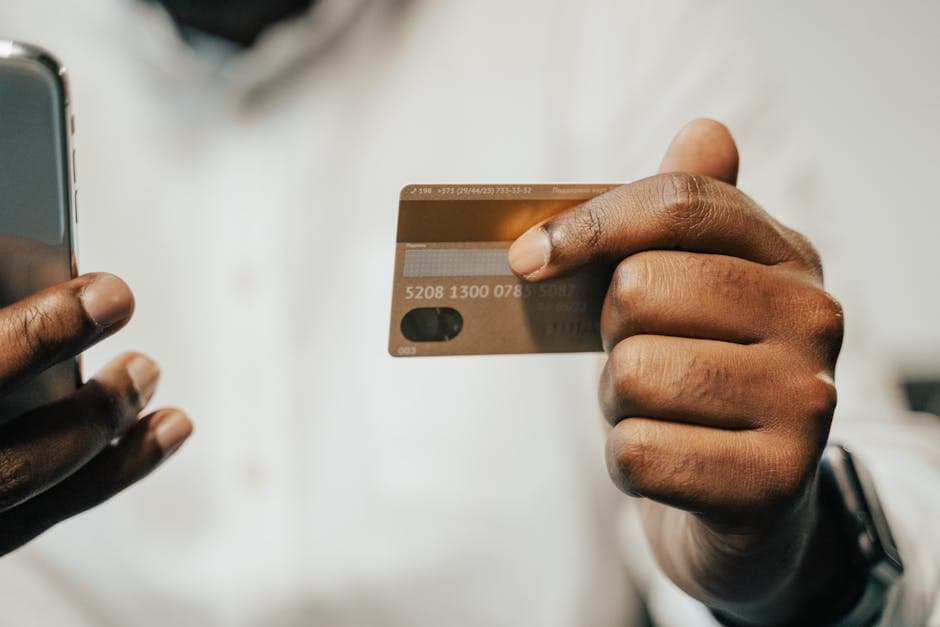
A free till for the Senegalese shop, Wave and Orange Money included
Saturday afternoon at Sandaga market in Dakar. The customer haggles, settles on a price, then pulls out a phone instead of a wallet: three seconds later, the Wave notification pings on the seller’s. The same scene plays out at the corner shop in Parcelles Assainies, at a tablier’s stall in Colobane, at a dibiterie in Thiès and in the streets of Touba in the weeks around the Magal. In Senegal, mobile money is no longer a novelty you explain to customers; it is simply how people pay. The blue Wave sticker sits on half the shopfronts in the country, and Orange Money is never far behind.
Receiving that money is the easy part. The hard part starts in the evening: knowing how much came in as cash, how much through Wave, how much through Orange Money, and whether the total matches what is in the drawer and on your merchant accounts. That is exactly what a till is for. But it has to record each payment method separately, count in FCFA without invented decimals, keep selling offline when the connection drops and, ideally, cost nothing per month.
Most POS software sold in Senegal is paid, with subscriptions commonly running 10,000 to 30,000 FCFA per month depending on features. Over a year, the top of that range comes to 360,000 FCFA: enough to restock a neighbourhood shop’s shelves several times over. A few free options exist, such as Kweeli or invoicing tools like MaFacturePro, but they lean toward online shops or invoicing rather than a till that sells at the counter with no network. This guide sorts it out: what a till needs to do in Senegalese trade, how the free options compare with each other, and how to start without spending a franc.
Taking Wave, Orange Money and Free Money cleanly
Three operators dominate mobile money in Senegal: Wave, often the cheapest with free transfers and about 1% on merchant payments, Orange Money, whose coverage reaches villages where Wave is not yet on the wall, and Free Money. The smart move is to open a merchant account with the operators that dominate your area. Merchant payment is generally free for the customer, the commission sits on your side, and customers pay more willingly when it costs them nothing. In Dakar, refusing Wave now means refusing sales. Count the commission as a cost of doing business: about 1% on a payment is cheaper than the fake banknote or the change dispute it replaces.
Receiving the money is not the skill. The skill is recording every payment at the till. For every sale:
- The customer sends the amount to your merchant number (Wave, Orange Money or Free Money). - You wait for the confirmation on your merchant side, on your own phone. Never the customer’s screenshot: one takes thirty seconds to fake, and fake confirmations circulate from Sandaga to the market in Thiès. - You record the sale with the right payment method, so the evening report splits cash, Wave, Orange Money and Free Money.
That discipline feels heavy on a quiet Tuesday. It proves itself on the eve of Tabaski, when the counter never empties and payments land faster than anyone can write them down. On that day, the till keeps the count, not your memory.
In the evening, you compare each merchant balance with what the till says, channel by channel. A 5,000 FCFA gap jumps out when cash, Wave and Orange Money are kept apart. It drowns when everything is lumped into a single total. A till that creates one payment method per operator turns that reconciliation into a five-minute routine. It is the first thing to check when choosing software, before price, before looks. One last practical habit: put your merchant number or QR code on a card at the counter, so you are not dictating digits during the evening rush.
digabloPos: free, offline, and built for FCFA and mobile money
digabloPos is free for life on its core POS. Not free for a trial month, not free up to a sales quota: free. Here is what that core covers:
- Wave, Orange Money and Free Money recorded as separate payment methods. The evening report splits cash from mobile money, operator by operator. Local tip: Wave is often cheaper, around 1% capped at 5,000 FCFA, while Orange Money covers the whole country. - Native FCFA (XOF). Prices, receipts and reports in FCFA, without cents that do not exist. - Works offline. You sell, manage stock and print receipts with no connection. Everything syncs when the network returns. - No monthly fee. Unlimited sales and products, 2 staff, receipts, reports. Optional modules exist for later, if the shop grows. - Any Android phone. The phone already in your pocket is enough. A Bluetooth thermal printer stays optional. - Customer credit, the neighbourhood ardoise. The regulars who take today and settle at the end of the month: the till keeps their balances up to date, name by name, sale by sale.
The offline point deserves a closer look. Between a Senelec power cut that takes the wifi down and a mobile network that chokes at rush hour or during the big religious gatherings, a till that demands a permanent connection stops several times a week. A till that records everything on the phone and syncs later never stops: the customer is served, the sale is traced, the evening report stays true. Just keep the phone charged: a power bank costs less than a day of untracked sales.
The ardoise deserves a word too. Credit keeps a neighbourhood shop alive and puts it at risk at the same time: a notebook goes missing, a page tears, an amount gets disputed in good faith on both sides. A balance kept in the till, dated and itemised, settles the question without souring the relationship. You keep giving credit; you stop losing track of it.
One more situation where the reports earn their keep: plenty of Senegalese shops are financed from abroad, with family keeping the counter in Dakar or Touba. When the day’s report syncs to an account you can open from anywhere, you see the numbers for yourself instead of asking over the phone and hoping the answer is complete.
Free POS in Senegal, compared
Side by side, with the figures as they are actually practised:
- digabloPos: free for life, offline-first, native FCFA, records Wave and Orange Money, runs on any Android. The pick for zero recurring cost. - Kweeli: Ivorian commercial-management software also used in Senegal, free to start, mobile money built in. It leans toward commercial management and online shops more than the shop counter. - MaFacturePro and other invoicing tools: useful for compliant invoices, but they are invoicing tools, often free trial then paid, not offline tills. - Loyverse: a capable free global app, but with no Senegal or FCFA-specific support and paid add-ons billed monthly. - Paid local POS: 10,000 to 30,000 FCFA per month depending on features.
Each of these has its audience. If your business lives on online orders, Kweeli holds its own. If your pressing need is invoicing, a dedicated tool does the job. But if your checklist comes down to four demands, no monthly fee, offline, FCFA, Wave and Orange Money kept separate, digabloPos is the strongest free starting point. And to say it plainly: for a neighbourhood shop counting its margin franc by franc, paying 20,000 FCFA a month just for the right to ring up sales makes no sense. That is a sack of rice going into software every month. Always compare over a full year rather than by the month: it is the twelve payments added together that measure up against the price of a phone or a full restock. And ask what happens to your data if you stop paying; with a free core, the question never comes up.
By type of business
The same free core adapts to most Senegalese trades. What changes is what you switch on.
The shop and general store first. Barcodes, real-time stock, the ardoise for the neighbourhood regulars. After two weeks you see in black and white what sells fast and what sleeps on the shelf, and you restock on numbers instead of guesswork. The boutiquier knows his prices by heart; what he rarely knows is which of the two hundred references on his shelves actually pays the rent. The stock report answers that.
The restaurant, dibiterie and fast food next. Table orders, sending to the kitchen, Wave or Orange Money at the counter. On a Friday night, when the room is full and three tables want the bill at once, every order is already recorded: nothing gets lost between the floor and the kitchen.
The pharmacy and parapharmacy. Batch and expiry tracking, scanning boxes to identify products automatically. An expired box discovered too late is money thrown away. An alert a few weeks ahead is a product sold in time.
The market and street selling, finally. The tablier in Colobane or the fabric seller at the HLM market has no counter and no printer: everything lives on the phone, offline, and syncs in the evening at home. For the first time, you know what the day actually brought in. The tailors’ street before Tabaski works the same way: orders and deposits recorded on the spot, nothing forgotten in the rush.
You start with the free till and only switch on a module (kitchen, batches, multi-store) the day the need is real. Not before.
What about the normalized invoice (DGID, VAT)?
An honest note, because the question comes up often. A free till covers everyday selling: recording each sale, tracking stock, producing a clean till report. For the vast majority of shops, tabliers and small restaurants, that is the essential part, and often all that is needed.
However, if you are registered for VAT (18% in Senegal) and must issue normalized invoices compliant with the DGID, carrying your NINEA, that is a separate layer from a POS. Senegal is preparing the general rollout of normalized e-invoicing: if you are concerned, check your setup separately, ideally with your accountant. digabloPos gives you a structured, reliable sales base that makes that work easier afterwards, but it does not replace your invoicing obligation if you are subject to it.
In other words: the till first, compliance in parallel if your size requires it. Most small shops are not concerned on day one, but it is better to know before an inspection reminds you.
Start in 5 minutes
1. Download digabloPos on your Android phone (or open it in a browser). 2. Add your products, or import your list, and set FCFA as the currency. 3. Add Wave, Orange Money and Free Money as payment methods. 4. Make your first sale. Pair a Bluetooth printer if you want printed receipts.
On the first evening, take five minutes: compare the till report with the drawer and your merchant balances. That small ritual, repeated daily, is what actually changes how a shop is run. If the notebook reassures you, keep it alongside for the first two weeks, then compare: the notebook forgets the sales of the evening rush, the till does not. No contract, no monthly fee, and it keeps selling when the network drops.
The mistakes that cost real money
The first mistake, already mentioned, is accepting the customer’s screenshot as proof of payment. The rule has no exceptions: a sale is paid when the confirmation shows on your merchant side, on your phone, not on theirs.
The second is lumping everything into one total. Cash, Wave, Orange Money and Free Money must stay separate channels, or the evening reconciliation becomes impossible and gaps settle in quietly. In the same spirit, keep the merchant account away from the personal account: when the shop’s takings and the family’s money flow through the same wallet, nobody knows what the shop earns anymore.
The third is keeping the ardoise in your head or on loose scraps of paper. Undated balances always end in an argument, and it is usually the shopkeeper who gives in.
The fourth is paying a subscription from day one. Start free, prove the need, and only add a paid module when it earns you more than it costs.
The next-to-last is letting everyone ring up sales on the same session. A PIN per employee ties each sale, each discount and each cancellation to a person: the day the drawer does not balance, you check the history instead of suspecting the whole team.
The last is never counting the drawer against the report. The report gives the expected amount, the drawer gives the reality. A gap caught the same evening can be fixed. A gap discovered a month later is already gone, and you will never know where.
Frequently asked questions
Is there a free POS software in Senegal?
Yes. digabloPos is free for life on its core POS, in FCFA and French, records Wave and Orange Money, and works offline.
Can it record Wave and Orange Money?
Yes. You set up Wave, Orange Money, and Free Money as payment methods, and each sale is recorded with its method for a clear split between cash and mobile money.
Does it work without internet?
Yes. digabloPos works fully offline, you sell, manage stock, and print receipts with no connection, and it syncs when the network returns.
Also on digabloPos
Sources and references
Start your free till in Senegal
No monthly fee, native FCFA, Wave and Orange Money recorded cleanly, even offline. digabloPos runs on any Android and is set up in 5 minutes.
Try for free