Free POS Software in Congo-Brazzaville 2026: MTN MoMo, Airtel Money
Free POS software for Congo-Brazzaville: MTN MoMo and Airtel Money recorded apart, prices in FCFA, sales that keep running through outages, no monthly fee.
POS specialist, Africa (anglophone & francophone)
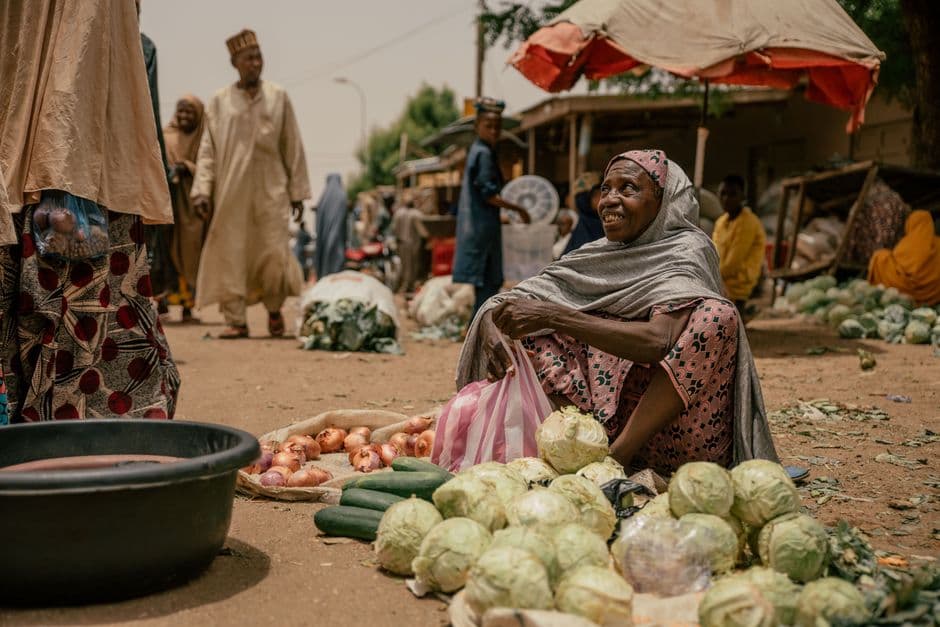
A free till for the Congolese shop, MTN MoMo and Airtel Money included
Saturday night in Poto-Poto. A customer puts his phone on the counter, keys in your merchant number, and you wait for the confirmation SMS while three people queue behind him. That is the moment the neighbourhood goes dark. An ordinary evening in a Brazzaville shop.
Mobile money reached Congolese habits through two doors: MTN Mobile Money and Airtel Money, with MTN alone handling more than 80% of the country’s mobile money transactions. In Poto-Poto, Bacongo and Moungali, and at the Grand Marché in Pointe-Noire, customers pay by phone as often as in cash, and they expect it to be quick.
Which gives your till a very concrete job description. It has to record each payment method separately: cash on one side, MTN MoMo and Airtel Money each on its own line. It has to count in Central African FCFA (XAF), with no pointless decimals. It has to keep taking sales offline when the connection drops or when E²C cuts the district. And it should cost nothing per month until you have a genuinely advanced need.
Four requirements, none of them exotic. Most software sold here misses at least one: it is accounting dressed up as a till, or a decent app billed on a subscription from day one, before you have sold a thing. This guide covers what to demand, what it really costs, and where to start without draining your working capital.
Taking MTN MoMo and Airtel Money cleanly
Two operators matter in Congo: MTN Mobile Money, by far the leader, and Airtel Money. Open a merchant account with both. Merchant payment is generally free for the customer, with the commission on the merchant side, and you avoid withdrawal fees by leaving the money on the merchant account instead of cashing it out every time.
Receiving the payment is not the hard part. Recording it at the till is. Every sale should follow the same drill:
- The customer sends the amount to your merchant number (MTN MoMo or Airtel Money). - You wait for the confirmation SMS on YOUR account, never the screenshot on the customer’s phone, which takes thirty seconds to fake. - You record the sale under the right payment method, so the evening report splits cash, MTN MoMo and Airtel Money.
Step three is the one that gets skipped, because the shop is busy and the money has already landed. Three weeks later your MTN statement shows a total that matches nothing in your notebook, and you can no longer tell which sale goes with which transfer. You also cannot tell whether a member of staff kept cash and logged the sale as MoMo, or the reverse. At that point it is not bookkeeping any more, it is archaeology.
Software that creates one payment method per operator solves this without asking anyone to be more disciplined. The cashier taps MTN or Airtel when taking the money, and in the evening you have three totals to check against three sources: the drawer, the MTN account, the Airtel account. A gap shows up the same day, while you still remember the day. Print your merchant number and stick it on the counter, too. It saves you dictating it ten times an hour on a Saturday.
digabloPos: free, offline, and built for FCFA and mobile money
digabloPos is free for life on its core POS. Not a thirty-day trial, not a crippled version that stops at the hundredth sale: taking payments, tracking stock, printing receipts and pulling reports cost nothing.
- MTN Mobile Money and Airtel Money recorded separately. Your daily report splits cash from mobile money, operator by operator. - Native FCFA (XAF). Prices, receipts and reports in Central African francs, with no unnecessary decimals. - Works offline. You sell, manage stock and print receipts with no connection; everything syncs when the network returns. - No monthly fee. Unlimited sales and products, two staff, receipts and reports included. Optional modules wait until you grow. - Any Android phone. No proprietary terminal to rent; a Bluetooth thermal printer is enough for tickets. - Customer credit. Credit sales and each customer’s outstanding balance, tracked properly. The neighbourhood tab, but counted.
Of everything on that list, offline is what changes daily life the most, and the word deserves a definition. Plenty of apps advertise an "offline mode" that merely shows your products without letting you take payment, or that holds the sale in memory and loses it if the app closes. A real offline till writes the sale to the device, decrements stock, prints the receipt, then pushes everything to the server when the connection comes back, losing nothing and duplicating nothing.
Ask any vendor the blunt version of the question before you sign: if the internet is down for two days in Pointe-Noire, what do I lose? The only acceptable answer is nothing. And keep a charged power bank under the counter. For running a till on a phone, it will earn its keep far more often than a generator.
Free POS in Congo-Brazzaville, compared
Local software here leans toward accounting and tax compliance, not an offline till. That makes sense when you sell to structured firms in Pointe-Noire. It makes much less sense when you run a shop in Moungali. Here is where the options sit:
- digabloPos: free for life, offline first, FCFA (XAF), records MTN MoMo and Airtel Money, on any Android. For anyone who wants zero recurring cost and no dependence on the connection. - Oopidi: Congolese accounting software, SYSCOHADA and DGI compliant (VAT, NIU, OHADA statements). Valuable for the books, but not an offline sales till. - Sage (through local integrators such as Ceso): OHADA ERP and accounting configured for Congo. Powerful, but heavy and paid, aimed at structured SMEs. - Yabetoopay and payment gateways: to accept MTN MoMo and Airtel Money online or in store. A collection tool to pair with a till, not a till. - Loyverse: a capable free global app, but with no Congo or XAF-specific support and paid monthly add-ons.
The usual confusion sits right there. You think you are choosing between tills, when you are actually comparing a till, an accounting package and a payment gateway. They do three different jobs. The till takes the money and tracks stock at the counter. The accounting tool produces your statements and filings. The gateway moves the funds.
If your checklist reads "no monthly fee, offline, FCFA, MTN MoMo and Airtel Money", digabloPos is the strongest free starting point. The local accounting tools complete the picture the day you have to file with the DGI, and not before.
By type of business
The same free core adapts to most Congolese trades, and each one has a setting that matters more than the rest.
- Shop and general store. Barcodes, real-time stock, customer credit for the regulars on your street. The payoff comes in the evening: you know what left the shelves and what should be in the drawer. - Bar, nganda and restaurant. Table orders, send to kitchen, MTN MoMo or Airtel Money at the counter. A full nganda on a Saturday means thirty open tabs at once; a floor plan is what stops a round being served and never billed. - Pharmacy and parapharmacy. Batch and expiry tracking, scan the box to identify the product automatically. Without that tracking, an expiry date is discovered at the moment of sale, which is too late. - Market trading and street selling. Everything fits on the phone, offline, with no hardware. You sell with no network and it syncs later, once you are back under decent coverage.
You start on the free till, then switch on a module (kitchen, batches, multi-store) the day your own numbers prove you need it, rather than the day a salesperson tells you so.
What about tax (VAT, invoicing)?
Be clear about what a free till does and does not do. It covers everyday selling: recording sales, tracking stock, producing a clean till report at closing. For the vast majority of Congolese shops, that is the essential part, and it is already a long way ahead of the notebook.
If, however, you are VAT-registered (18% standard rate, 18.9% with the Congolese surcharge) and have to produce filings and DGI-compliant invoices, you are in a separate layer from the till business. Lean on a compliant accounting tool such as Oopidi or Sage for that, ideally with an accountant who knows how the DGI actually works in practice.
digabloPos then gives you a structured, reliable sales base that feeds the accounting work instead of complicating it: totals by day, by payment method and by product, exportable, rather than a pile of paper scraps. What it does not do is remove your filing obligation if you are subject to it, and no free software will do that for you.
Start in 5 minutes
1. Download digabloPos on your Android phone, or simply open it in a browser. 2. Add your products, or import your list, and set FCFA (XAF). 3. Add MTN Mobile Money and Airtel Money as payment methods. 4. Make your first sale. Pair a Bluetooth printer if you want printed receipts.
One piece of practical advice: do not enter your whole stock on day one. Start with the fifty items that move the most, the ones that make up most of your turnover. Take payments through the app for two weeks, keeping the notebook alongside if that reassures you, then add the rest shelf by shelf. Within a month the shop runs on real numbers.
No contract, no monthly fee, and it keeps selling when the network drops.
What it really costs
A "free" till can turn out expensive. Look behind the word, in this order: how many sales per month are allowed, how many products, how many staff accounts, whether reports are included, and above all whether you can export your data the day you leave. Plenty of offers are free right up to the limit that concerns you, and paid immediately after.
Then be wary of subscriptions charged from day one. Twenty or thirty thousand FCFA a month looks small on an invoice; over a year it is the price of a decent Android phone plus a thermal printer, before you have sold a single crate of beer. For a neighbourhood shop doing a few dozen sales a day, that subscription makes no sense at all.
The model that holds up in Congo is this one: the core till stays free, with no cap on sales or products, and advanced modules are bought one at a time, only once they earn more than they cost, in the range of 6,000 to 9,000 FCFA a month each, cancellable. The kitchen module earns its keep when the nganda starts losing orders. Batch tracking earns its keep in a pharmacy. Multi-store earns its keep when the second shop actually exists.
Your first real investment should not go into software at all. It should go into the Bluetooth thermal printer, a power bank, and a decent barcode scanner if you scan. Those are one-off purchases that work every single day.
The mistakes that cost money
The first is choosing software that needs the internet at all times. At the first serious outage you are back on paper, and your stock figures mean nothing for a week. In Congo that is not a hypothetical risk, it is next week’s schedule.
The second is lumping mobile money and cash into one total. You lose the only thing that makes internal theft visible: a line-by-line comparison between what the merchant account says and what the till says.
The third is accepting a screenshot as proof of payment. The SMS on your own account, or nothing. Tell your staff on day one, otherwise somebody gets caught out on a busy evening, and it will not be you, it will be your salesperson.
The fourth is not giving each employee a PIN. With no identification, an unexplained discount or a voided sale belongs to nobody, and the day the drawer does not balance you suspect everyone instead of reading the history.
The fifth, the quiet one, is never comparing theoretical stock with what is actually on the shelf. A rolling count, even partial, even one shelf a week, is enough to catch a leak before it becomes a hole.
Start small: fifty products and two payment methods, and let the till run for two weeks before you judge it. The trial costs nothing, and by the end of the month you will finally know what your shop earns, day by day.
Frequently asked questions
Is there a free POS software in Congo-Brazzaville?
Yes. digabloPos is free for life on its core POS, in FCFA (XAF) and French, records MTN Mobile Money and Airtel Money, and works fully offline on any Android.
Can it record MTN MoMo and Airtel Money separately?
Yes. You set up MTN Mobile Money and Airtel Money as separate payment methods, so your end-of-day report clearly splits cash, MTN MoMo, and Airtel Money, which makes reconciliation simple.
Does it work without internet?
Yes. digabloPos works fully offline, you sell, manage stock, and print receipts with no connection, and everything syncs when the network returns.
Does it handle VAT and DGI filings?
The free till covers everyday selling, stock, and reports. If you are VAT-registered (18%, 18.9% with the surcharge) and must produce DGI filings, that is a separate layer, pair digabloPos with a compliant accounting tool like Oopidi or Sage.
Also on digabloPos
Sources and references
Start your free till in Congo-Brazzaville
No monthly fee, MTN MoMo and Airtel Money recorded separately, sales that keep running through outages, prices in FCFA. digabloPos runs on any Android.
Try for free