Free POS Software in Gabon 2026: Airtel Money, Moov Money
Free POS software in Gabon: Airtel Money and Moov Money kept apart, FCFA, works offline, no monthly fee. Built for Libreville, Port-Gentil and Mont-Bouet.
POS specialist, Africa (anglophone & francophone)
A free till for the Gabonese shop: Airtel Money and Moov Money included
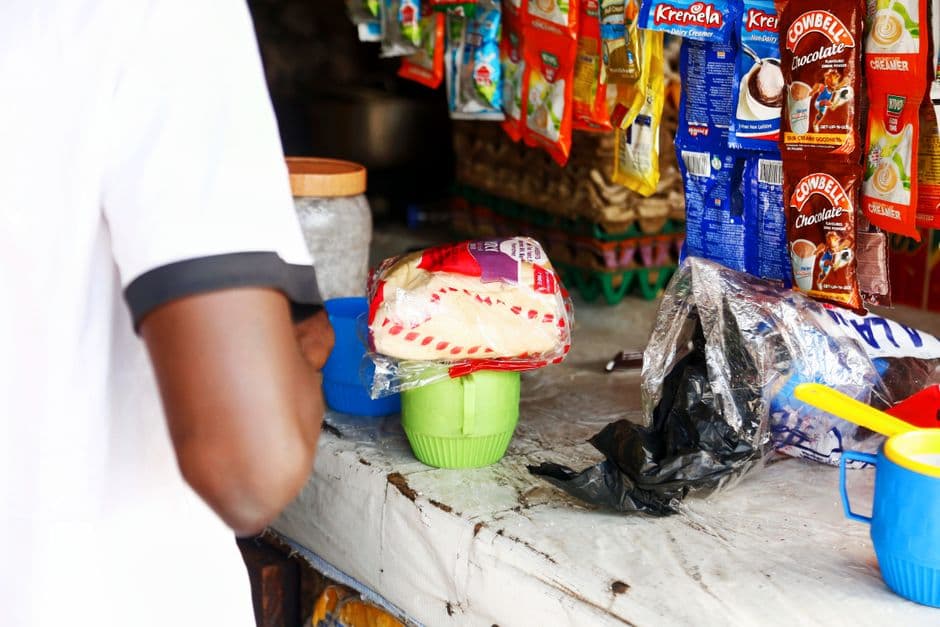
Saturday morning at the Mont-Bouet market, the customer no longer asks whether you have change. She takes out her phone and waits for your merchant number. In 2024, more than 4,000 billion FCFA flowed through Gabon's mobile money, driven by Airtel Money (clearly dominant) and Moov Money (Gabon Telecom). In Libreville, in Port-Gentil, in Franceville, the phone has become a second cash drawer.
The trouble is that the second drawer never talks to the first one. The money lands on the merchant account, the notebook stays on the counter, and by closing time nobody really knows what was sold, at what price, or what is left on the shelf. Gabon has higher purchasing power than most of the sub-region, yet its retail trade is still overwhelmingly informal: the corner shop, the market stall, the maquis that opens at dusk. The revenue is real. The record of it, much less so.
A useful till here does four things, not forty. Record every payment method separately (cash, Airtel Money, Moov Money), work in Central African FCFA (XAF) without decimals nobody uses, keep selling offline when the network or the power goes down, and cost nothing per month. Written out like that it sounds obvious. Yet most tills sold in Gabon are either imported software billed by subscription, or web apps that stop dead the moment the connection stutters.
This guide goes through what actually exists, what it really costs, and where to start if you run a shop, a maquis, or a stall at the market.
Taking Airtel Money and Moov Money cleanly
Two operators matter in Gabon: Airtel Money (Airtel Gabon, dominant) and Moov Money (Moov Africa Gabon / Gabon Telecom). The first move is to open a merchant account with both, and above all to stop running the business through your personal number. Merchant payment is generally free for the customer, the commission sits on the merchant side, and you avoid withdrawal fees for as long as the money stays on the merchant account. Moov even offers merchant collection on an Android terminal with PayXpress.
Receiving the payment is the easy part. Recording it is not.
Every shopkeeper knows the scene that costs money. The queue builds up, the customer shows you a "transaction successful" screen, you let him go so the line keeps moving, and the SMS never arrives. A screenshot takes thirty seconds to fake with any photo editor. So the rule allows no exception, not even for a regular:
- The customer sends the amount to your merchant number (Airtel Money or Moov Money). - You wait for the confirmation SMS on YOUR phone, never the customer's screen. - You record the sale under the right payment method, so the evening report splits cash, Airtel Money, and Moov Money.
It is the third line that gets skipped, and it is the third line that hurts. If every mobile money sale falls into a single "electronic payment" bucket, nothing reconciles: the Airtel statement says 180,000, the Moov statement says 95,000, the till says 300,000, and the 25,000 gap stays a mystery forever. With one payment method per operator, the gap shows up the same evening, channel by channel, while you still remember the day and who was behind the counter.
Reconciling takes five minutes when the till is clean. Open the end-of-day report, compare the Airtel Money line against the Airtel merchant history, then the Moov Money line against Moov, then count the cash in the drawer. Three checks, three answers. A shortfall gets dealt with on the day, not three months later when it has become impossible to explain.
One last counter tip: put your merchant number on a big sign next to the till. You will stop dictating it fifty times a day, and customers will stop sending money to the wrong number.
digabloPos: free, offline, and built for FCFA and mobile money
digabloPos is free for life on its core POS. Not a thirty-day trial, not a crippled demo that cuts you off at a hundred products: selling, stock, receipts and reports cost nothing, and keep costing nothing.
- Airtel Money and Moov Money recorded separately. The daily report splits cash from mobile money, operator by operator. - Native FCFA (XAF). Prices, receipts and reports in Central African francs, with no useless decimals. - Works offline. You sell, track stock and print receipts with no connection. Everything syncs when the network comes back. - No monthly fee. Unlimited sales and products, two staff accounts, receipts, reports. Optional modules wait until you grow. - Any Android phone. No proprietary terminal to rent. A Bluetooth thermal printer only if you want paper receipts. - Customer credit. The neighbourhood tab, but tallied: who owes what, since when, and how much is out there in total.
Two of those points deserve a closer look, because they are the ones that decide things on the ground in Gabon.
Offline first. Plenty of apps advertise an "offline mode" that amounts to keeping the screen alive during the outage, then losing everything on restart. The real test is different: if the network is down for two days, can I sell, take payment, print, and do I get it all back afterwards? Between power cuts and coverage that turns moody as soon as you leave the main roads, that question is not academic in Libreville. Ask it in exactly those words before you sign anything. The right answer is: you lose nothing.
Customer credit next. In a corner shop the tab is not an accident, it is the business model: the neighbour comes mid-month and pays when he gets paid. Granting credit was never the hard part. Knowing how much money is sitting outside your shop is. A till that keeps the balances tells you on one screen, without leafing through the notebook, and you chase the debt before it grows too large to ask for.
Free POS in Gabon, compared
Local software is thin on the ground and usually imported: French tools sold by subscription, or business-management ERPs designed for companies that are already structured. Here is where the options a Gabonese shopkeeper actually runs into sit.
- digabloPos. Free for life, offline first, FCFA (XAF), Airtel Money and Moov Money recorded as separate payment methods, on any Android. The right pick if you want zero recurring cost and zero dependence on the connection. - Loyverse. A capable free global app, but with no particular attention to Gabon or the XAF, and paid add-ons the moment you want more staff accounts or advanced stock management. - Imported business-management tools (Global POS, EBP, XL Pos). Powerful, thorough, paid. They were built for the European market (NF525 certification) and a stable connection, and they ignore Gabonese mobile money. - Payment gateways (Moov PayXpress, Airtel and Moov aggregators). They exist to collect mobile money in store. That is a collection tool to pair with a till, not a full POS.
The rule of thumb fits in one sentence. If your checklist reads no monthly fee, offline, FCFA, Airtel Money and Moov Money, digabloPos is the strongest free starting point. If you run a trading business in Port-Gentil with an in-house accountant, fixed assets and dozens of suppliers, an imported ERP earns its keep and nobody will blame you for paying for it.
In between, beware of one common piece of reasoning: "I will take the most complete one and grow into it." The most complete one demands data entry that nobody has time for behind a counter on a Saturday. A till that goes unused produces wrong numbers, and wrong numbers are worth less than no numbers. Start with what the team will actually use every day, add the rest later.
A last word on sticker price versus real price. Any subscription multiplies by 36 over three years. At 20,000 FCFA a month, that is 720,000 FCFA: enough to kit out two shops with a phone and a printer and still have change. Do that arithmetic before you sign, not after.
By type of business
The same free core covers most Gabonese trades. What changes from one trade to the next is what you switch on, and what you look at in the evening.
- Shop and general store. Barcodes, real-time stock, customer credit for the regulars. The day you see in black and white that rice sells twice as fast as you order it, the Saturday stockouts stop. - Bar, maquis, restaurant. Table orders, send to kitchen, Airtel Money or Moov Money at the counter. The evening service holds together without anyone chasing a forgotten bill. - Pharmacy and parapharmacy. Batch and expiry tracking, scan the box to identify the product. Without that tracking, the expired box is found once it is already a loss. - Market and street selling. Everything on the phone, offline, no hardware. At Mont-Bouet, between the noise, the crowd and the rain, nobody is installing a fixed workstation.
The market case deserves an extra word, because that is where "this is not for me" comes up most often. On a stall at Mont-Bouet or Nkembo, the point is not to print a receipt, nobody asks for one. The point is to know what is left and what the day brought in. The phone that already receives the Airtel Money doubles as the till: two taps to record the sale, saved on the device even with no network, and by evening you know your takings product by product instead of counting notes and trying to remember what went out.
For the maquis, the value sits elsewhere. The black hole in a bar is drinks served and never collected: the bottle given to a friend, the bill that vanishes when the table leaves. Orders recorded per table, with a code per server, closes that door without turning anyone into a suspect. The next morning you know who served what.
Either way, you start with the free till and only switch on a module (kitchen, batches, multi-store) the day the need is proven, not before.
What about tax (VAT, the normalized invoice)?
Let us be honest about scope. A free till covers everyday selling: recording the sale, tracking stock, producing a clean report at closing time. For the vast majority of shops that is the essential part, and it is already far beyond what a notebook gives you.
Tax is a separate layer. Since January 2026, Gabon has been rolling out the normalized electronic invoice (FNE). The 2026 Finance Law makes e-invoicing mandatory for businesses subject to VAT (standard rate 18%), corporate income tax, or synthetic tax. The invoice carries a verifiable QR code and the business registers on the DGI's e-Tax platform. The key point: issuing the compliant invoice goes through the DGI's official system, not through your POS.
Which leads to a sentence worth reading twice. digabloPos is an operational POS and reporting tool, not a certified normalized-invoice issuer. It gives you a structured, dated, reliable sales base that makes the accounting and the compliance work far less painful. It does not replace your obligation to issue invoices through the official system if you are subject to it. Anyone telling you otherwise is selling you air.
Plenty of corner shops are not concerned today. Some will be tomorrow, and the switch is always rougher for the shopkeeper who has no record of his sales: he has to rebuild a year of trading from memory, with a rain-damaged notebook and figures that never add up. Keeping a clean till while you still have the choice costs far less. If you are unsure where you stand, the DGI is the only source that counts, and the link is at the bottom of this article.
Start in 5 minutes
1. Download digabloPos on your Android phone, or simply open it in a browser. 2. Add your products, or import your list, and set FCFA (XAF). 3. Add Airtel Money and Moov Money as payment methods. 4. Make your first sale. Pair a Bluetooth printer if you want paper receipts.
Five minutes is enough to take payment. Give it a month for the shop to genuinely run on numbers. Do not enter your three hundred product lines on the first evening: start with the fifty that make up most of your sales, take payments through the app for two weeks, and keep the notebook next to you if that reassures you. You will add the rest shelf by shelf, then the staff codes and the low-stock alerts.
No contract, no monthly fee, and it keeps selling when the network drops.
What a till really costs in Gabon
Free software does not mean a free setup. Here is where the money actually goes when you put a till together in Libreville or Port-Gentil.
The phone first. An entry-level Android does the job, and most shopkeepers use the one already in their pocket, the same one that receives the Airtel Money. If yours is five years old and crawling, replace it: it is the only truly unavoidable purchase, and it serves for everything, not just the till.
The printer next, and only if your customers ask for receipts. A Bluetooth thermal printer costs a few tens of thousands of francs in Libreville, once, with no subscription behind it. Many shops go a full year without one. The barcode scanner, on the other hand, pays for itself as soon as you sell packaged goods: it wipes out keying mistakes and halves the time per customer at peak hours.
The software last. The digabloPos core POS costs nothing whatever your turnover, and there is no hidden tier that catches up with you after six months. The advanced modules (kitchen, batches and expiry dates, multi-store, extra staff) are taken one at a time, a few thousand FCFA a month each, and cancelled whenever you want.
Against that, the classic subscription is due from day one, before your first sale, and it keeps landing in January when the shop is quiet and customers have drained their mobile money over the holidays. Our view, and we stand by it: for a corner shop or a maquis, a monthly subscription makes no sense as long as you are not using the advanced features it bills you for. Pay for the hardware, not for the software's rent.
The mistakes that cost real money
The first one has been said already, but it happens every single day: accepting a screenshot as proof of payment. It takes thirty seconds to fake. Only the SMS on your merchant account counts, even when the queue is long, even when the customer sighs, even when he is a regular's cousin.
The second is collecting on your personal number. Shop money mixes with household money, withdrawal fees quietly eat the margin, and by month end nobody knows what the shop actually earned. One merchant account with Airtel, one with Moov, and the problem disappears.
The third is choosing software that demands a permanent internet connection. At the first serious outage you fall back to paper, and the stock figures in the app mean nothing for weeks afterwards. That is precisely what never gets tested in a demo, in an air-conditioned office with perfect fibre.
The fourth is never comparing the stock in the software with the stock on the shelf. A rolling count, even partial, even one aisle a week, catches the leaks before they dig a hole. Without it the app says 40 cases of juice, the shelf holds 31, and nobody will ever know where the other 9 went.
The fifth is not training the team. A good tool used badly produces wrong figures. Half a day with your sellers, one code per person, and you will finally know who did what, including who is voiding sales at eleven at night.
The last one is quieter: only ever looking at the daily total. That total teaches you almost nothing. What makes you money is knowing which ten products carry most of your turnover, which ones have been sitting on the shelf for two months tying up your cash, and how much the neighbourhood owes you on the tab. Those three numbers are already in the free till. You just have to open the report.
Also on digabloPos
Sources and references
Start your free till in Gabon
No monthly fee, Airtel Money and Moov Money recorded separately, works offline, in FCFA. digabloPos runs on any Android and is ready in five minutes.
Try for free