Free POS Software in Togo 2026: Flooz, T-Money, FCFA
Free POS software in Togo in 2026: record Flooz and Mixx by Yas (T-Money), sell offline in FCFA with no monthly fee. How digabloPos compares with Loyverse.
POS specialist, Africa (anglophone & francophone)
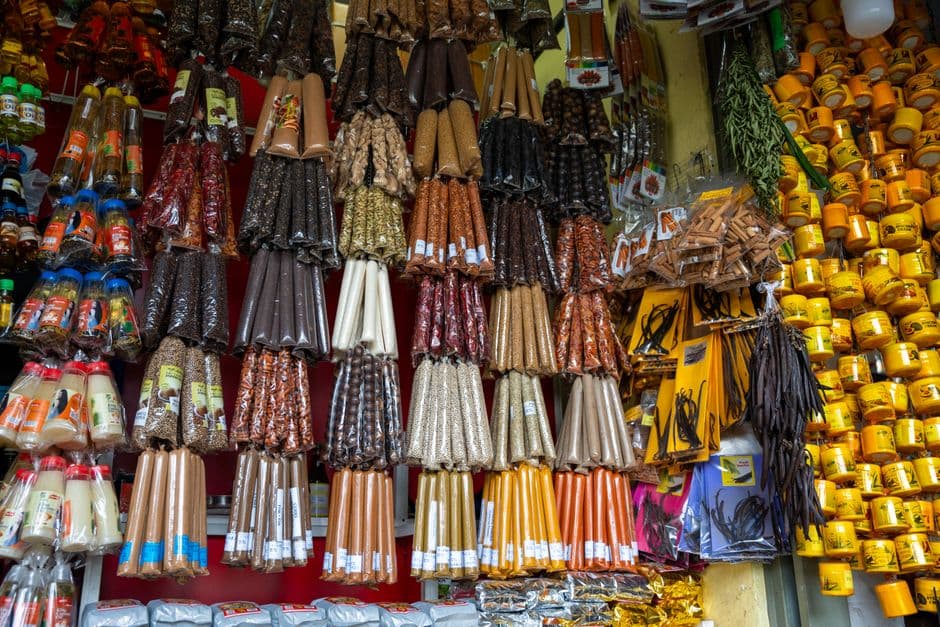
A free till for the Togolese shop, Flooz and T-Money included
Saturday morning at Assigamé, the great market of Lomé. The wax print sellers are laying out their bolts of cloth, the aisles are already packed, and when a customer pays she does not always reach for banknotes. She dials \*155# and sends the amount by Flooz. Two rows down, the man selling batteries has written his Mixx by Yas number in marker pen on a piece of cardboard. The same scene plays out in the evening in the shops of Bè, Tokoin and Agoè, and in the neighbourhood buvettes, the small open-air bars where a round of beer gets settled by phone between two football matches.
Cash still rules, and there is no point pretending otherwise. At the market and in the corner grocery, a large share of the day still happens in coins and notes. But mobile money has settled in alongside it, and that is exactly where the till starts to hurt. A paper notebook cannot tell you, at 8 pm, how much came in through Flooz, how much through Mixx by Yas (the wallet formerly known as T-Money), and how much is sleeping in the drawer. Until you can answer that, you do not really know whether the day went well.
What a till has to do in Togo comes down to four things. Record each payment method separately. Count in FCFA, the West African CFA franc (XOF), a currency with no decimals worth printing. Keep selling offline when the connection drops or when CEET, the national power utility, cuts the neighbourhood’s electricity. And ideally cost nothing per month. Yet most POS software sold in Togo is paid, on a subscription, or built for compliant invoicing rather than for the counter of a shop in Lomé, Kara or Sokodé.
This guide sorts it out: what a till has to do here, how the free options really compare, what a subscription costs you over a year, and the mistakes that quietly drain a cash drawer.
Taking Flooz and Mixx by Yas (T-Money) cleanly
Two wallets matter in Togo. Flooz, from Moov Africa Togo (dial \*155#), now the most used by transaction volume. And Mixx by Yas, the former T-Money, run by Tmoney S.A. of the Yas/Togocom group (dial \*145#). Most traders accept both, for the simple reason that the customer pays with the operator that is already in her phone, not with the one you would prefer.
First move: open a merchant account with the operator, instead of running the shop’s money through your personal number. Merchant payment is generally free for the customer, the commission sits on your side, and people pay more willingly when the gesture costs them nothing. Write the merchant number up at the counter, in large figures, so nobody has to dictate it ten times during the rush.
Receiving the money is the easy part. The real work is recording the payment at the till. For every sale:
- The customer sends the amount to your merchant number (Flooz or Mixx by Yas). - You wait for the confirmation on your merchant phone. Never the customer’s screenshot: a fake one takes thirty seconds to produce, and fake confirmation screens circulate in every market in the country. - You record the sale with the right payment method, so the evening report cleanly splits cash, Flooz and T-Money.
At closing time you compare the balance of each merchant account with what the till says, channel by channel. A gap of 5,000 FCFA jumps out when the channels are separated; it sinks into the noise when everything lands in a single total. A till that creates one payment method per wallet turns that reconciliation into a five-minute routine. Check for that before you even look at the price.
digabloPos: free, offline, and built for FCFA and mobile money
digabloPos is free for life on its core till. Not free for three months, not free until your fiftieth sale: free, full stop. Here is what that core covers.
- Flooz and Mixx by Yas (T-Money) recorded as separate payment methods. The evening report splits cash from mobile money, wallet by wallet. - Native FCFA (XOF). Prices, receipts and reports in CFA francs, with no decimals that do not exist. - Works offline. You sell, track stock and print receipts with no connection. Everything syncs when the network comes back. - No monthly fee. Unlimited sales and products, two staff accounts, receipts, reports. Paid modules exist for later, if the shop grows. - Any Android phone. The phone already in your pocket is enough. A Bluetooth thermal printer stays optional. - Customer credit, the neighbourhood tab. The regular who takes now and settles at the end of the month is part of shop life here. Her balance lives in the till instead of a notebook that always ends up lost.
The offline point deserves a pause, because it is where a lot of apps quietly fail. Between a CEET power cut that takes the wifi down and mobile data that crawls at peak hours, a till that demands a permanent connection stops several times a week in Lomé, and far more often upcountry. A till that records everything on the phone and syncs afterwards never stops: the customer at 9 pm is served exactly like the one at noon.
For a shop, a buvette or a market stall counting every franc, this free core removes the two classic barriers to getting equipped: hardware to buy and a subscription to pay every month.
Free POS in Togo, compared
The Togolese market comes down to four families.
- digabloPos: free for life, offline first, FCFA, records Flooz and Mixx by Yas separately, runs on any Android. - Loyverse: a capable free global app, but with no particular support for Togo or the FCFA, and paid monthly add-ons. - Compliant invoicing tools (NIF, OTR): handy for issuing standard-compliant invoices, often free-trial then paid. They are invoicing tools, not counter tills that keep selling with no network. - Paid local POS: a monthly subscription depending on the features, sometimes with hardware you are obliged to buy.
Each of these has a place, and it would be dishonest to pretend otherwise. Loyverse does the job if you sell somewhere the connection never drops, which describes neither Assigamé on a market day nor many parts of Lomé at the end of the afternoon. An invoicing tool becomes necessary the day the tax administration expects a standardized invoice from you, but it will not help you ring up a beer on a Saturday night. And a paid POS can be defended when one specific feature justifies the cost, not because a salesperson walked into the shop.
If your requirement fits in four phrases (no monthly fee, offline, FCFA, mobile money), digabloPos is the strongest free starting point. You try it on the phone you already own, with no commitment, and you judge it on your own sales rather than on a brochure.
By type of business
A general store in Agoè does not live like a buvette in Bè, and a cloth seller at Assigamé lives differently again. The same free core covers all three, with different settings.
The shop and the general store. Barcodes speed up checkout and make the stock reliable: you scan the tin of milk, the right price comes up, the quantity counts itself down. Customer credit, the ardoise, earns its keep every day in a neighbourhood. That tab is better off living in the till, with an up-to-date balance for each regular, than in a notebook nobody rereads.
The buvette, the bar and the fast food joint. Orders are taken by table, sent to the kitchen, and the bill is settled at the counter in cash or by phone. On a match night, when every table fills at once and everyone orders together, this is the difference between lost orders and served customers. The braised chicken and the brochettes do not wait.
The pharmacy and the parapharmacy. Batch and expiry tracking becomes possible, with box scanning to identify the product automatically. An expired box found too late is money thrown away. An alert a few weeks ahead is a product sold in time.
The great market and street selling. The Nana Benz, the women who built the Togolese wax print trade and turned it into fortunes, ran it all on a notebook and an iron memory. Their sellers now work with a phone in hand: everything fits inside it, no hardware at all, and offline mode shows its full value. You sell at the stall or on the move without worrying about the network, and it all syncs in the evening once you are back.
The logic stays the same in every case. You start with the free till, and you switch on a module (kitchen screen, batches, multi-store) the day the business asks for it. Not before.
What about the standardized invoice (OTR, 18% VAT)?
Be clear about what a free till covers, and what it does not. It covers everyday selling: recording each transaction, tracking stock, producing a clean report at night. For the vast majority of shops, buvettes and stalls in the country, that is the bulk of the need, and it already beats the notebook by a wide margin.
If, on the other hand, you are VAT-registered (18% in Togo) and must issue standardized invoices (facture normalisée) compliant with the Office Togolais des Recettes (OTR), the Togolese revenue authority, with your NIF and the required fiscal visa, know that this is a separate layer from a POS. Worth knowing before you worry: since 1 January 2025, the VAT registration threshold was raised to 100 million FCFA of annual revenue, so a great many small shops fall below it and are asking themselves the question for nothing.
digabloPos is a POS and reporting tool, not a certified issuer of standardized invoices. What it gives you is a structured sales base: every sale dated, split by payment method, easy to find again months later. The accounting work that follows becomes far simpler than reconstructing a month of activity from carbon-copy receipt books. But do not confuse the two layers, and check your own situation directly with the OTR rather than with a software vendor who has every interest in reassuring you.
Start in 5 minutes
No need to block out a day or call in a technician.
1. Download digabloPos on your Android phone (or open it in a browser). 2. Add your products, or import your list if you already have one in a file, and set the currency to FCFA. 3. Add Flooz and Mixx by Yas (T-Money) as payment methods. 4. Make your first sale. Pair a Bluetooth printer if your customers want a paper receipt.
The right moment to do this is a quiet one: a Tuesday morning rather than a Saturday at Assigamé. Start by entering the fifty products that sell the most, ring up sales with the app for a week while keeping the notebook alongside if that reassures you, then add the rest of the stock shelf by shelf. After a fortnight, the shop runs on real figures. No contract, no monthly fee, and it keeps selling when the network drops.
What a subscription really costs you over a year
Do the arithmetic once, calmly, before you sign anything. A subscription at 10,000 FCFA a month is 120,000 FCFA a year. At 25,000 FCFA a month, you are looking at 300,000 FCFA a year, every year, whether trade was good or not. Over three years that is a whole shelf you did not fill, several months of rent, or the freezer you have been putting off for two seasons.
The argument from paid-software vendors is support and advanced features. Look honestly at what you use at the counter: ringing up sales, tracking stock, splitting cash from mobile money, printing the evening report. That core exists for free. The advanced features (multi-store, kitchen screen, detailed batch tracking) earn their keep at a certain stage of growth, and at that stage a per-module model, where you pay only for what you actually use, costs less than an all-inclusive plan you exploit at half capacity.
Then there is the hidden hardware cost. Some offers force their own terminal on you. You end up paying for a device that does less than the phone already in your pocket, and the day you change software, the box goes into the cupboard along with the subscription. A till that runs on your own Android leaves you free to walk away whenever you like. The first franc goes into stock, the second into a receipt printer if your customers ask for one, and none into a subscription for as long as the free tier covers the need.
The mistakes that quietly drain a cash drawer
The first is mixing the payment channels. Everything lands in one total, and the day 15,000 FCFA is missing, there is no way to tell whether the hole came from the drawer, from a Flooz transfer that never arrived, or from a sale nobody recorded. Separate the channels on day one, not on the day of the first gap.
The second is the screenshot. At peak hours, the waiter glances at the customer’s phone, sees a confirmation screen, and lets it go. Fake screens circulate in Lomé as they do everywhere else. The rule allows no exception: it is the confirmation received on your merchant phone that validates the sale, never the customer’s screen.
The third is not counting at night. The end-of-day report tells you how much should be in the drawer and on each merchant account. The comparison takes five minutes. A gap spotted the same evening gets settled with the team the next morning; a gap discovered at the end of the month is gone for good, and it poisons trust with everyone.
The fourth is choosing a till that demands the internet. At the first long outage you go back to paper, the day’s figures are wrong and the stock means nothing. Before committing, run the airplane-mode test: open the app, cut the network, make a sale. If it goes through, the tool can handle Togo. If the screen freezes, move on to the next one.
The last is not training the team. A badly used till produces wrong figures, and wrong figures are worse than no figures at all, because they inspire undeserved confidence. An hour of hands-on training, one PIN code per employee so every sale has a name attached, and you finally know, each evening, what really happened in your shop.
Also on digabloPos
Sources and references
Start your free till in Togo
No monthly fee, Flooz and Mixx by Yas recorded separately, works offline, in FCFA. digabloPos runs on the Android phone you already own and is ready in 5 minutes.
Try for free