Free POS Software in Mexico 2026: Mercado Pago, CoDi, abarrotes
Free POS software in Mexico 2026: record Mercado Pago, CoDi and cash, work offline, price in pesos, pay no monthly fee. Compared for corner stores (abarrotes).
Point of sale, Mexico City, Mexico
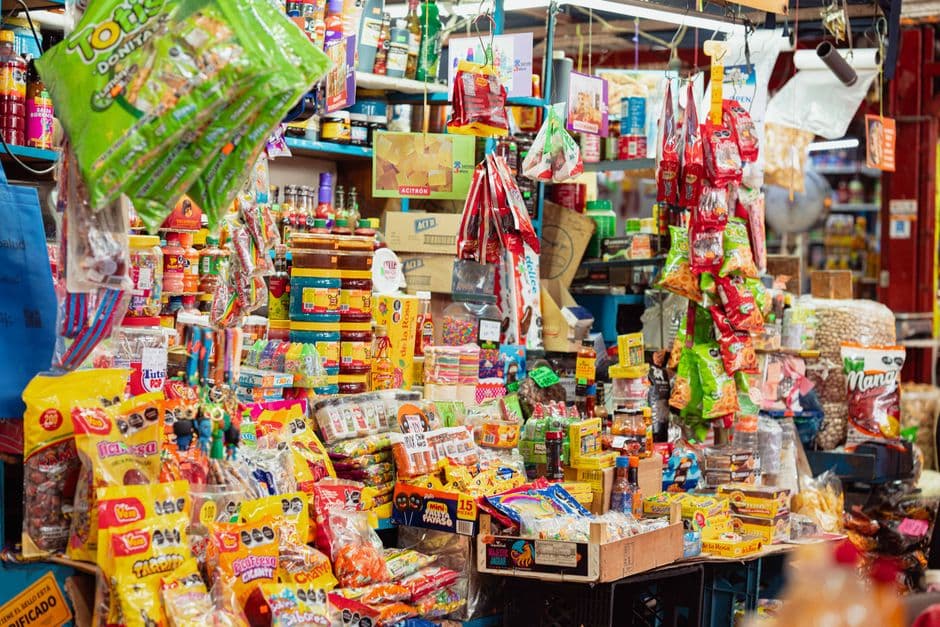
A free till for the Mexican store: Mercado Pago, CoDi and cash
Seven in the evening, a tienda de abarrotes in a working-class district of Mexico City. One customer puts two soft drinks and a kilo of tortillas on the counter and pulls out his phone: he wants to pay with Mercado Pago. The man behind him is holding a 500 peso note and waiting for change. The lady from the corner takes bread and soap on credit, as she does every week, and it goes in the notebook. Three sales, three ways of paying, and not one of them recorded in the same place.
That is not a technology problem, it is a money problem. By the end of the week the shopkeeper cannot say how much came in by transfer, who owes what, or why the two-litre bottles ran out on Thursday when stock said otherwise. This is the everyday reality of the corner store in Mexico City, Guadalajara, Monterrey and every small town in between, and it is why a paper notebook eventually stops being enough.
If you are moving into this market, or running a shop for family back home from abroad, the shape of the problem is worth understanding before you shop for software. The phone now lives inside the cash drawer. Customers pay with Mercado Pago, with SPEI transfers, with CoDi, and still, very often, with cash. A store that only takes cash quietly loses sales to the one across the street that does not.
So the right till has to do four things, and only four to begin with: record each payment method separately (cash, Mercado Pago, CoDi, card), handle the peso (MXN) properly, work offline when the power or the internet goes, and cost nothing per month. That is what a changarro actually needs. It is rarely what traditional registers sell, since most of them arrive with hardware and a subscription attached, and that subscription does not pause on the days the shop takes very little.
Taking Mercado Pago, CoDi and transfers cleanly
In Mexico it pays to lean on what people already carry. Mercado Pago dominates: cards, SPEI transfers, cash paid in at OXXO, and the balance held in the app itself, with its Point terminal handling card payments at the counter. Clip is the other card reader you see clipped to a shopkeeper's phone all over the country. CoDi, the Bank of Mexico's QR payment standard, is used mostly for small amounts, and a SPEI transfer lands in seconds.
Receiving the money is the easy half. The half that ruins shops is recording it at the till.
Two rules are worth more than any feature list. First, confirm the payment on your side, in your own account or on your own terminal, never from the screenshot the customer holds up. Those screenshots are faked in thirty seconds and some people make a living from it, always in the middle of the Saturday rush. Second, log the sale under the method that was truly used, even when there is a queue behind. A peso filed in the wrong column today is half an hour of detective work on Sunday.
When every channel has its own payment method inside the system, reconciling stops being guesswork. You open the Mercado Pago statement, compare it with what the till says for that channel, and if there is a gap you know exactly which sale to look at. Without that discipline, matching statements against the drawer is a matter of opinion, and opinions do not survive an argument with a supplier or an accountant.
digabloPos: free, offline, and built for the peso
Against that four-point list, here is what the core of digabloPos gives a Mexican shop, with no monthly fee and no card details required to start.
- Mercado Pago, CoDi, SPEI, card and cash as separate payment methods, so the end-of-day cut splits itself. - Real pesos and centavos in prices, tickets and reports. - Full offline operation. You sell, deduct stock and print tickets with no internet and no power on the street; everything syncs when the signal comes back. - Unlimited sales and products, two staff members, tickets and reports on the free plan. Optional modules (kitchen, batches and expiry dates, several branches) are switched on only if the day comes when you need them. - Any Android phone. No expensive terminal; a cheap Bluetooth thermal printer is enough for tickets. - Customer credit (fiados) with a running balance per person, which is what finally retires the notebook.
One detail matters more than it looks. Each employee signs in with their own PIN, so every sale, every cancellation and every discount carries a name. In a shop where the son, the wife and the afternoon helper all serve customers, that is worth as much as the stock control. When the cut does not balance and everyone shares one login, there is nobody to ask.
The end-of-day cut is where the whole thing proves itself. At closing time it tells you what should be in the drawer in cash, what came in through Mercado Pago, what through CoDi and transfers, what on card. You count the cash. If it balances, you close and go home. If it is short, you know tonight, not next month when the gap has quietly become a habit.
Free POS in Mexico, compared
Mexico has serious local options, and several are genuinely free. Here is where they sit.
- digabloPos. Free for life, offline-first, pesos, records Mercado Pago, CoDi and card, runs on any Android. Its strength is not depending on the signal and not charging a monthly fee. - Tiendatek. Very popular free POS among Mexican shopkeepers (tenderos), with inventory, fiados and Mercado Pago terminal integration. Clearly built for abarrotes. - AbarrotesPDV. Free software that turns a computer into a POS, simple and direct for a corner store. - Eleventa. A well-known register in Mexico, free to start, with a paid plan for the advanced features. - Alegra. POS with a free trial and then paid plans (from around $215 MXN a month); its strength is invoicing. - Loyverse. A capable free global app, but with no Mexico-specific support and paid add-ons.
If your checklist reads "no monthly fee, offline, pesos, Mercado Pago and CoDi," digabloPos and Tiendatek are the two sensible starting points. If invoicing is what keeps you up at night, look at Alegra or a dedicated Mexican invoicing provider, and treat that as a separate cost from the till itself.
Do not choose on the length of the feature list. Every product in that list will show you a dashboard. Very few of them will still take a payment when the modem is restarting on a Saturday afternoon, and that is the test that matters in this market.
By type of business
The same free core adapts to almost any Mexican trade, with very little changed.
In an abarrotes or changarro, speed at the counter is what counts: barcodes, live stock, credit for the neighbours, and a clean Mercado Pago reconciliation at closing. Nobody is going to inventory twelve hundred product lines every week, and any consultant who suggests it has never stood behind that counter. What works is automatic deduction on every sale, a minimum level set on the twenty or thirty items that really move the cash (soft drinks, oil, eggs, beer, tortillas, cigarettes), and one shelf counted properly per week.
In a fonda, taquería or café, what counts is quick item buttons, sending the order to the kitchen without shouting, and card or CoDi at the counter. With tables open on screen, nobody walks out unpaid by accident.
In a pharmacy, what counts is batches and expiry dates, plus scanning the box so the product identifies itself instead of being typed in. Selling the batch that expires first is the difference between margin and rubbish.
In the tianguis or street selling, what counts is that the whole till fits in a phone and works with no signal, because a market aisle has neither wifi nor a power socket. You sell, and it syncs when you get home.
You start with the free till and switch on a module the day you truly need it, not before.
What about the SAT (CFDI 4.0, VAT)?
This is where honesty matters, because plenty of software pages promise more than they deliver.
A free till covers your operations: recording sales, tracking stock, reconciling Mercado Pago, producing a clean cut. That is the backbone most corner stores need every single day.
The invoice is a separate tax layer. In Mexico, the CFDI 4.0 electronic invoice is mandatory and the only one valid before the SAT since April 2023, and a sales ticket is not a CFDI. When a customer asks for a factura, that CFDI is stamped through a PAC (an authorized certification provider) or the SAT portal, using the recipient's RFC and tax regime. Standard VAT (IVA) is 16%, and many small businesses file under the Régimen Simplificado de Confianza (RESICO).
In practice: treat digabloPos as your point-of-sale and reporting system, and issue CFDIs through your invoicing provider or the SAT portal when they are requested. The benefit is not small. Arriving at month end with sales already classified by payment method, instead of a bag of tickets and a notebook, saves you hours and saves your accountant billable time. If you are running the shop from another country, it is also the only way to know what really happened at the counter last week.
Start in 5 minutes
1. Download digabloPos on your Android phone (or open it in the browser on the counter computer). 2. Set the Mexican peso (MXN) and enter your fifty best-selling products, with prices and barcodes. Just fifty. 3. Add Mercado Pago, CoDi, card and cash as payment methods. 4. Make your first sale, and pair a Bluetooth thermal printer if you want tickets.
Then run the till for one full week, keeping the notebook beside it if that reassures you, and do the cut every night. In week two, add the rest of the catalogue one shelf per day and set minimum levels on the items that move. In week three, give each person who serves customers their own PIN and move the fiados out of the notebook and into the system.
No contract, no monthly fee, and it keeps selling when the internet drops.
The mistakes that cost real money
The first one is lumping everything into "cash" because there is a queue. Two weeks of that and your till is lying to you, and a system you no longer believe gets abandoned.
The second is accepting a screenshot as proof of payment. It happens far more than shopkeepers admit, and it always happens at the busiest moment.
The third is choosing a system that requires the internet. In Mexico that is not a remote hypothesis, it is an ordinary Tuesday: a CFE power cut, a modem rebooting, mobile data running out mid-month.
The fourth is one shared login for the whole family. When the drawer is short and everyone used the same PIN, there is nobody to ask and nothing to check.
The fifth is trying to type in all twelve hundred products on day one, getting tired, and giving up. That is how good tools end up unused on a shelf.
What "free" really costs
Free is a word to read carefully in this market. Before committing to any till, check four things.
Transaction fees. Some free systems earn by taking a percentage of every payment routed through them. On fifty thousand pesos of monthly sales, three per cent is fifteen hundred pesos. That is not free, it is a subscription with a friendlier name.
Tied hardware. If the software only runs on the vendor's own terminal, you are renting a box forever. The Android phone already in your pocket does the same job.
Modules dressed up as optional. Ask what the features you will actually use cost, not what the headline plan shows.
Your data. If you decide to leave in a year, can you export your products, your sales and your customers? If the answer is no, it is not free software, it is a free cage.
digabloPos charges nothing for the core till and takes no cut of your sales. Modules are paid separately, only when you switch them on, and can be cancelled whenever you like. Your first real spend in a Mexican shop should be a thermal printer and a decent case for the phone, not a monthly plan.
Frequently asked questions
Is there a free POS software in Mexico?
Yes. digabloPos is free for life on its core POS, in pesos (MXN), records Mercado Pago, CoDi and cash, and works fully offline on any Android, ideal for corner stores (abarrotes).
Can it record Mercado Pago and CoDi separately?
Yes. You set up Mercado Pago, CoDi, SPEI and card as separate payment methods, so your end-of-day cut splits cash from each digital method and reconciliation is simple.
Does it work without internet?
Yes. digabloPos works fully offline, you sell, track stock and print tickets with no internet, and everything syncs when the signal returns.
Does it issue CFDI invoices for the SAT?
digabloPos is your point-of-sale and reporting system. The CFDI 4.0 invoice is a separate tax layer (stamped through a PAC or the SAT). Use your invoicing provider for CFDIs and digabloPos for daily operations and the end-of-day cut.
Also on digabloPos
Sources and references
Start your free till in Mexico
No monthly fee, records Mercado Pago, CoDi and cash, works offline, prices in pesos. digabloPos runs on any Android and is ready in five minutes.
Try for free