Free POS Software in Colombia 2026: Nequi, Daviplata, Bre-B
Free POS software for Colombian corner stores: record Nequi, Daviplata, PSE and Bre-B, track fiados, sell offline in pesos, and pay no monthly fee at all.
Point of sale, Mexico City, Mexico
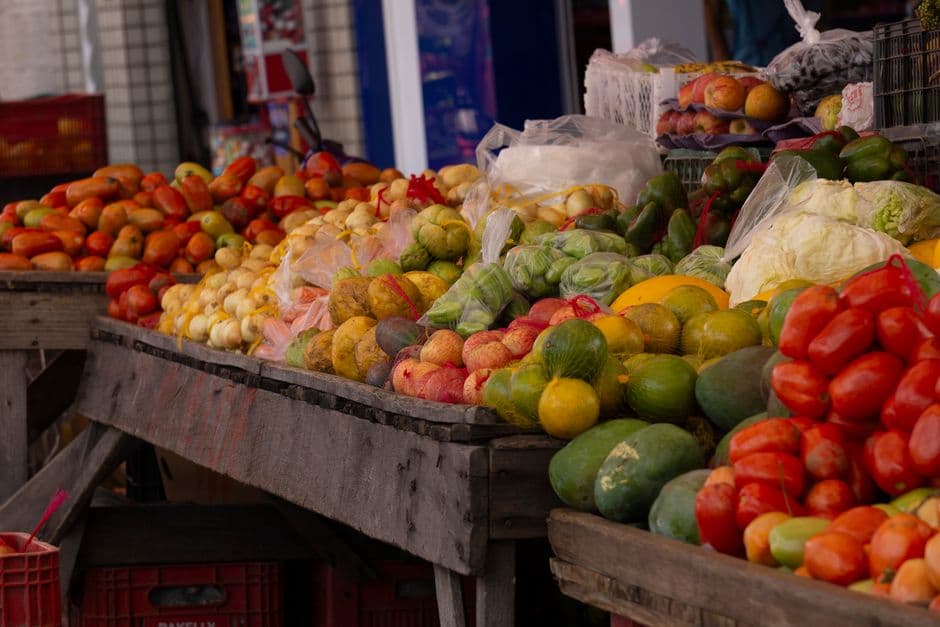
A free till for the Colombian store: Nequi, Daviplata and cash
Half past six in the evening, and the tienda de barrio fills up. One customer pays for milk and bread in cash. The next one pulls out his phone and sends the money by Nequi without breaking his call. The third asks you to write it down, he will pay on Friday when he gets paid. The fourth wants to know if you take Daviplata, because he stopped carrying notes months ago.
Four sales, three payment methods and one credit slip, all inside three minutes. That is the ordinary rhythm of a corner store in Bogotá, Medellín, Cali or Barranquilla, and it is the reason a Colombian till has a harder job than a European one. At closing time you need to know how much cash is in the drawer, how much landed on the phone, and how much people owe you.
So the right till has to do four plain things: record each payment method separately (cash, Nequi, Daviplata, PSE, card), work in the Colombian peso (COP), keep selling when the internet drops, and cost nothing per month. That is what a small Colombian shop actually needs, and it is rarely what traditional registers offer, since most arrive bundled with a card terminal and a subscription.
This guide covers three things: how to keep digital payments straight, which free point of sale options genuinely work in Colombia, and where a free till stops. That last part matters, because a POS is not an invoicing agent for the tax authority.
Taking Nequi, Daviplata, PSE and Bre-B cleanly
In Colombia it pays to lean on what people already have installed. Nequi (Bancolombia group) and Daviplata (Davivienda) are the everyday wallets, and the Bancolombia QR taped next to the register is part of the furniture by now. PSE handles direct debits straight from the bank account. And since 2025 there is Bre-B, the instant payment system run by the Banco de la República, the central bank: it is interoperable and works with “llaves” (keys: your phone number, email, ID number or a code), so a customer pays you instantly whatever bank or wallet holds their money.
Receiving the payment is the easy half. The half that costs you money is recording it. The routine is short, and it has to survive the evening rush:
- The customer pays by Nequi, Daviplata, PSE, Bre-B, QR or card. - You confirm the payment on your side, in your own app or account. Never on the customer’s screen. - You log the sale under that method, not under cash and not under a catch-all “other”.
The second step is not paranoia. A transfer confirmation screenshot takes about thirty seconds to fake, and the classic version of the trick is the customer in a hurry who waves his phone at you, says it has gone through, and walks out with the goods while you serve three other people. The only confirmation worth anything is the sound your own app makes. During the rush, keep the shop phone in sight with the volume up.
The third step is what saves your close. When every digital sale lands in the same bucket, reconciling the month becomes guesswork: the Nequi statement says one thing, the drawer says another, and you quietly absorb the difference. A till that creates one payment method per channel hands you four or five clear figures at the end of the day. You compare each one against its app, and anything missing shows up that same evening instead of three weeks later.
digabloPos: free, offline, and built for the peso
digabloPos runs on any Android phone, and the core till is free for life. Not a fifteen day trial, and not a stripped version that locks up at sale number one hundred.
- Records Nequi, Daviplata, PSE, Bre-B, card and cash as separate payment methods, so your daily cut splits each channel. - Native Colombian peso (COP). Prices, tickets and reports in pesos, no centavos, the way your customers read them. - Works offline. Sell, draw down stock and print tickets with no internet; everything syncs when the signal comes back. - No monthly fee. Unlimited sales and products, two staff accounts, tickets and reports, free. Optional modules only when you grow. - Customer credit (fiados). A running balance per customer: the neighbourhood notebook, but tallied. - Any Android phone. No expensive card terminal; an optional Bluetooth thermal printer if you want printed tickets.
Offline is worth dwelling on, because it is where most cloud tills quietly fail in Colombia. A basement unit in a shopping centre, a stall in the plaza de mercado, a heavy downpour in Medellín, a power cut in the neighbourhood, and the subscription till you signed up for will not open. Meanwhile the queue grows and the customer walks next door, where they are still selling with a calculator. Before you commit to any software, ask the salesperson one direct question: if I go two days without internet, what do I lose? The only acceptable answer is nothing.
What you feel day to day is the close. You count the notes in the drawer, look at the Nequi and Daviplata figures the till gives you, compare them with the apps, and in five minutes you know whether the day balanced. Repeated every evening, that is what tells you whether the shop is making money or just moving goods.
Free POS in Colombia, compared
Colombia has serious local options, and several are genuinely free. Here is where they sit:
- digabloPos: free for life, offline first, in pesos, records Nequi, Daviplata, PSE, Bre-B, card and cash, runs on any Android. The best bet if you want zero recurring cost and no dependence on the signal. - Treinta: a hugely popular Colombian app among corner stores and micro entrepreneurs. Records sales, expenses, inventory and accounts receivable (fiados) from the phone, with a free plan. A great starting point. - Alegra POS: cloud POS with a free trial (15 days) then paid plans. Its strength is electronic invoicing, since it is a DIAN authorized provider. - Siigo: accounting and electronic invoicing software widely used by SMEs. Powerful, but paid and accounting oriented. - Bsale: cloud POS with invoicing, popular in retail; paid. - Loyverse: capable free global app, with no Colombia specific support and paid add-ons. - Mercado Pago Point: Mercado Pago’s card reader. Fine for cards, but not a full till with inventory.
If your checklist reads “no monthly fee, offline, pesos, Nequi, Daviplata and Bre-B”, digabloPos and Treinta are the two strongest free starting points. And an opinion, since nobody else will give you one: if you are just opening and turnover is small, paying a dollar priced cloud subscription for a POS makes no sense. That money does more work sitting in stock. The day your accountant genuinely needs electronic invoicing, you add an authorized provider for the invoices and keep the free till for selling.
By type of business
The same free core adapts to almost any Colombian trade, and what changes is the module you switch on later.
- Corner store and minimarket. Barcodes for packaged goods, quick buttons for whatever is sold loose, real time stock, fiados for the regulars from the building across the street, and clean Nequi and Daviplata reconciliation. - Restaurant, café and bakery. Product buttons for the midday corrientazo (the set lunch), orders sent straight to the kitchen, and QR, PSE or card at the counter. At one in the afternoon, every second in the queue counts. - Droguería (pharmacy). Batch and expiry tracking, scan the box to identify the product without hunting for it. A pharmacy with no expiry control is throwing money away on its own shelves. - Market stall, licorera and street vendor. Everything on the phone, offline, with no hardware: you sell even with no signal, and it all syncs later.
One habit cuts across all of them: the fiado, the credit slip. In a Colombian corner store, giving credit is not going away, and it does not need to. It is what keeps the family from the building opposite loyal, and what makes the fortnightly pay day land in full. The problem is never granting credit, it is granting it without a record. A till that tracks fiados turns the notebook into a running balance per customer, with a date on every line, so you can do the one thing the notebook never allowed: set a ceiling. A good customer with a sensible limit is a business. A customer you keep serving on credit because he always pays in the end is an interest free loan you are making out of your own working capital.
You start with the free till and only turn on a module (kitchen, batches, multi store) the day the business genuinely asks for it. Not the other way round.
What about the DIAN (VAT, electronic invoice)?
Time to be honest, because this is where most people get confused. A free till covers your operations: recording sales, tracking stock, reconciling Nequi and Daviplata, knowing who owes you, and producing a clean cut. That is the backbone the vast majority of shops need.
But the invoice is a separate tax layer. In Colombia, a physical POS ticket is only valid when the sale does not exceed 5 UVT per document (in 2025, 5 UVT ≈ COP $212,060). Above that amount, or whenever the customer asks for it, you must issue an electronic invoice (factura electrónica) or the electronic equivalent document (electronic POS), transmitted to the DIAN in real time. Standard VAT (IVA) is 19%, and many small businesses file under the Régimen Simple de Tributación (RST).
Important, with no small print: digabloPos is your point of sale and reporting system, not a DIAN authorized electronic invoicing issuer. The electronic invoice and the electronic POS document are issued through an enabled technology provider (proveedor tecnológico) or through the DIAN’s own free invoicing software.
In practice the arrangement that works is this: you sell and reconcile in digabloPos, and you issue invoices through your provider or the DIAN portal when they are demanded. The tidy sales base sitting in the till is exactly what your accountant needs, instead of a bag of crumpled tickets at the end of the month. And if any software promises to “take care of the DIAN for you” without being an authorized provider, be suspicious.
Start in 5 minutes
1. Download digabloPos on your Android phone, or open it in a browser. 2. Load your products (or import a list) and set the Colombian peso (COP). 3. Add Nequi, Daviplata, PSE, Bre-B, card and cash as payment methods. 4. Make your first sale, and pair a Bluetooth printer if you want tickets.
No contract, no monthly fee, and it keeps selling when the internet drops. By the end of the first day you will have something the notebook never gave you: the exact count of what came in, channel by channel.
What it really costs to start
The core till costs nothing per month, so the whole budget comes down to equipment, and you probably already own it.
The Android phone in your pocket is enough to begin: download it, load the products, and you are selling the same afternoon. If you want printed tickets, a Bluetooth thermal printer is the only purchase you need, and it is a one off. A barcode scanner helps if you carry a lot of packaged lines, though the phone camera scans too.
What you avoid is the interesting part: no rented card terminal, no annual licence, no per user charge, no cap on sales. If the shop grows and you open a second location, you switch on the module you need and pay for that alone. A shopkeeper with modest turnover has no business paying a fixed monthly fee before selling the first sack of rice of the month.
The mistakes that cost the most
Almost every discrepancy we see in Colombian shops fits into five lines.
Filing everything digital as cash. The most common and the most expensive. If Nequi, Daviplata and card all land in the same bucket, your close is worthless and you will never find where the money leaks.
Believing the screenshot. Confirm in your own app, every time, especially when the customer is in a hurry, which is exactly when the trick works.
Giving credit with no ceiling and no date. The fiado you do not record today is the one you never collect. Set a limit per customer and review the debtor list once a week, not once a year.
Not closing the till every day. Today’s discrepancy can still be solved today. A discrepancy from two weeks ago is simply a loss.
Changing prices only in your head. If the supplier raised the price of a sack and the till still shows the old one, you are selling at a loss without noticing. That is the quiet error that closes shops that “were selling a lot”.
Also on digabloPos
Sources and references
Start your free till in Colombia
No monthly fee, records Nequi, Daviplata, PSE, Bre-B and cash, tracks fiados, works offline in pesos. digabloPos runs on any Android and is ready in 5 minutes.
Try for free